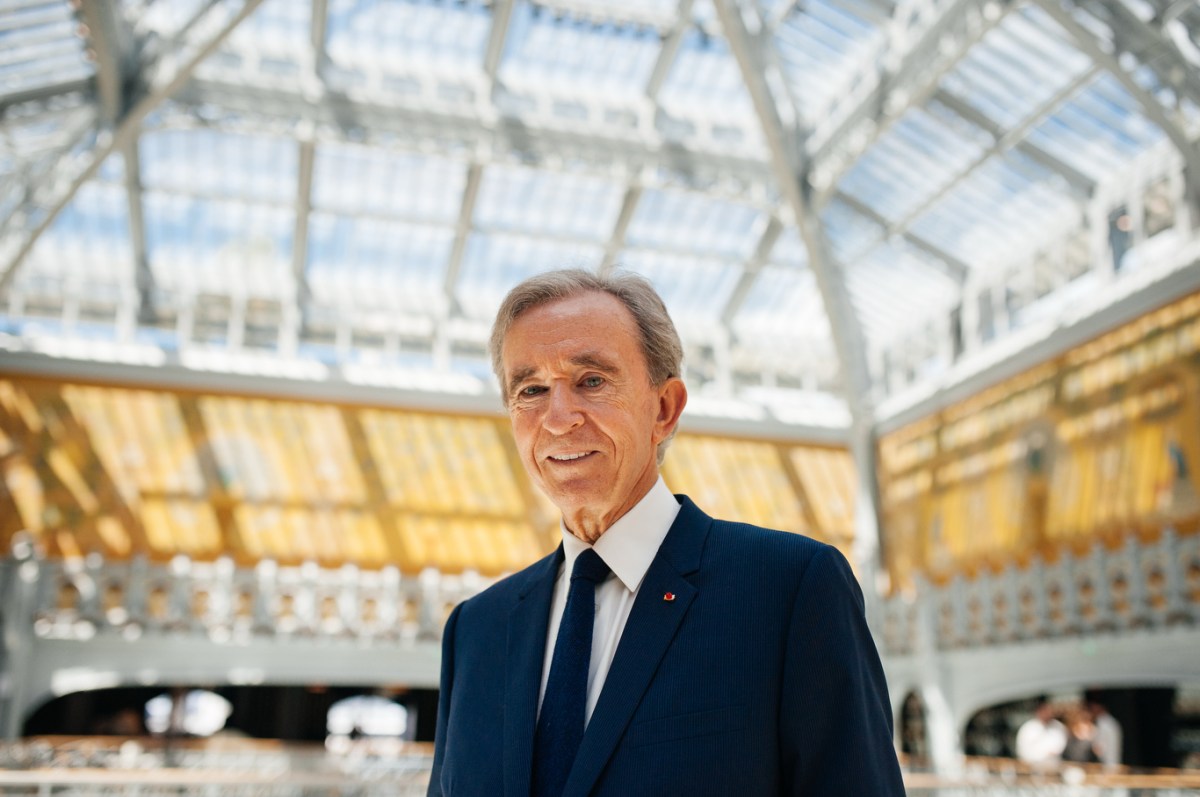
Bernard Arnault's empire-building approach has fundamentally reshaped how the luxury industry operates. The LVMH chairman and CEO receives the 2026 WWD John B. Fairchild Honor for Lifetime Achievement, a recognition that underscores his unparalleled influence on global fashion and luxury markets over four decades.
Arnault assumed control of LVMH in 1989 when the conglomerate was a fractured collection of French brands struggling with identity and direction. Through aggressive acquisition strategy and operational discipline, he consolidated more than 75 luxury houses including Louis Vuitton, Dior, Givenchy, Céline, Fendi, and Celine under a unified corporate structure. His model reversed the traditional luxury paradigm. Rather than allowing designers free creative reign with minimal financial oversight, Arnault implemented systems that balanced artistic vision with shareholder returns. He proved that heritage brands could scale without losing their prestige.
The Fairchild Honor recognizes Arnault's phrase: "transforming creativity into profitability." This wasn't mere corporate jargon. He hired visionary creative directors like Marc Jacobs at Louis Vuitton and John Galliano at Dior, giving them resources and platform while maintaining financial accountability. When creative talent delivered, the system amplified their reach globally. When it didn't, he made changes without sentiment. This ruthlessness separated LVMH from competitors who either protected underperforming designers or sacrificed brand coherence for quarterly earnings.
Arnault's portfolio strategy proved prescient. While competitors bet heavily on single mega-brands, he diversified across price points, geographies, and categories. LVMH spans fashion houses, jewelry, watches, wine and spirits, travel goods, and beauty. This architecture insulated the group from sector-specific downturns. During economic recessions, luxury customers traded down to accessible LVMH labels. During booms, they traded up.
His influence extends beyond balance sheets. Arnault shaped the modern luxury industry's relationship with talent, technology, and transparency. He welcomed digital innovation when rivals clung to exclusivity models. He understood that heritage and modernity weren't opposites but complementary forces. Louis Vuitton under his watch became streetwear royalty without sacrificing exclusivity.
The Fairchild Honor also reflects Arnault's impact on industry consolidation itself. His success with LVMH inspired the mega-conglomerate model across luxury. Kering, Richemont, and EssieLuxe followed similar paths, acquiring multiple houses and centralizing management. Today's luxury landscape bears his structural fingerprints.
At 75, Arnault remains actively involved in LVMH operations, though he has begun transitioning leadership to his children. This succession planning itself represents another strategic innovation. Unlike many family-business founders, he implemented systematic development for his heirs, rotating them through key roles across the conglomerate.
The WWD recognition arrives as LVMH faces fresh headwinds. Chinese luxury demand has softened. Gen-Z consumers challenge traditional exclusivity models. Sustainability pressures mount. Arnault's legacy will ultimately rest not just on what he built but whether the structures he created can adapt to these emerging forces. The 2026 Fairchild Honor acknowledges his transformational past while the industry watches how his successors navigate an increasingly complex future.