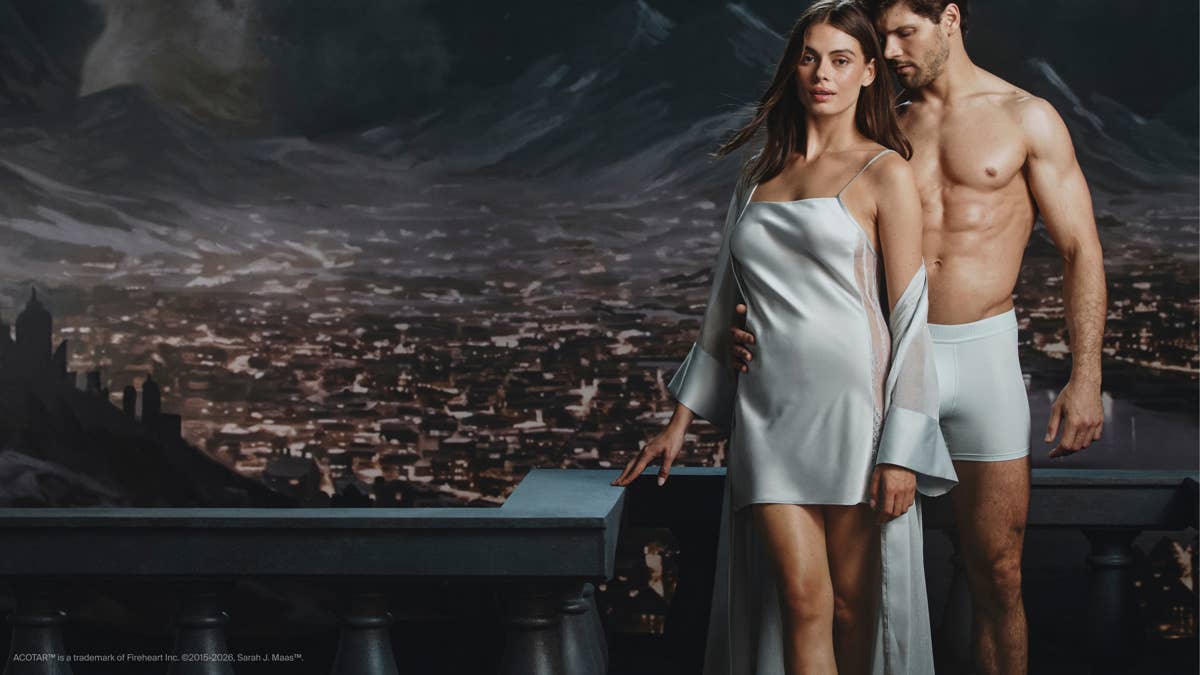
# How Brands Navigate Sarah J. Maas' Fantasy World Without a Visual Reference Point
The licensing explosion around Sarah J. Maas' "A Court of Thorns and Roses" series presents fashion brands with an unusual creative problem. Unlike adapting to established film or television aesthetics, designers working with ACOTAR must conjure visual identity from literary descriptions alone. The novels provide richly detailed worlds across multiple courts and realms, but no directorial vision, costume design, or production design to guide interpretation.
This creative gap creates both opportunity and challenge. Brands licensing ACOTAR properties must decode Maas' prose into wearable fashion while maintaining authenticity to the source material. The Night Court's dark, sensual aesthetic differs dramatically from the Summer Court's sun-drenched warmth or the Winter Court's icy elegance. A single brand cannot represent all courts equally. Strategic choices about which faction to emphasize become central to collection development.
Fashion houses approaching ACOTAR face questions traditional licensed apparel never grapples with this directly. What does the Winter Solstice ball actually look like? How do high fae courtesans dress versus warrior fae? Does Feysand romance translate to a cohesive aesthetic philosophy, or do competing visions fragment the brand landscape? Without Netflix's "Bridgerton" corsetry or Disney's princess silhouettes to anchor design decisions, every brand creates interpretation from scratch.
The absence of visual reference point actually liberates designers in some ways. They cannot fail to match a costume designer's vision because no such vision officially exists. They answer only to Maas' text and their own brand DNA. A contemporary sportswear label can emphasize ACOTAR's warrior aspects. A luxury house can lean into the decadent court intrigue. A contemporary brand can cherry-pick romantic elements without slavish adherence to any single aesthetic.
Publishers and entertainment divisions clearly believe fan investment in these characters runs deep enough to drive licensing revenue without visual confirmation. ACOTAR fans have sustained vivid imaginative attachments to these worlds for over a decade across multiple book releases. They possess internal visual libraries built through repeated reading and community interpretation. Fan art and cosplay communities have already established visual conventions. Brands can tap into existing fan aesthetics while adding their own perspective.
The broader trend speaks to shifting entertainment economics. As streaming adapts more fantasy series annually, the gap between book release and visual adaptation widens. Brands cannot always wait for film or television confirmation before launching merchandise. Licensing ACOTAR's intellectual property before any adaptation exists hedges against delayed production schedules or casting controversy. Fan communities sustain cultural properties between media adaptations. Fashion licensing becomes a way to keep intellectual property alive and profitable during those gaps.
This model also reflects changing consumer expectations around fan culture. Readers do not passively consume. They generate cosplay, fan fiction, artwork, and internal visual aesthetics. Brands licensing properties to these engaged communities profit from fan interpretation rather than fighting it. ACOTAR collaborations essentially monetize the creative labor fans already invest in the series.
Successful ACOTAR fashion lines will likely acknowledge the source material's literary roots while respecting individual brand identity. Designers must avoid generic fantasy tropes while capturing the specific emotional tone Maas established across seven novels. The stakes are real. Misstep and fans reject the collaboration entirely. Get it right and brands tap into one of contemporary publishing's most passionate fandoms, generating revenue from communities that have sustained these worlds through sheer imaginative force alone.