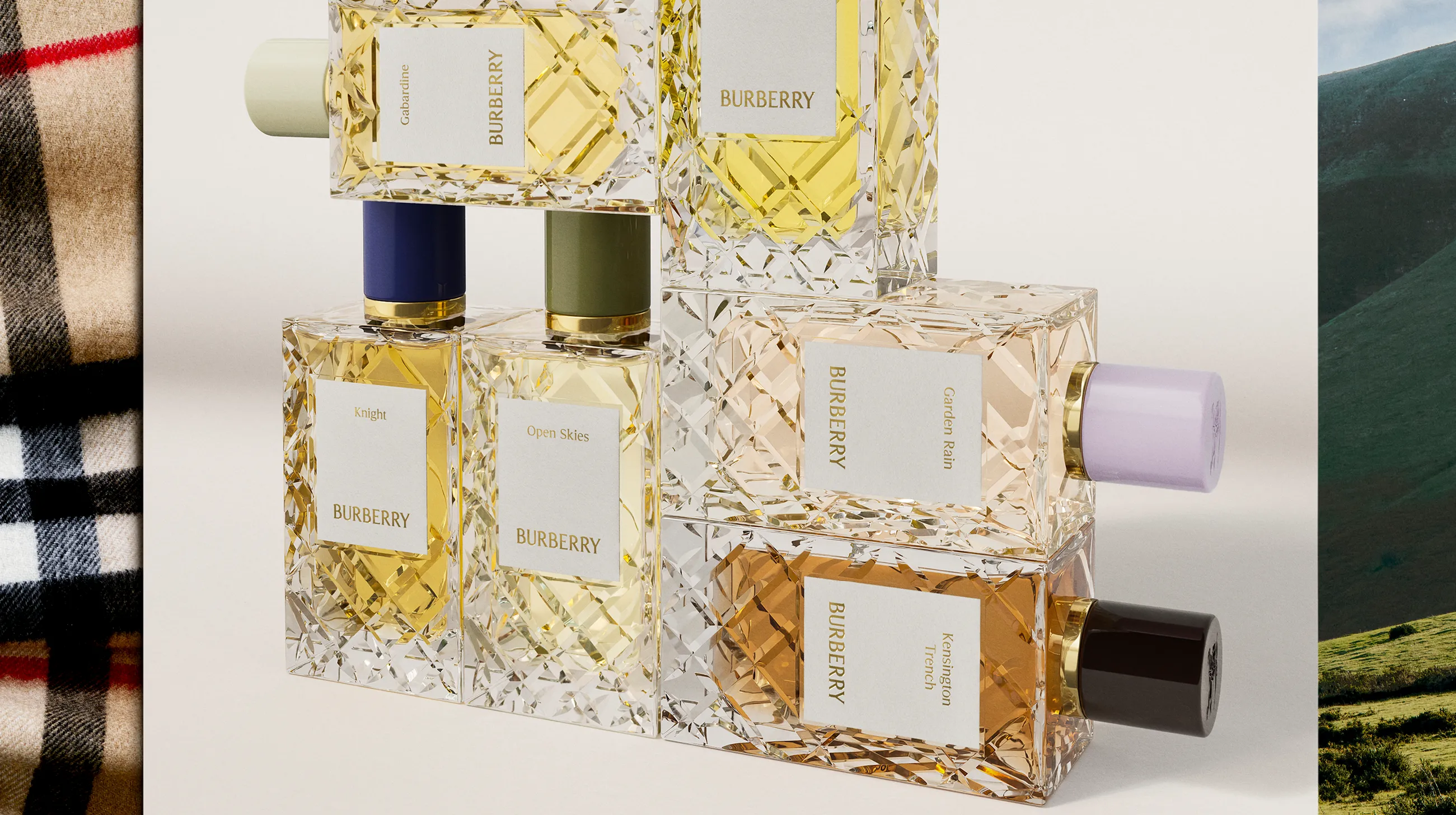
# Burberry Launches Prorsum Fragrance Line, Elevating Luxury Scent Portfolio
Burberry has unveiled Prorsum, a new fragrance collection that positions itself as the brand's most luxurious olfactory offering to date. The eaux de parfum line marks a deliberate escalation in Burberry's fragrance strategy, moving beyond its mainstream consumer base to target the ultra-premium segment where brands compete on artisanal composition and exclusivity rather than volume.
The Prorsum collection arrives at a pivotal moment for Burberry. Under Chief Creative Officer Daniel Lee, who took the helm in 2023, the heritage British brand has been recalibrating its identity, stripping back some of the logo-heavy aesthetics of the Tom Ford era while reinvigorating craft and directional design. This fragrance launch signals that Lee's vision extends beyond clothing into the complete luxury ecosystem, where scent serves as both a financial driver and a cultural statement.
Eaux de parfum represent the haute couture of fragrance. They contain between 15 and 20 percent fragrance concentration, compared to eau de toilette's 5 to 15 percent range. This formulation delivers greater longevity, diffusion, and complexity, allowing perfumers to work with premium raw materials that might vanish too quickly in lighter concentrations. For Burberry, the choice to launch an eau de parfum line signals confidence in both the composition and the consumer willingness to pay for quality over quantity.
The Prorsum name itself carries weight within Burberry lore. The label originally denoted the brand's highest tier of womenswear in the early 2000s, representing "Prorsum by Burberry" before the diffusion system evolved. Recycling this name positions the fragrances as a return to core luxury values, a linguistic callback that resonates with fashion-literate consumers who remember when Prorsum meant entrance into Burberry's most exclusive realm.
Burberry's fragrance business represents a significant revenue stream for luxury conglomerates. The beauty division operates across licensed partnerships and company-owned channels, generating margins that often exceed apparel sales. By moving upmarket with Prorsum, Burberry joins competitors like Dior, Guerlain, and Tom Ford in the practice of tiering fragrance offerings to capture different consumer cohorts. The celebrity-adjacent pricing of mainstream Burberry fragrances contrasts sharply with the investment-level positioning of Prorsum.
The luxury beauty market has shifted substantially in recent years. Consumers increasingly reject mass-market fragrances in favor of niche or indie brands that promise uniqueness and story. Simultaneously, heritage brands have fought back by investing in superior formulations and limited distribution. Prorsum sits squarely in this tension, allowing Burberry to communicate craft credentials while leveraging global recognition that boutique brands cannot access.
Industry observers will watch whether Prorsum achieves meaningful distribution through Burberry's flagship stores and select luxury retailers, or if the line remains internet-exclusive initially. The decision shapes perception significantly. Scarcity builds prestige, but access patterns also determine which consumer demographic the brand is courting.
This fragrance line validates Lee's broader strategy at Burberry: reclaim ground as an atelier-level luxury house that competes on artistry rather than accessibility. Prorsum fragrance proves that philosophy extends into every category where the brand operates.