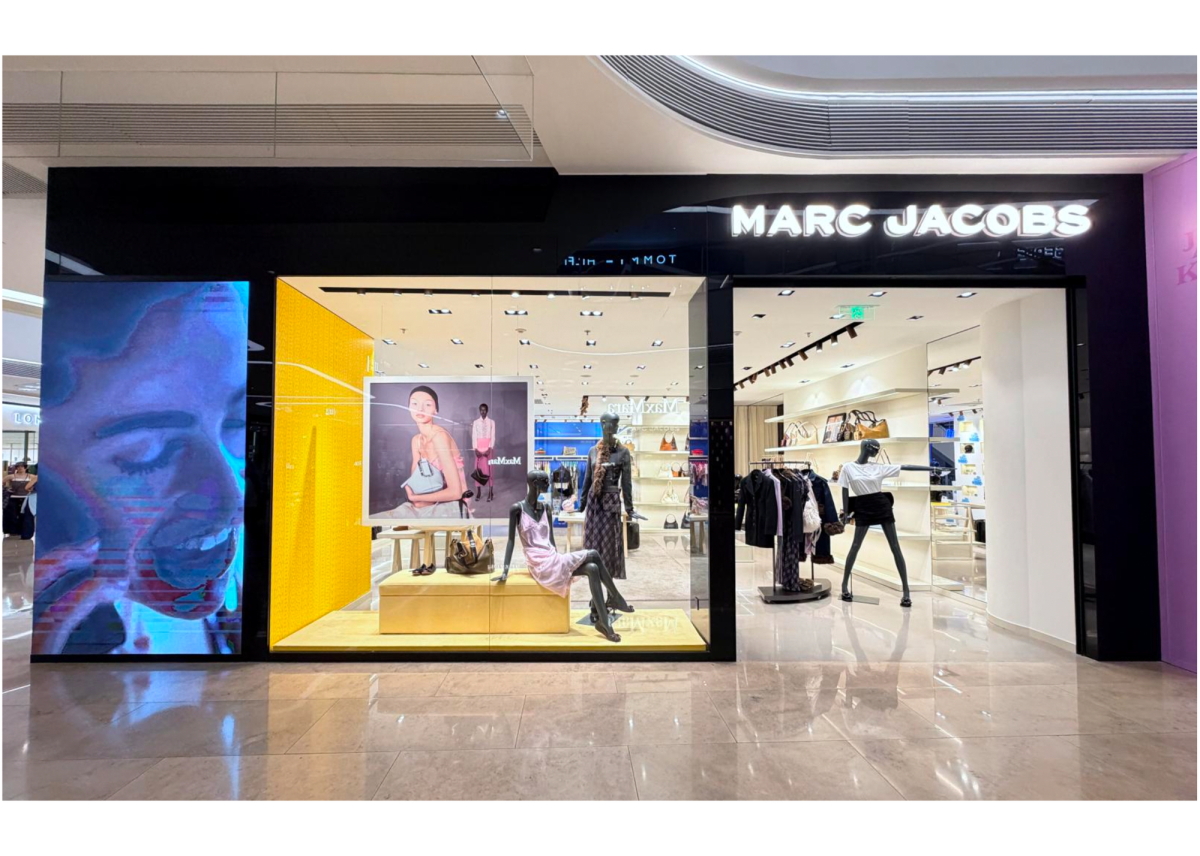
Marc Jacobs strengthens its footprint across Greater China through a strategic partnership with I.T Group, the Hong Kong-based fashion retailer that operates across mainland China, Hong Kong, and Taiwan. The collaboration targets accelerated growth via multiple retail channels, including dedicated boutiques, in-store shops, e-commerce expansion, and wholesale partnerships.
This move reflects Marc Jacobs' broader push into Asia-Pacific markets, where luxury and contemporary American fashion continues to gain traction among affluent consumers. I.T Group brings decades of retail expertise and established relationships across the region. The company operates over 100 locations across Asia and maintains strong digital infrastructure, giving Marc Jacobs immediate access to both physical retail footprint and online distribution networks.
The partnership strategy unfolds across four key pillars. Stand-alone boutiques will anchor the brand's presence in major metropolitan markets, establishing Marc Jacobs as a destination rather than a secondary offering. Shops-in-shop installations within I.T's existing locations provide immediate brand visibility without requiring new real estate investments. Digital commerce expansion taps into the region's e-commerce sophistication, where platforms and consumer behavior differ markedly from Western markets. Wholesale distribution through I.T's network reaches department stores and specialty retailers across Greater China.
Greater China represents a critical growth market for American fashion houses. The region's luxury segment expanded significantly post-pandemic, driven by younger affluent consumers who embrace international contemporary brands. Marc Jacobs, under parent company LVMH Luxury Goods (though Marc Jacobs operates as a relatively independent entity within the conglomerate), occupies a unique position between accessible luxury and high fashion. The brand resonates with style-conscious consumers seeking alternative perspectives to traditional heritage houses.
Marc Jacobs' Asia strategy predates this announcement but accelerates under new leadership and market conditions. The designer brand operates across multiple price points, from the Marc Jacobs mainline to contemporary diffusion lines, creating multiple entry points for Chinese consumers. This tiered approach proved successful in other Asian markets and applies directly to Greater China's diverse consumer base.
I.T Group's selection matters strategically. The retailer maintains credibility with both Chinese consumers and international brands seeking authentic regional distribution. The company has successfully launched European and American brands across Asia, understanding nuances of local marketing, regulatory requirements, and consumer preferences. I.T also operates advanced digital capabilities through its own e-commerce platforms and marketplace integrations, essential for reaching urban Chinese shoppers accustomed to seamless omnichannel retail.
The timing aligns with broader industry trends. American fashion houses increasingly pursue direct regional partnerships rather than relying solely on luxury conglomerates' distribution networks. Marc Jacobs benefits from LVMH's infrastructure while maintaining operational independence, a structure that enables faster decision-making in dynamic markets like China. I.T's partnership model allows Marc Jacobs to scale without massive capital investment in retail infrastructure or regulatory navigation.
For I.T Group, the partnership diversifies its brand portfolio and deepens relationships with major LVMH-adjacent designers. For Marc Jacobs, Greater China access becomes frictionless and capital-efficient, critical for competing against established luxury players already embedded in the region. Expect rapid boutique openings in Shanghai, Beijing, Chengdu, and Shenzhen within the next 12-18 months, followed by expansion into second-tier cities as brand awareness builds.