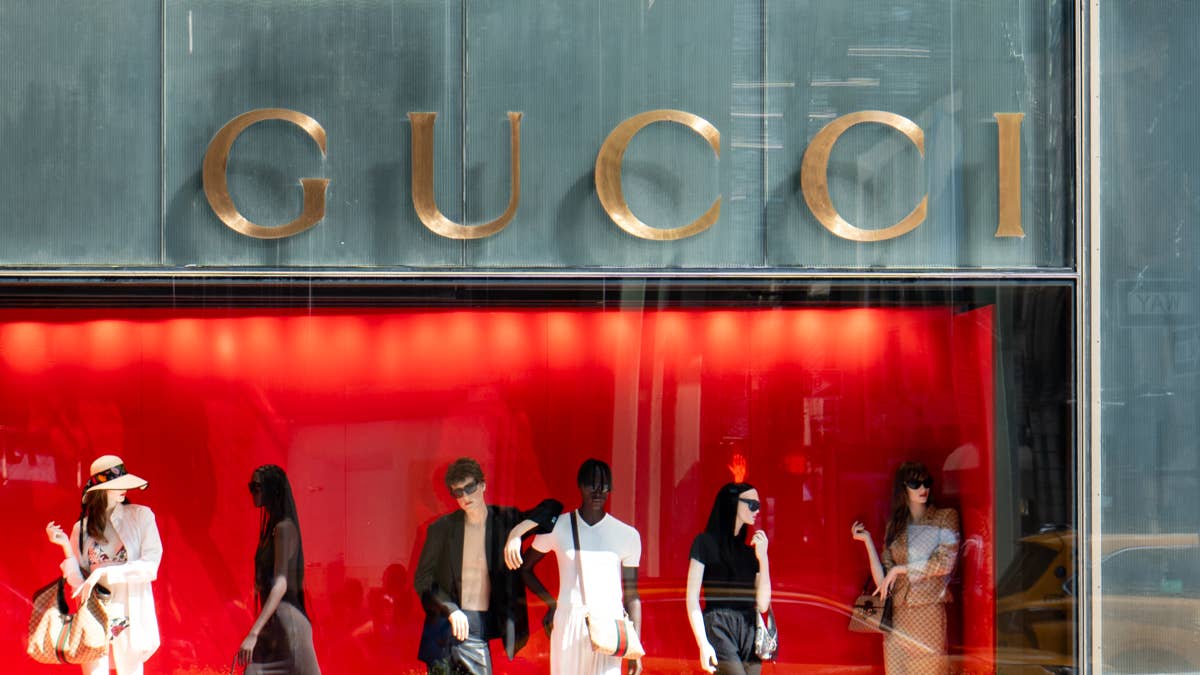
Kering's luxury empire faces turbulent headwinds. The conglomerate behind Gucci, Saint Laurent, Balenciaga, and Alexander McQueen reported a 12% stock decline following disappointing sales figures. The drop signals investor anxiety about the holding company's recovery trajectory as flagship brands struggle to regain momentum in a soften luxury market.
The slide reflects deeper challenges within Kering's portfolio. Gucci, historically the company's revenue engine, continues underperforming analyst expectations. Luxury consumers show hesitation in discretionary spending, particularly in key markets like Europe and China. Creative leadership changes at flagship houses, combined with inventory corrections, have created a turbulent transition period. François-Henri Pinault's team faces pressure to restore confidence through clearer brand positioning and accelerated digital transformation.
Meanwhile, Gap Inc. claims an unexpected win. The American retailer receives an innovation award, a symbolic reversal for a company once dismissed as creatively moribund. Under new strategic direction, Gap has attempted repositioning its core brand away from commodity basics toward lifestyle relevance. This recognition suggests progress on design innovation, though the award carries less commercial weight than sustained comparable-store sales growth. Gap's Old Navy division continues driving profitability, while the namesake brand remains in recovery mode.
The two stories paint divergent trajectories within the global fashion retail landscape. Legacy luxury operates from a position of inherited prestige but fragile execution. Mainstream American retail fights for cultural relevance through deliberate repositioning. Neither company operates with the advantage of momentum.
Art Basel Paris, the prestigious art fair hosting parallel fashion and design programming, cut its run short amid civil unrest. The decision reflects broader volatility in Europe's cultural calendar and raises questions about the sustainability of major art/fashion convergence events. Paris remains central to luxury storytelling, yet infrastructure instability threatens ancillary revenue streams that depend on concentrated global travel and spending.
Kering's stock pressure demands immediate narrative reconstruction. Investors require proof that creative investment translates to consumer desire. The luxury sector operates on perceived scarcity and aspirational positioning. Once that narrative fractures, recovery demands more than operational efficiency. Saint Laurent under its current creative direction carries momentum, but systemic confidence restoration across Kering properties requires measurable consumer reengagement.
Gap's innovation award signals the retail middle market recognizes that survival demands differentiation beyond price competition. The company's historic identity as commodity producer offers both liability and opportunity. Successfully shifting cultural perception takes years of consistent execution and editorial clarity. One award accelerates narrative but does not guarantee commercial viability.
These parallel developments underscore fashion's current operating environment. Luxury brands confront saturation and changing consumer values around acquisition and heritage. Mainstream retail navigates the zone between designer aspiration and fast-fashion accessibility. Neither positioning remains as stable or profitable as five years ago. The winners will be companies that move decisively on brand clarity and consumer connection rather than those hoping market conditions improve organically.