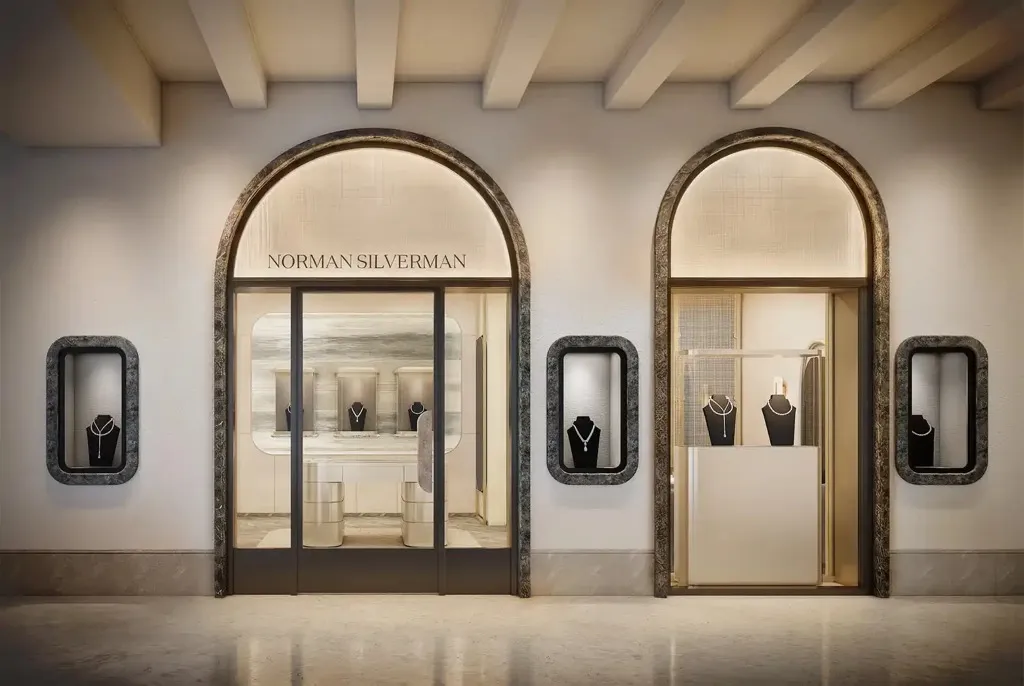
Norman Silverman, the Los Angeles-based family jeweler with a legacy spanning decades, is making a major retail pivot. The brand opens its first flagship store at The Maybourne Beverly Hills, marking a significant expansion for the private diamond specialist into the luxury hospitality ecosystem.
The Maybourne Beverly Hills represents the jeweler's most ambitious retail venture to date. The property, a ultra-luxury hotel and residential development in one of the world's most coveted zip codes, offers Norman Silverman direct access to international clientele and affluent residents. The flagship consolidates the brand's shift from primarily private appointments and custom work into a visible, experience-driven retail presence.
Norman Silverman built its reputation on bespoke diamond sourcing and custom jewelry design. The family business operated largely through referral networks and private consultations, a model common among high-tier independent jewelers competing against conglomerate-owned luxury brands. Opening at The Maybourne signals a recalibration. The hotel's positioning as a contemporary luxury destination, distinct from traditional Beverly Hills glamour, aligns with an emerging segment of ultra-wealthy consumers who value boutique exclusivity over conventional prestige.
The retail landscape for independent diamond merchants has shifted significantly. Mega-brands like Cartier, Van Cleef and Arpels, and Tiffany dominate location-based luxury retail, yet they increasingly face competition from specialized independent jewelers offering personalized service and ethical sourcing narratives. Norman Silverman's decision to plant a flagship at a hospitality property rather than on Rodeo Drive or within a traditional shopping center reflects this trend. Hotel-based luxury retail creates curated, membership-like experiences that appeal to high-net-worth individuals seeking privacy and prestige without the transactional feel of street-level boutiques.
The Maybourne Beverly Hills itself opened relatively recently, positioning itself as an alternative to legacy luxury hotels by emphasizing contemporary design, personalized service, and an integrated retail environment. Anchoring a flagship jeweler within that ecosystem elevates both the property's luxury credentials and Norman Silverman's market positioning.
For Norman Silverman, the flagship serves multiple functions. It establishes a permanent showroom for custom design consultation, creates a visible brand presence among international travelers and residents, and positions the jeweler within an exclusive community of luxury service providers. The space likely balances retail display with private appointment areas, maintaining the brand's heritage of bespoke service while building brand recognition.
This move reflects broader retail dynamics in American luxury. Independent jewelers and family-owned luxury goods makers increasingly partner with hospitality and lifestyle properties rather than relying solely on traditional retail districts. The strategy addresses rising commercial real estate costs, shifting consumer preferences toward experience-based luxury, and the need for curated, high-touch environments that justify premium pricing.
Norman Silverman joins a growing roster of specialized luxury brands discovering that flagship retail in premium hospitality properties offers better long-term positioning than conventional retail rent. The Beverly Hills flagship represents maturation for a family business navigating an industry undergoing profound transformation.