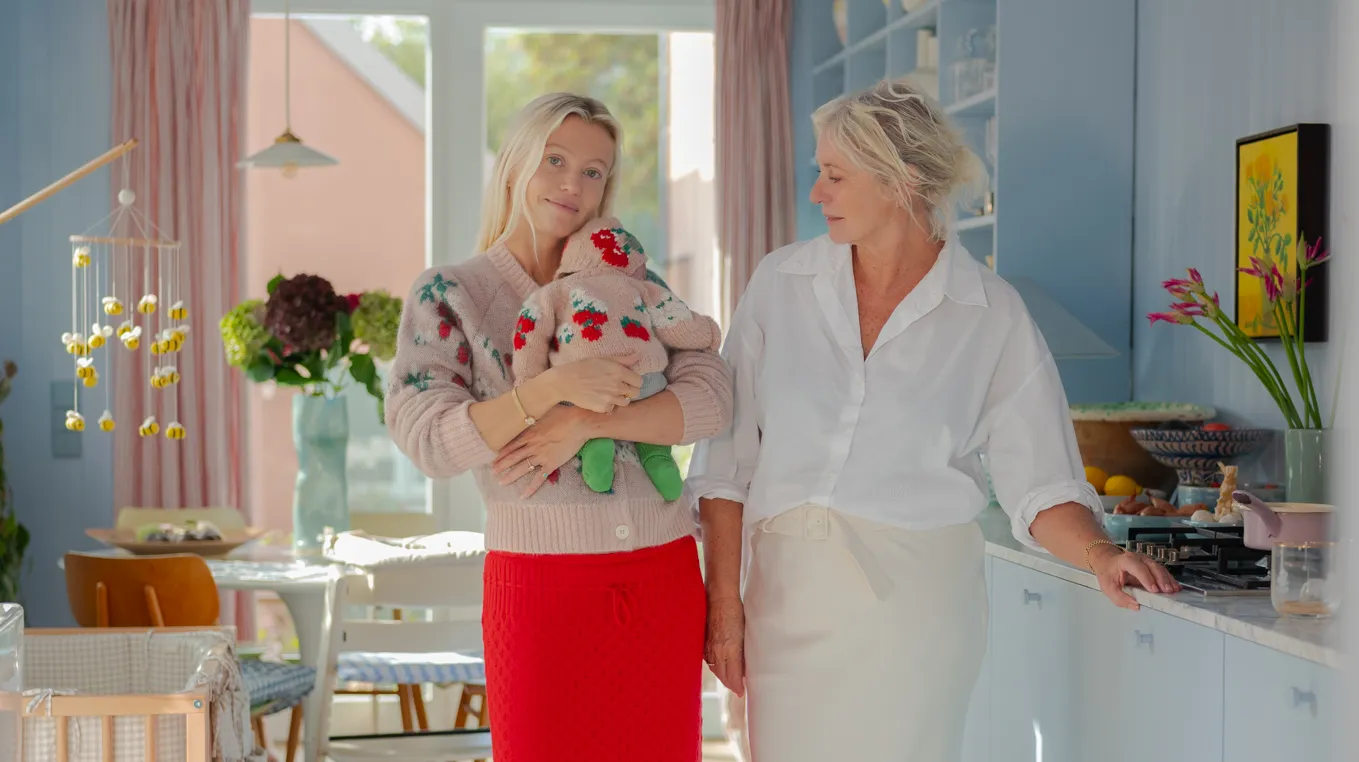
Bernadette, the Belgian luxury knitwear brand founded by Charlotte de Geyter and her mother, has launched its first children's collection. The move comes at a natural inflection point for the house, with de Geyter welcoming her first child in September.
The capsule represents a deliberate expansion for Bernadette beyond its adult-focused aesthetic. De Geyter, who helms creative direction alongside her mother, brings the brand's signature approach to children's wear. That DNA centers on precisely constructed knitwear, elevated fabrications, and a refined color palette that has defined Bernadette's identity since its inception.
Bernadette built its reputation through refined, luxury-focused knitwear that appeals to a customer base valuing craft and wearability over trend-chasing. The brand's pieces carry the hallmarks of Belgian design sensibility: understated sophistication, technical precision, and investment-grade construction. Collections feature carefully edited silhouettes in muted tones and natural fibers, positioning Bernadette as a counterpoint to fast fashion's noise.
The children's capsule maintains this philosophical consistency. Rather than infantilizing design or relying on cartoon graphics and primary colors, the collection translates Bernadette's aesthetic into smaller proportions. This approach aligns with a broader luxury industry trend toward elevated children's wear, where heritage brands extend their customer relationships across family structures while commanding premium pricing for thoughtfully constructed pieces designed to last through multiple wearers.
For Bernadette specifically, the collection serves multiple strategic functions. It deepens brand loyalty by offering mothers who shop the line a coordinated family aesthetic. It extends the customer lifecycle, introducing a new demographic to the house's design philosophy at younger ages. It also addresses a market gap where luxury children's knitwear often either mimics adult design without proper proportion adjustment or adopts overly playful aesthetics that clash with parental preferences for sophistication.
De Geyter's personal timing appears genuinely connected to the business decision. Founders frequently report that parenthood reshapes creative vision and priorities. For a mother-daughter business, new generational arrival carries additional layers of meaning, reinforcing family continuity as both brand narrative and operational reality.
The capsule launch occurs within a competitive landscape where luxury groups have expanded children's offerings as category diversification accelerates. Loro Piana offers children's lines. Isabel Marant produces kids' collections. Even historically adult-focused houses recognize that family-focused shopping behavior and the Instagram-driven documentation of coordinated family fashion creates market opportunity.
Bernadette's entry differs in scale and approach. The initial capsule appears smaller than full seasonal collections, suggesting a testing phase rather than wholesale category reinvention. This methodical expansion mirrors the brand's broader philosophy, avoiding overextension while gauging demand within existing customer bases.
The children's knitwear capsule extends Bernadette's narrative beyond product category into lifestyle positioning. It signals that the brand understands its customers as humans with evolving needs across life stages, not merely as purchasers of luxury sweaters. For a brand built on mother-daughter partnership, the collection carries thematic resonance that transcends commercial calculation.