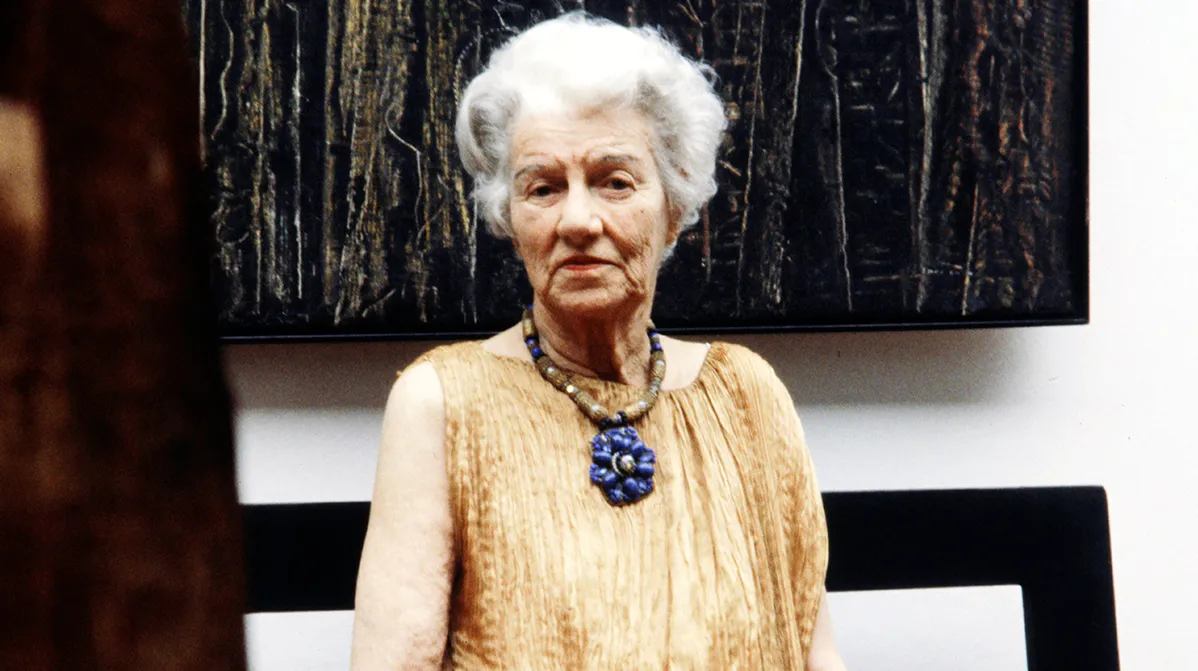
# How Peggy Guggenheim Shaped the Modern Arts Movement
Peggy Guggenheim stands as one of the twentieth century's most consequential figures in art patronage, a woman whose wealth, vision, and relentless commitment to avant-garde movements fundamentally altered the landscape of contemporary art. Her influence extends far beyond simple collecting. She actively shaped which artists received recognition, which movements gained momentum, and ultimately how the world understood modernism itself.
Born into the Guggenheim mining fortune, Peggy inherited substantial wealth but rejected a life of passive luxury. Instead, she channeled her resources into supporting artists during their most vulnerable years. She opened galleries, funded exhibitions, and most crucially, purchased works by artists who were marginalized, misunderstood, or entirely overlooked by mainstream institutions. Her Paris gallery, Guggenheim Jeune, operated from 1938 to 1940 and became a beacon for European modernists facing political upheaval.
Her eye for emerging talent proved prescient. Peggy championed Jackson Pollock before his drip paintings captivated the world, providing him with studio space, financial support, and crucially, exhibition opportunities when galleries rejected his work as incomprehensible. She supported Marcel Duchamp, Joan Miró, Wassily Kandinsky, and countless Surrealists whose radical visions challenged artistic convention. She didn't simply buy their work; she believed in their vision when doubt surrounded them.
The Art of This Century gallery, which Peggy opened in New York in 1942, served as a physical manifestation of her curatorial philosophy. She combined European modernism with American Abstract Expressionism under one roof, creating dialogue between continents and aesthetics. The space itself functioned as experimental architecture, with curved walls and innovative display methods that prioritized viewer experience over traditional museum conventions.
Guggenheim's approach to collecting differed fundamentally from male collectors of her era. Rather than acquisitiveness for acquisition's sake, she viewed collecting as an act of cultural stewardship. She lived among her artworks, entertained artists in her homes, and treated patronage as intimate collaboration. Her multiple residences in Paris, Venice, and New York became salons where artistic creation happened organically.
Her personal life intertwined with her professional vision in ways that shaped artistic history. Her marriages to artists like Max Ernst and relationships with numerous creatives meant she inhabited the world she championed. She understood the financial precarity and emotional vulnerability of artistic practice from proximity, not distance. This intimacy informed her decisions about which artists to support and how.
The Guggenheim Foundation and her Venice palazzo, now the Peggy Guggenheim Collection museum, continue her legacy. The collection itself functions as her curated thesis on modernism. By placing specific works alongside others, she constructed a narrative about how twentieth-century art evolved and what mattered most about that evolution.
Peggy Guggenheim proved that patronage transcends mere financial transaction. It requires vision, taste, courage, and conviction to support work the market hasn't yet validated. Her insistence on backing artists before critical consensus formed established a model for serious collecting. She demonstrated that collectors shape movements and that thoughtful patronage represents its own form of artistic creation.