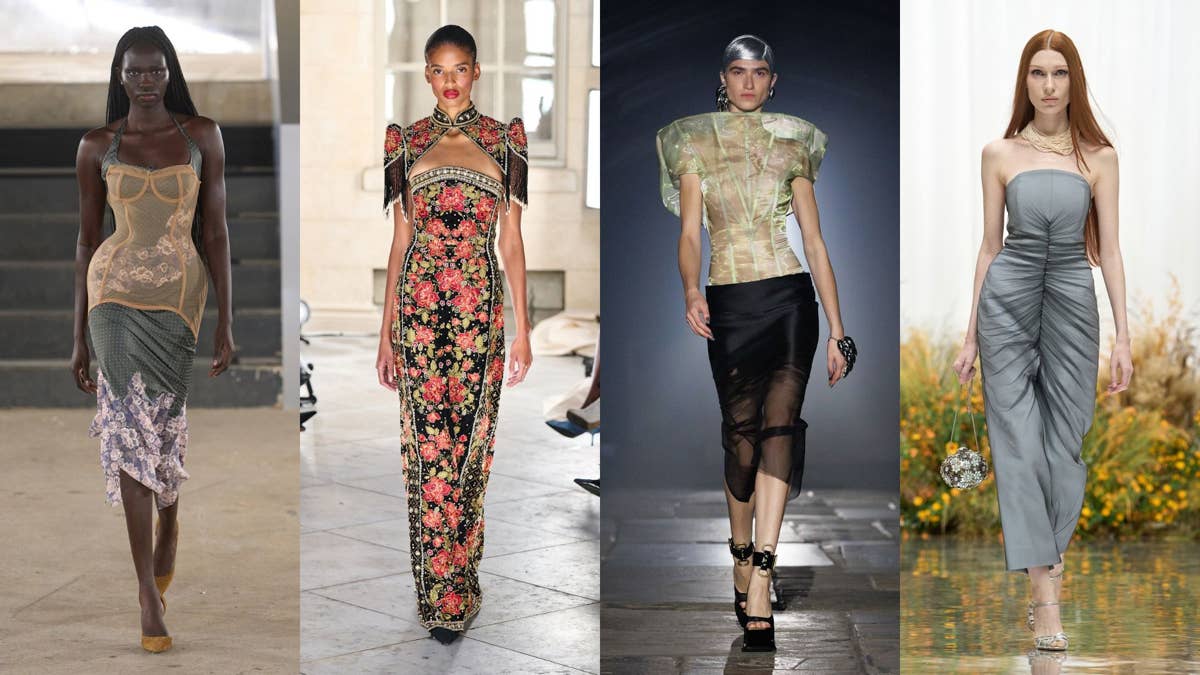
# The 8 Coolest Trends From London Fashion Week Spring 2027
London Fashion Week delivered a collection of directional statements for spring 2027, pivoting away from digital maximalism toward tactile, rebellious design. The showing reflected a broader industry reset: designers rejected algorithmic aesthetics in favor of human-made imperfection and subversive reinterpretations of utilitarian basics.
The most striking thread running through presentations was an explicit push back against AI-generated design. Designers showcased hand-crafted details, visible seams, and intentional irregularities as markers of authentic creation. This anti-AI stance emerged not as nostalgic romanticism but as a deliberate design philosophy. Collections featured hand-embroidery, artisanal dyeing techniques, and construction methods that deliberately resisted machine precision. The message was clear: imperfection and human labor became luxury signifiers.
Subversive takes on intimate apparel dominated several presentations. Designers deconstructed the bra, repositioning straps as visible design elements and transforming undergarments into statement outerwear. This built on the ongoing conversation about the fashion industry's relationship with women's bodies, but with a sharper edge. Rather than utilitarian comfort narratives, these pieces leaned into provocation. Lace bra straps appeared over tailored jackets. Structured cups emerged as silhouette shapers in unexpected contexts. The category transformed from hidden necessity to visible, celebrated garment.
The apron experienced parallel treatment. Once relegated to workwear and domestic uniform, aprons reappeared as architectural overlays on structured dresses and leather jackets. Designers played with scale, proportion, and material. Oversized canvas aprons hung from silk evening wear. Leather aprons with exaggerated pockets dominated streetwear presentations. This trend reflected fashion's ongoing appetite for ironic deconstruction of class signifiers. The apron moved from servant's necessity to high fashion statement piece.
Color palettes trended toward earthy, muted tones with occasional pops of jewel tones achieved through natural dyeing methods. The restriction felt intentional rather than limiting. Without the digital color correction tools that dominated digital fashion imagery for years, designers returned to seasonally appropriate hues and naturally achievable pigments.
Fabrications emphasized natural fibers and visible construction. Linen, unbleached cotton, and raw silk dominated presentations. Seams remained intentionally visible. Hems were hand-finished with visible stitching. This transparency of process reflected the anti-AI ethos but also connected to broader sustainability conversations. Designers communicated their methods visibly, inviting scrutiny rather than hiding production.
Silhouettes ranged from severely tailored to dramatically draped, but with shared emphasis on volume and movement. The rigid, body-hugging aesthetic that defined mid-2020s design completely disappeared. Instead, garments moved independently from bodies. Oversized jackets, flowing trousers, and sculptural layering dominated. This shift prioritized garment presence over body enhancement.
The week confirmed fashion's tipping point away from algorithm-driven design and toward what designers positioned as "authentic" creation. Whether this represents genuine industry reckoning or another trend cycle remains uncertain. What's clear is that London's spring 2027 presentations rejected sterile precision in favor of visible human craft, subversive recontextualization of mundane garments, and unapologetic embrace of imperfection.