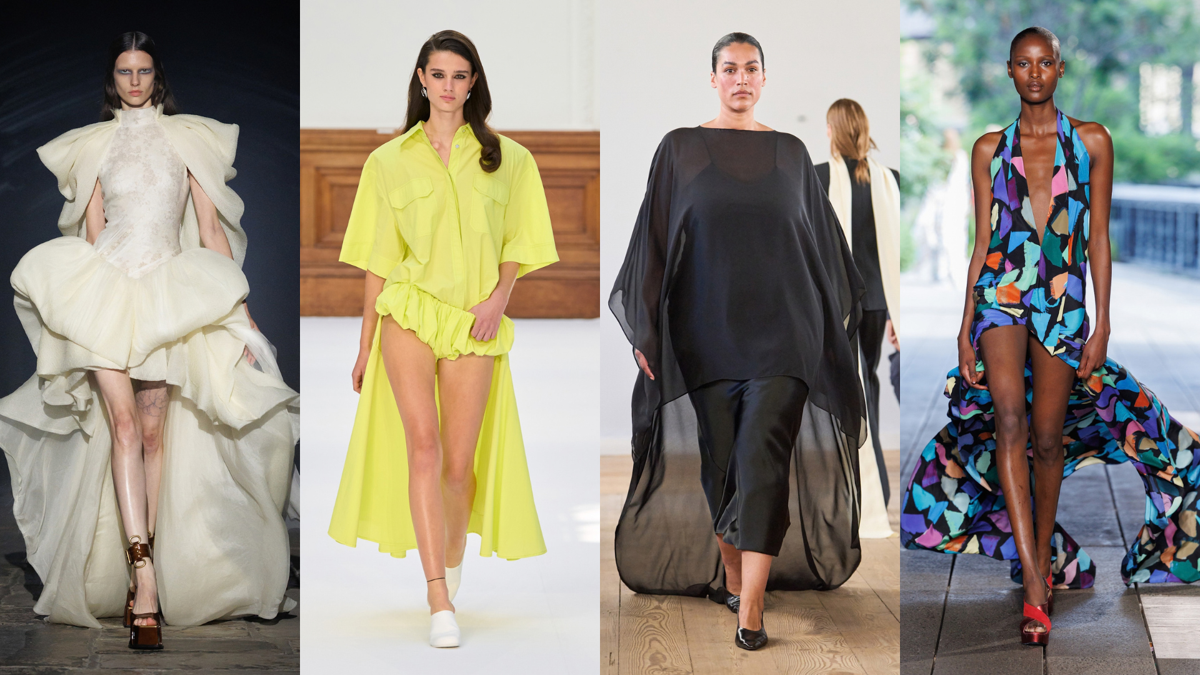
The mullet hem, that polarizing silhouette of the 2010s that championed shorter fronts and longer backs, has returned to dominate Spring 2027 runway collections. Designers are reviving the controversial cut across dresses and skirts, signaling a broader cyclical return to early-decade aesthetics that many fashion observers thought had been retired for good.
This revival speaks to the fashion industry's current obsession with nostalgia and the accelerated fashion cycle that defines contemporary design. The mullet hem emerged as a statement piece during the 2010s when designers sought to challenge traditional silhouette conventions. The cut offered practical utility dressed up as avant-garde experimentation. Designers paired short, knee-skimming hemlines in front with dramatic, floor-length trains in back, creating visual tension and movement that photographs well for social media.
What makes this 2027 resurrection particularly telling is its ubiquity. Rather than appearing as isolated experiments from boundary-pushing labels, mullet hems have spread across the runway ecosystem. Contemporary designers working at multiple price points and aesthetic categories are adopting the silhouette. This suggests the fashion industry has moved beyond viewing the cut as a novelty or transitional trend and now treats it as a legitimate design option worth revisiting.
The timing reflects broader fashion sentiment around Y2K and early-2010s nostalgia. Gen Z consumers, now driving purchasing power in fashion, did not experience these eras firsthand or experienced them as young children. This generational distance allows designers to recontextualize older silhouettes without the baggage of those who lived through their original peak. The mullet hem, stripped of its early associations with fast fashion and trend-chasing, presents itself as retro rather than outdated.
Fashion's embrace of historical recirculation has accelerated dramatically. Trends that once cycled back every 20 to 30 years now return within 10 to 15 years. Social media archives, Pinterest boards, and digital fashion history make it easier for designers to access and recycle previous silhouettes. The mullet hem's return demonstrates how digital culture collapses temporal distance. A 2010s trend feels simultaneously ancient and immediately available for reinterpretation.
The mullet hem also signals practical changes in how designers approach dressing bodies. The silhouette offers visual interest while maintaining wearability. The shorter front allows ease of movement and prevents tripping hazards that plague full-length garments. The longer back provides drama and presence. This combination appeals to designers seeking to balance runway spectacle with garment functionality.
Styling the mullet hem for 2027 differs from its original iteration. Contemporary interpretations pair the silhouette with minimal, streamlined tops and modern footwear. The early-2010s version often featured matched sets with both top and bottom in coordinating patterns. Today's versions emphasize contrast and mix-and-match aesthetics, reflecting current consumer preferences for versatile, trans-seasonal pieces that work across multiple styling scenarios.
Whether the mullet hem achieves lasting runway presence or burns out quickly depends on consumer adoption. Early indicators from Spring 2027 collections suggest designers believe the silhouette has legs, so to speak. The cut's return represents both fashion's circular nature and the industry's relentless search for fresh angles on familiar forms. Like many revived trends, the mullet hem works because it offers something old filtered through contemporary sensibilities, allowing designers to feel both nostalgic and innovative simultaneously.