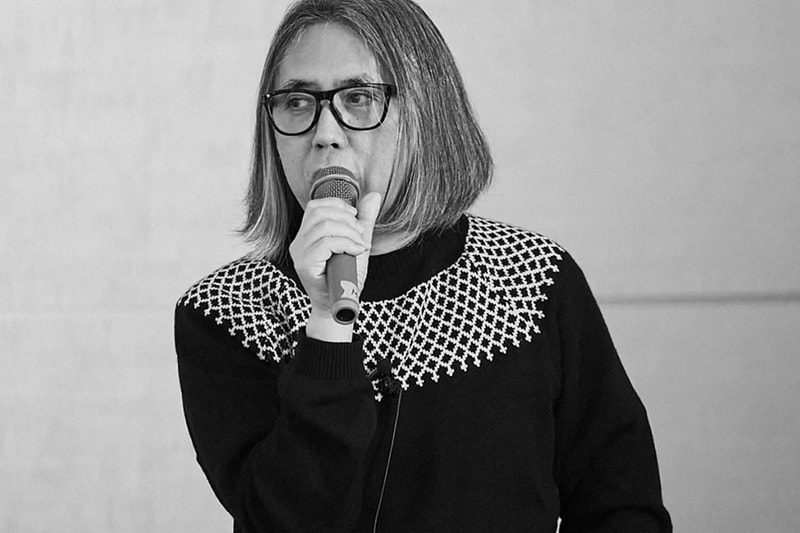
Hiroshi Fujiwara, the Tokyo-based designer and cultural curator behind FRAGMENT, has launched applications for the second iteration of FRAGMENT UNIVERSITY. The initiative opens enrollment for a November 2026 start date, positioning itself as an unconventional educational venture that blends design philosophy with cross-disciplinary thinking.
FRAGMENT UNIVERSITY operates as a nine-part in-person lecture series rather than a traditional classroom environment. Fujiwara curates guest faculty who bring non-traditional perspectives spanning music theory, human nature, design history, and creative practice. This structure reflects Fujiwara's broader ethos. His work across FRAGMENT design collaborations, his role as creative director for various streetwear and luxury initiatives, and his consulting work all emphasize synthesis across seemingly disparate fields.
The second term announcement signals sustained belief in this model. The first term, which concluded earlier in 2026, established the framework. Now Fujiwara expands access. Applications close September 28, 2026, requiring prospective students to submit both an application and a motivation statement. This gatekeeping maintains intentionality around participant selection while remaining open to new voices beyond fashion industry insiders.
Fujiwara's approach to education mirrors his design methodology. FRAGMENT emerged in the early 2000s as a label centered on fragmentation, collision, and recontextualization. Collaborations with Nike, Louis Vuitton, Stüssy, and others pushed graphic language and silhouette disruption. But Fujiwara's influence extends beyond product. He functions as a tastemaker and intellectual who shapes cultural conversation through curation, not merely through collections.
FRAGMENT UNIVERSITY formalizes this curatorial impulse. Rather than teaching students to design clothes or follow trend cycles, the program positions design as a lens for understanding broader human systems. Music theory informs how visual composition operates. Studies of human nature deepen understanding of consumer psychology and cultural behavior. This synthesis explains why luxury houses and cultural institutions increasingly engage designers as strategic thinkers, not just makers.
The November 2026 timing places the second term in the midst of peak fashion calendar activity. Students will engage with content while fashion weeks unfold globally and retail strategies for 2027 solidify. This scheduling choice may prove intentional, exposing participants to industry momentum while they develop their critical frameworks.
FRAGMENT UNIVERSITY also reflects shifting demographics in fashion education. Traditional fashion schools face pressure to justify curricula that feel increasingly disconnected from industry realities. Institutions like Central Saint Martins, Parsons, and FIT remain influential, yet emerging alternative models gain traction. Fujiwara's approach prioritizes intellectual rigor and real-world cultural relevance over technical apparel construction. This appeals to students seeking mentorship from practitioners who maintain active roles in global culture rather than purely academic positions.
The program's in-person requirement carries weight. As remote education proliferated post-pandemic, curated in-person experiences command premium positioning. Hypebeast coverage itself signals insider status. The publication functions as streetwear and design culture's primary news infrastructure, reaching both industry professionals and aspirational audiences. Featuring FRAGMENT UNIVERSITY enrollment signals this offering holds cultural legitimacy.
Fujiwara's expanded commitment to education suggests longer-term institutional thinking beyond seasonal collections. FRAGMENT has matured from underground Tokyo streetwear to globally recognized design entity collaborating with LVMH, Nike's Innovation Kitchen, and other major players. Educational programming builds infrastructure around ideas and community rather than relying solely on product cycles. This positions FRAGMENT as a cultural entity with staying power. For designers navigating an increasingly complex landscape where brand meaning extends far beyond garments, Fujiwara models a sustainable alternative to traditional retail dependency.