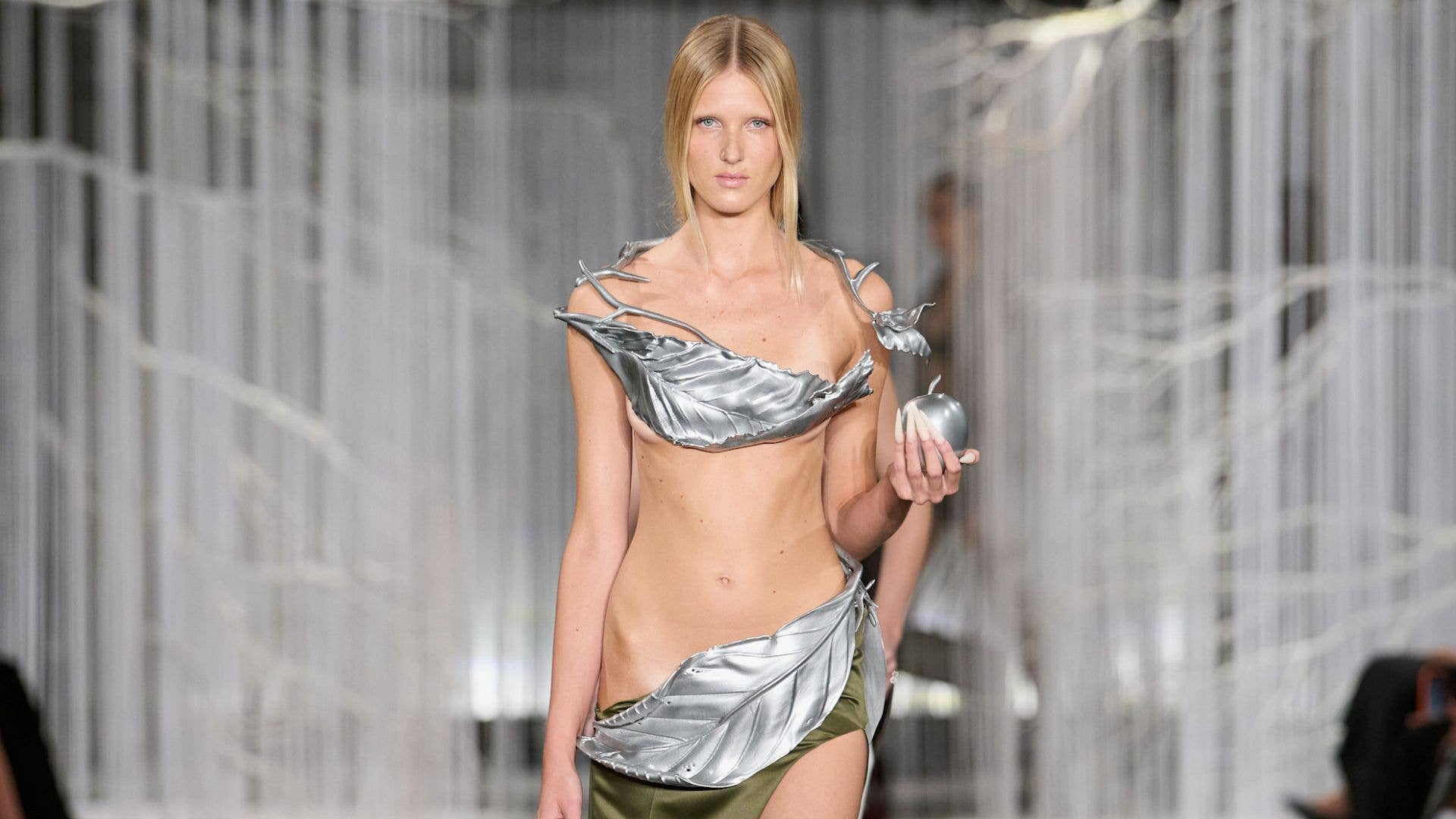
Grace Ling has positioned her Spring 2027 collection as a deliberate study in contradiction. Titled "Oddities," the collection interrogates the tension between opposing forces: masculinity colliding with femininity, sensuality wrestling with strength, delicacy meeting aggression.
This thematic framework reflects a broader design philosophy that rejects neat categorization. Ling constructs garments that embody simultaneous states, refusing the traditional binary that has long dictated how designers approach gendered dressing. The collection speaks to a fashion moment increasingly comfortable with ambiguity and fluidity, where a single piece can feel both vulnerable and powerful, both soft and commanding.
The duality Ling explores extends beyond aesthetic. By centering "oddities" as a collection concept, she challenges the fashion industry's historical preference for harmony and cohesion. Instead, Ling leans into productive friction. This approach aligns with growing consumer appetite for clothing that feels psychologically complex, that reflects the contradictions people actually embody rather than idealized, singular versions of themselves.
Spring 2027 collections typically signal emerging trends roughly eighteen months ahead of consumer release. Ling's focus on duality suggests the industry is moving toward more nuanced expressions of identity in silhouette and fabrication. Designers increasingly reject the idea that strength must look severe or that sensuality must appear passive. Collections that explore these tensions gain cultural traction because they validate how people actually feel and move through the world.
Ling's approach also reflects shifting conversations around gender in fashion. The industry has begun dismantling rigid codes that assigned certain fabrics, cuts, and embellishments exclusively to men or women. A masculine-leaning tailored piece adorned with delicate beading, or a fluid silk camisole paired with utilitarian hardware, becomes a language for expressing internal multiplicity. This vocabulary matters more to younger consumers, who increasingly view clothing as a tool for self-actualization rather than social conformity.
The "Oddities" collection suggests Ling understands that contradiction is not a flaw in design but a feature. A garment need not resolve its tensions to succeed. The most compelling pieces often live in the space between competing impulses, creating visual and tactile interest through unresolved opposition. This philosophy challenges the clean narratives that traditionally organized fashion collections.
For Ling specifically, this collection represents a maturation of her design voice. By articulating her core tensions explicitly, she invites audiences into her creative logic. Collections with clear conceptual frameworks tend to generate stronger critical and commercial responses because they offer something beyond aesthetics: they offer a worldview.
The Spring 2027 market will likely see other designers exploring similar territory. When one influential designer articulates a concept with clarity and conviction, others follow. "Oddities" may well signal a broader shift toward embracing contradiction as a design principle rather than a problem to be solved. In fashion, contradiction often proves more interesting than resolution.