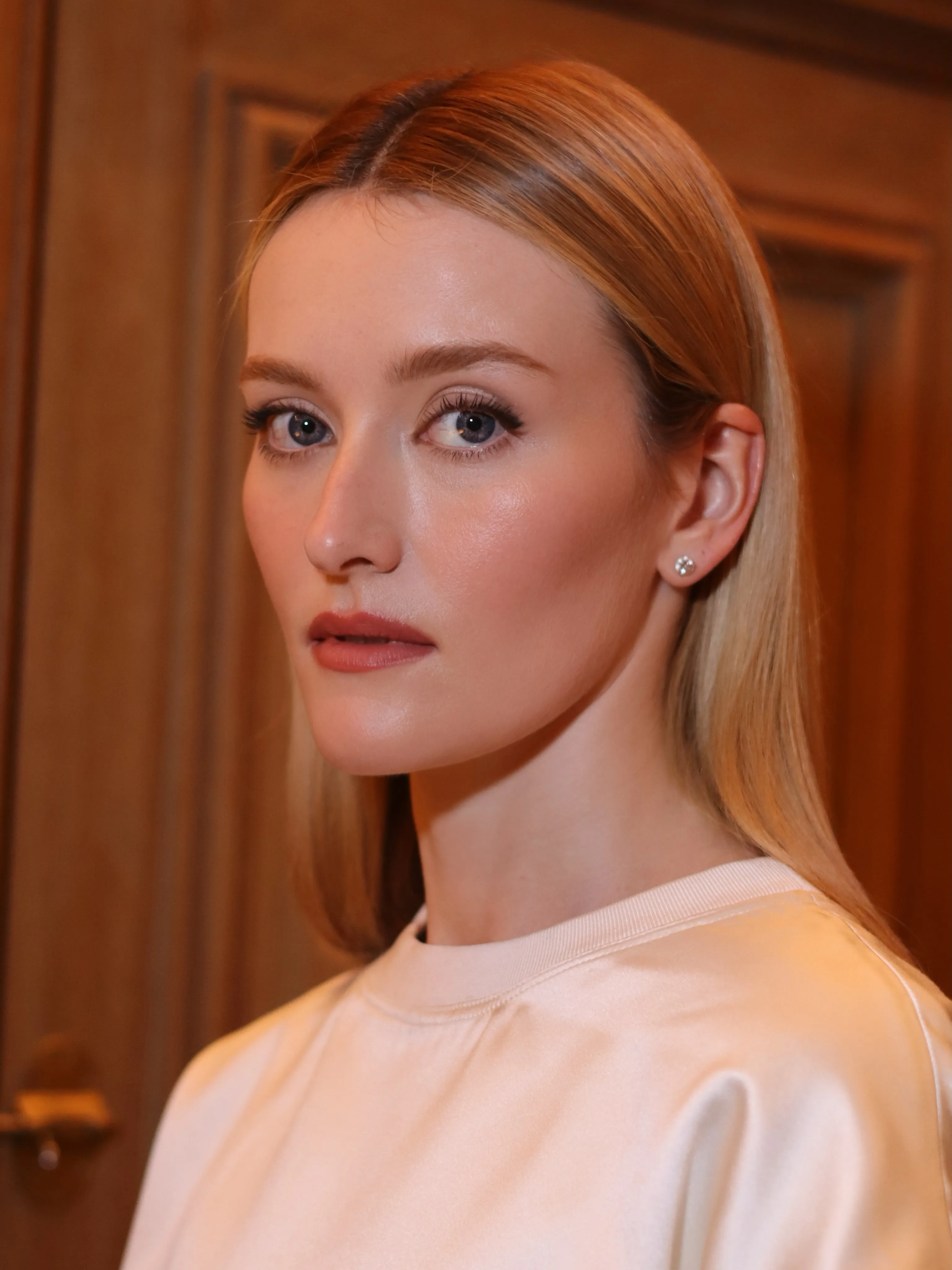
Vogue's weekly Beauty Marks column makes something crystal clear that the fashion industry has long whispered: celebrities don't deserve all the credit for the beauty trends we're about to see everywhere. Read through this week's curated looks—from Phoebe Bridgers's angelic platinum hair styled by Mara Roszak to Chappell Roan's theatrical frosted blue eyeshadow by Dee Carrion—and you'll notice a consistent pattern. The makeup artists, hairstylists, and nail artists are the true architects of these moments.
Consider the specifics. Rosie Huntington-Whiteley's 'full femme fatale' look at the LACMA Art+Film Gala didn't materialize from the actress alone. Hung Vanngo created the smoky, elongated eyes and sculpted cheekbones, while Danielle Priano pulled her hair into that severe, slicked-back updo. Amanda Seyfried's mid-2000s blonde bombshell nostalgia at the Steps premiere came courtesy of Renato Campora's dramatic side part styling and Genevieve Herr's makeup work. Without these creators, these celebrities would simply be wearing clothes.
The reporting acknowledges this hierarchy explicitly: 'as much about celebrity beauty as it is about the makeup artists, hairstylists, and nail artists, as well as the creators crafting the trends you're about to see everywhere.' Yet the column structure still leads with celebrity names while crediting the artists in secondary clauses. This matters. When readers scroll through beauty inspiration—whether Demi Lovato's Manuka honey-inspired manicure by Natalie Minerva or Pauline Chalamet's romantic tousled bob by Tobi Henney—they should know immediately who created these looks.
The beauty industry's pecking order needs restructuring. Fashion and retail professionals should lobby Vogue and similar publications to flip the hierarchy. Lead with the artist's vision and technique, then name the celebrity wearing it. This simple editorial change would redirect influence and opportunity toward the creators actually driving trends. After all, when Beauty Marks urges readers to 'pin' nail art for appointments or consider 'finishing touches worth stealing,' they're copying the professionals' work, not the celebrities' faces.
The most telling detail appears in the call-to-action: 'head to the app to vote for your favorite.' This engagement metric rewards the entire team—but only if readers understand who crafted each look. Until bylines and credits reflect the actual creative hierarchy, these talented professionals remain invisible architects of a visual culture that the fashion world treats as celebrity property. That's not just unfair; it's economically shortsighted for an industry that depends on these creators to generate demand.