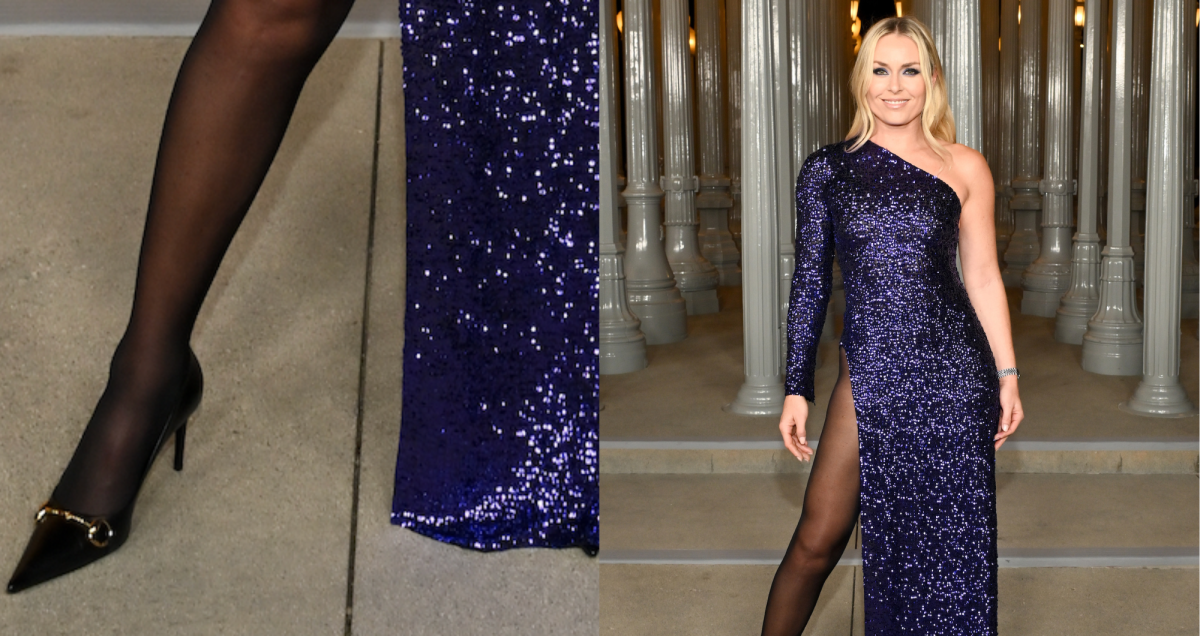
Lindsey Vonn looked stunning at the Los Angeles County Museum of Art's 15th annual Art+Film Gala this past Saturday night. The Olympic skier wore a purple, single-sleeve sequined Gucci gown paired with classic black horsebit heels—both from the same Italian house. The dress itself deserves praise: the deep royal purple with its asymmetrical off-the-shoulder cut, dramatic thigh-high slit, and large round sequins that glittered under the LACMA lights created a memorable visual. The horsebit pumps, known for their sharply pointed toe, stiletto heel, and golden hardware across the vamp, complemented the ensemble perfectly. By all accounts, Vonn looked exceptional.
Yet here's what troubles me: Vonn wore head-to-toe Gucci, and this wasn't even noteworthy enough to question. She's a 'well-known fan of the Gucci brand, often sporting their attire while out and about,' according to the reporting. Earlier this year at the 2026 ESPY awards, she wore another one-sleeved sequined Gucci number—a floor-length dress with a high neckline and silver sequins creating a nearly metallic effect. Two major red carpet moments, two single-sleeve sequined Gucci gowns. The repetition speaks volumes about where power lies in fashion right now.
Gucci's presenting sponsorship of LACMA's gala—a role it has held since the event's 2011 debut—means the brand has been central to this prestigious event for 15 years. When a single fashion house maintains that kind of institutional grip, with celebrities like Vonn reliably delivering head-to-toe looks, the red carpet becomes less about fashion risk-taking and more about brand activation. This Saturday's gala honored artist Vija Celmins and 'Dune' director Denis Villeneuve, with Leonardo DiCaprio and LACMA trustee Eva Chow returning as co-chairs. These are creative luminaries. They deserve red carpets that challenge and surprise.
The problem isn't Gucci's quality—Vonn's dress was genuinely striking. The problem is the predictability. When major celebrities repeatedly wear the same designer at prestigious events, and that designer is also the presenting sponsor, we've created a system that discourages experimentation. Where are the unexpected designer pairings? Where are the emerging brands getting their moment under the LACMA lights?
Moving forward, prestigious cultural institutions should reconsider how sponsorships shape the narratives around their events. Yes, Gucci's money matters. But so does the credibility and cultural relevance of the red carpet itself. Fashion should feel alive and unpredictable at events honoring true artistic vision. Right now, it feels like we're watching an extended advertisement, no matter how beautifully sequined.