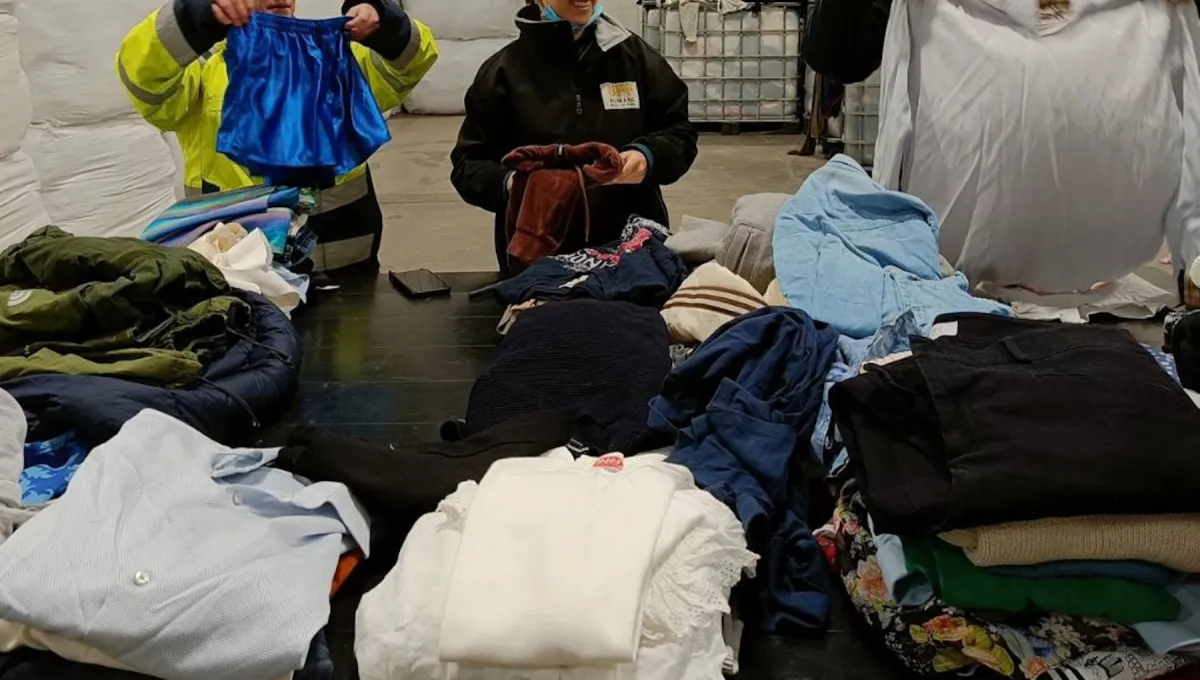
Eunomia Research & Consulting and Norwegian consultancy Mepex tracked 200 discarded clothing items from Nordic countries through international secondhand textile supply chains, documenting journeys across 23 countries. The research exposed significant gaps in visibility around what happens to garments after they leave initial sorting destinations.
The study found that 71 percent of tracked garments had their last recorded location in Europe, with Poland accounting for 30 percent and Slovakia for 18 percent. Pakistan received 14 percent of the sample. The tracking lasted six months, and some garments had not completed their journeys when monitoring ended. Those locations do not necessarily represent where clothing was ultimately sold, reused or discarded.
European textile exporters can generally identify their immediate buyers but have far less information about subsequent shipments and final destinations. Nordic countries export much of their collected textile material without sorting it domestically due to high labor costs, relying instead on processing operations in Poland, Lithuania, Germany, Slovakia and Bulgaria. At those facilities, garments are graded and directed toward markets for reuse, repair, recycling or other processing.
The study found that 66 percent of tracked items had their last recorded location within the European Union or European Economic Area, while 34 percent were recorded outside those markets. Asia-Pacific accounted for 18 percent, Africa for 9 percent and the Middle East for 3 percent. Four tracked items reached secondhand clothing markets in Nigeria through Benin, despite Nigeria's prohibition on used clothing imports.
Lower-quality garments traveled farther internationally. Fifty-six percent of Grade D garments, the lowest quality category, had their last recorded location outside Europe, compared with 24 percent of Grade A garments.
The European Union prepares to implement additional requirements affecting textile producers. Under revisions to the Waste Framework Directive, member states must establish extended producer responsibility systems for textiles. Restrictions under the revised Waste Shipment Regulation will limit waste exports to certain non-OECD countries beginning in 2027.
The report recommends clearer textile-quality classifications, stronger accountability for lower-grade exports and minimum standards for receiving facilities. It also calls for investment in Nordic sorting and recycling infrastructure and measures supporting domestic secondhand markets and repair businesses.
Kathrine Kirkevaag, senior adviser at Mepex, stated that "the existing export system has played an important role in keeping clothing in circulation" while noting that "the sector faces increasing pressure as collection volumes rise and the material mix becomes more difficult to manage."