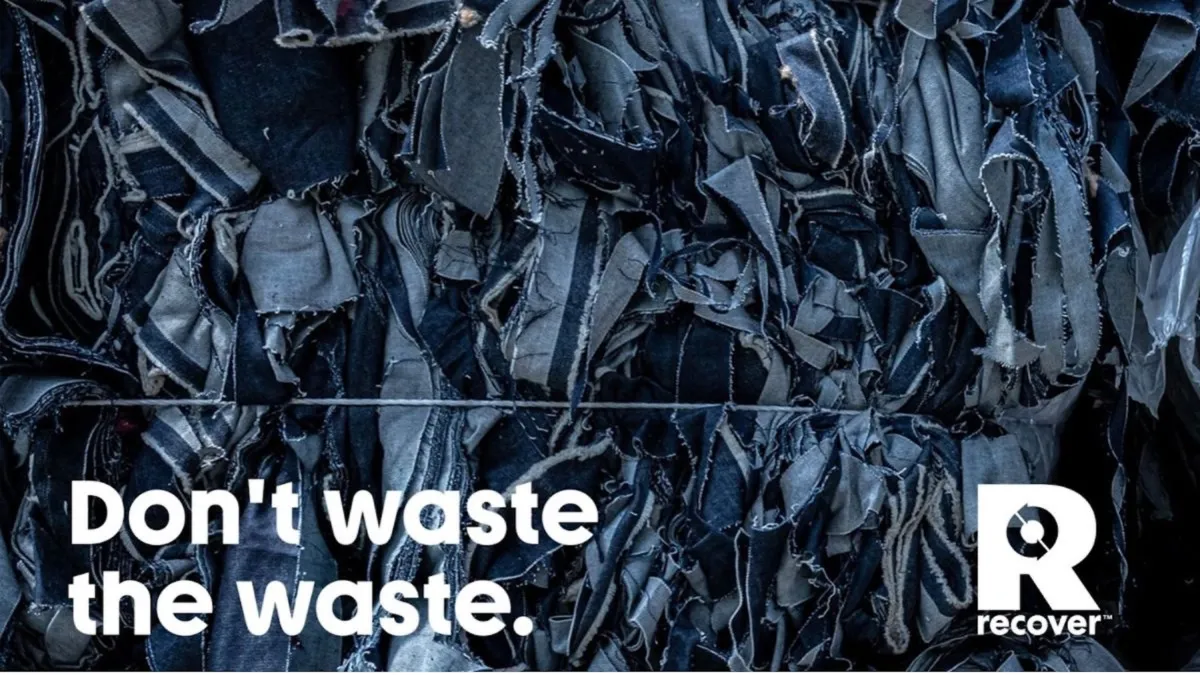
Recover, the fiber producer focused on circular textile solutions, launched its "Real" campaign to accelerate adoption of recycled cotton among major fashion brands. The company reports its recycled cotton was integrated into more than 200 million garments during 2025, a figure that underscores both the scalability of the technology and the market's readiness for sustainable alternatives.
The campaign positions Recover's recycled cotton not as a future concept but as an available, proven solution. By emphasizing "real" adoption rates and real production volumes, Recover challenges brands to move past sustainability rhetoric toward tangible action. The messaging directly counters the industry tendency to treat circular textiles as experimental or premium-tier options.
Recover's recycled cotton process takes pre- and post-consumer cotton waste and reprocesses it into virgin-quality fibers. Unlike virgin cotton production, which consumes massive quantities of water and pesticides, recycled cotton dramatically reduces environmental impact while maintaining performance standards that major brands require. The 200-million-garment milestone demonstrates that production capacity no longer represents a bottleneck. Manufacturing exists. Supply chains function. Brands have access.
The "Real" campaign reflects a shift in sustainability messaging across the fashion industry. Early-stage sustainability initiatives focused on innovation and potential. Current campaigns emphasize implementation and scale. Recover's approach aligns with how major conglomerates now evaluate fiber solutions. LVMH, Kering, Inditex, and other giants no longer ask if circular textiles work. They ask why adoption rates remain uneven across their supply chains.
Recycled cotton occupies a distinct position within the circular economy hierarchy. Unlike polyester recycling, which often downgrades fiber quality with each cycle, cotton recycling preserves material integrity. Multiple recycling loops remain technically feasible. This positions recycled cotton as a long-term circular solution rather than a temporary bridge to innovation.
However, industry adoption patterns reveal persistent friction points. Cost premiums remain, though they have narrowed significantly. Supply concentration creates risk for brands seeking diversification. Some retailers still lack the visibility into their supply chains necessary to verify recycled content claims, a gap that invites greenwashing concerns.
Recover's emphasis on 200 million garments serves a strategic purpose beyond marketing. The volume statement establishes the company as a established player with proven manufacturing relationships. It signals to wavering brands that switching to recycled cotton no longer requires pioneering risk. Competitors already made the transition. Production infrastructure exists. Adoption became normalized.
The campaign also targets mid-market brands that possess less negotiating power than tier-one luxury houses. These brands often follow sustainability trends established by larger players but lack the resources to develop proprietary solutions. Recover's "Real" framing positions recycled cotton as the path of least resistance. Adoption becomes easier than maintaining status quo.
Market dynamics suggest momentum will continue. Raw material cost volatility, water scarcity in cotton-growing regions, and regulatory pressure on virgin fiber production all favor recycled cotton adoption. European legislation increasingly mandates due diligence on environmental impact. Extended producer responsibility schemes will soon force brands to account for end-of-life garment recovery.
Recover's campaign arrives at an inflection point. Recycled cotton transitioned from niche material to mainstream fiber supply. The industry's remaining question involves pace of adoption, not feasibility. Brands that commit now gain competitive positioning within regulatory frameworks that penalize virgin fiber dependence. The "Real" campaign effectively communicates this calculus to decision-makers still sitting on the fence.