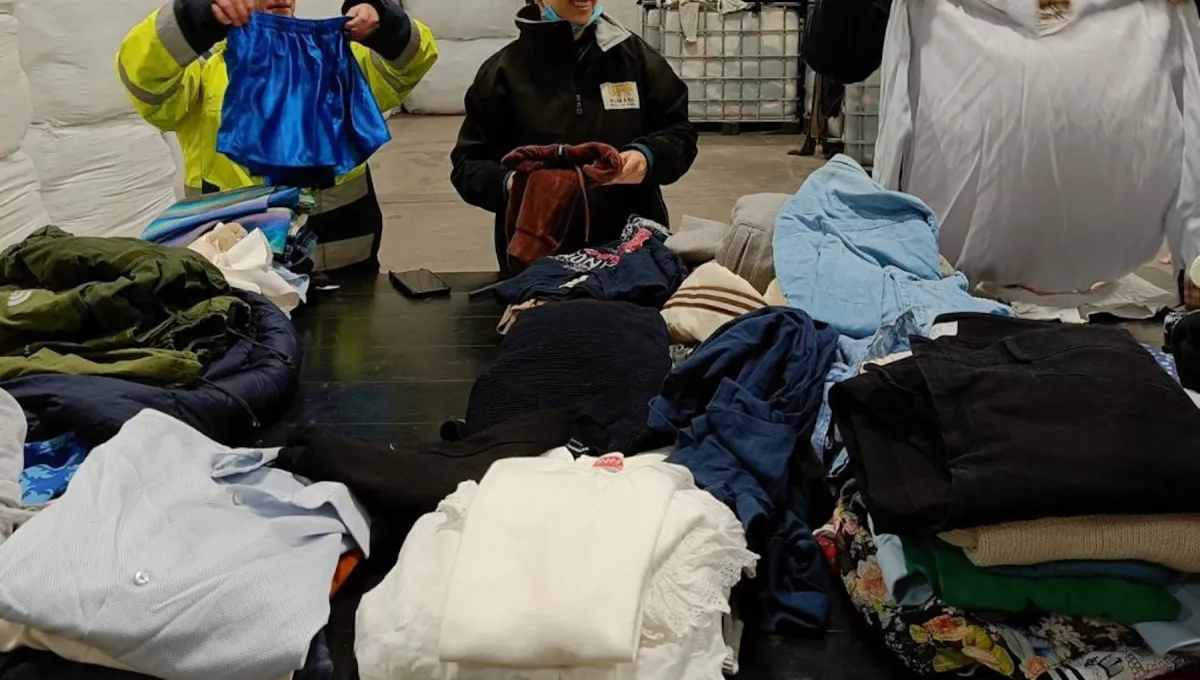
A new study from Eunomia Research & Consulting and Mepex tracking 200 discarded clothing items from five Nordic countries has exposed a troubling reality: European fashion companies have virtually no idea what happens to their exported garments once they leave sorting facilities. The research, which documented journeys across 23 countries, reveals that while 71 percent of tracked garments had their last recorded location in Europe—with Poland accounting for 30 percent and Slovakia for 18 percent—these locations represent only the beginning of a journey that often remains deliberately obscured. Exporters can identify their immediate buyers, but they have far less information about subsequent shipments, processing activities and final destinations. This opacity must end.
The study's findings paint a picture of a system designed to evade accountability. Researchers tracked items reaching secondhand clothing markets in Nigeria through Benin, despite Nigeria's prohibition on used clothing imports—a route that illustrates how easily garments slip through regulatory cracks. While the study did not directly document illegal dumping or environmental leakage at African or Asian endpoints, the difficulty of tracing garments through these networks speaks volumes about the current system's inadequacy. High labor costs mean Nordic countries export much of their collected textile material without sorting it domestically, instead relying on processing operations in Poland, Lithuania, Germany, Slovakia and Bulgaria. From there, clothing can pass through additional wholesalers, sorting operations and importing countries before reaching consumers—or landfills.
The quality disparity is particularly damning. Researchers found that 56 percent of Grade D garments—the lowest quality category—had their last recorded location outside Europe, compared with just 24 percent of Grade A garments. This pattern suggests lower-grade textiles are deliberately routed to markets in Africa and Asia, where oversight and environmental protections may be weaker. While the report acknowledges that seasonality, style and local preferences influence destination decisions, the concentration of reject-pile clothing in developing nations raises ethical questions about who bears the environmental and social costs of Europe's fast-fashion consumption.
The European Union's upcoming textile regulations present an opportunity to demand better. Under revisions to the Waste Framework Directive, member states must establish extended producer responsibility systems for textiles, and the EU's revised Waste Shipment Regulation will restrict waste exports to certain non-OECD countries beginning in 2027. These measures could force genuine accountability—but only if implemented with teeth. The researchers recommend clearer textile-quality classifications, stronger accountability for lower-grade exports and minimum standards for receiving facilities. Equally important is investment in Nordic sorting and recycling infrastructure and support for domestic secondhand markets.
Europe cannot simply export its textile waste problem and call it sustainable secondhand trade. As collection volumes rise and material quality deteriorates, the existing system will collapse under its own contradictions. Brands must invest in durability, repairability and domestic infrastructure rather than shipping difficulty to developing nations. Extended producer responsibility fees should reward longevity over volume. Without stronger downstream oversight and genuine accountability measures, increasing collection requirements will merely accelerate the movement of more problematic material through supply chains designed to obscure where it ultimately ends up—and who pays the price.