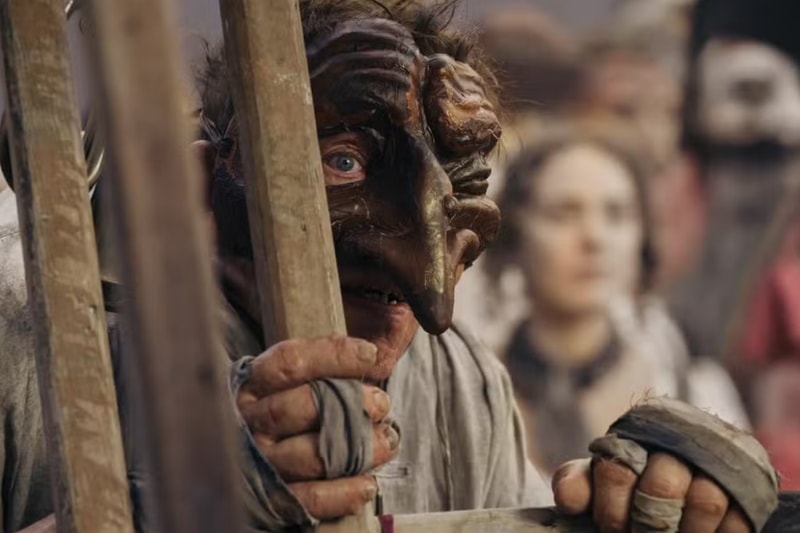
Vincent Cassel slips into the twisted frame of Victor Hugo's most haunted character for Netflix's ambitious period thriller "The Hunchback, Soul of Paris." Director Jean-François Richet constructs a grimy, visceral take on the classic novel, stripping away sentimentality for a darker historical reading set against 1830s Paris turbulence.
The first-look images released by Vanity Fair France reveal Cassel's physical transformation. His hunched posture, weathered makeup, and ragged costuming signal a departure from typical romantic interpretations of the source material. Richet, known for gritty crime dramas like "Mesrine" and "Night Call," brings his signature aesthetic to Hugo's gothic melodrama. This is not the Disney animated musical. This is Paris as a character unto itself: narrow alleys, stone facades, crowded squares where poverty and desperation collide with institutional power.
The casting of Cassel elevates the project's ambitions. The French actor carries credibility in morally complex roles, from his work in "Sheitan" to standout turns in prestige television. His Quasimodo appears less mascot and more outsider navigating a society built to reject him. The narrative focuses on the cathedral's bell-ringer as a gateway into examining class, disability, and social abandonment during a pivotal moment in French history.
Richet's filmmaking approach prioritizes authenticity over spectacle. Period films often collapse into costume pageantry, but the production design visible in these stills suggests textures over polish. The streets look lived in. The light feels natural. This grounds the story in material reality rather than fantasy. For Netflix, which has invested heavily in international prestige content, "The Hunchback, Soul of Paris" represents a statement of intent. The platform competes with theatrical releases by backing auteur-driven historical pieces that respect source material while reinterpreting it for contemporary audiences.
The November 27, 2026 release date positions the film as awards-season adjacency. Netflix continues mining classic literature for adaptations, following the strategy that yielded "The Diplomat," "Godless," and other period projects. Each offers fresh angles on canonical stories. "The Hunchback, Soul of Paris" stakes its claim on Hugo's novel by interrogating what it means to be monstrous in a monstrous society.
The production also reflects broader trends in European filmmaking. French cinema particularly has seen a resurgence of literary adaptations that foreground visual language over narrative convenience. Directors like Jacques Audiard and Maïwenn have repositioned classic texts as vehicles for formal experimentation. Richet follows this trajectory, treating Hugo not as untouchable source but as a blueprint for exploring 19th century trauma.
Cassel's casting further complicates easy readings. He brings neither pathos nor pity to the role. His presence suggests a man capable of complexity, rage, intelligence, and presence. Quasimodo becomes less sympathetic figure and more defiant inhabitant of margins. This reframing appeals to audiences fatigued by sentimentalized disability representation in mainstream media.
Netflix's global release ensures the film reaches across territories simultaneously. European prestige content now competes directly with American studio productions on the same platform, a shift that democratizes access while elevating production values for international narratives. "The Hunchback, Soul of Paris" exemplifies this evolution. It announces that Netflix recognizes value in locally rooted stories with universal resonance.