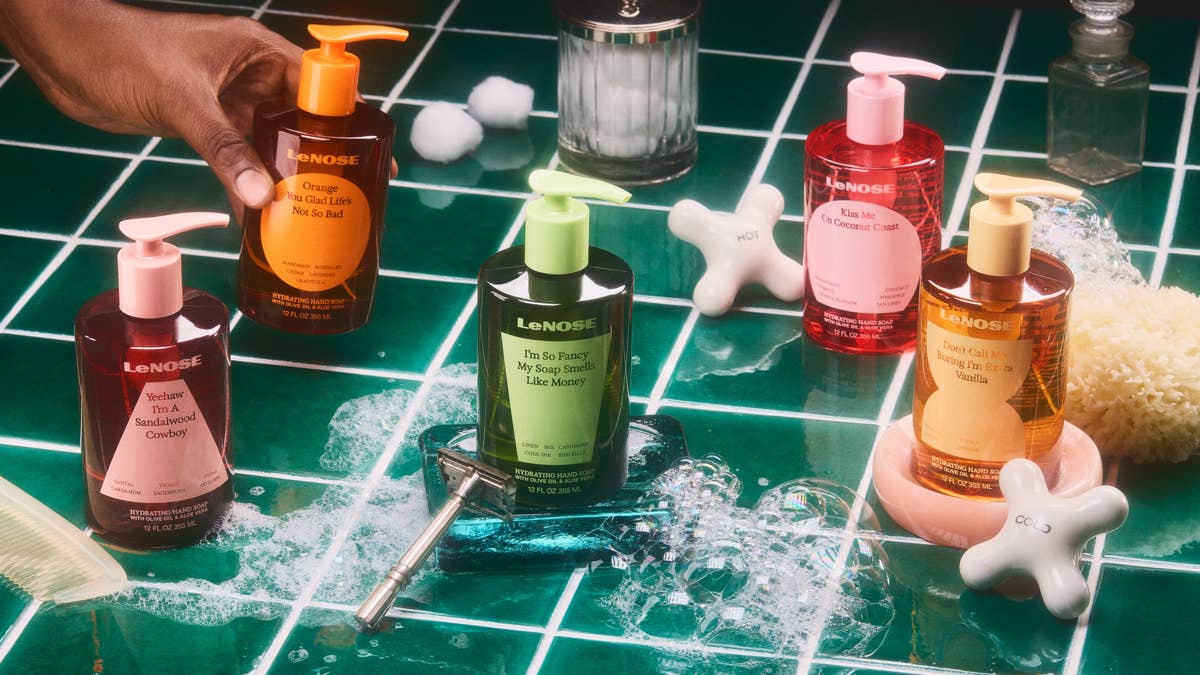
LeNose, a luxury hand soap brand with democratization on its mind, launches with an explicit mission to disrupt premium personal care by making high-end formulations accessible at non-luxury prices. The brand's chief marketing officer, Zee Carlstrom, frames this positioning clearly: "We want to create a world where everyone can have nice things."
This entry into the luxury soap market arrives at a moment when prestige personal care brands command premium margins on products that remain fundamentally utilitarian. Brands like Aesop, Diptyque, and Oskar pull triple-digit price points for hand soaps that many consumers view as lifestyle upgrades rather than necessities. LeNose challenges this calculus by bundling sophisticated fragrances and high-performance ingredients into a product priced for the mainstream market.
The hand soap category has shifted considerably in recent years. Once dominated by functional drugstore staples, it evolved into a status category fueled by social media aesthetics and bathroom styling trends. Influencers and design-forward consumers curate sink displays as carefully as they style shelving. Luxury soap brands capitalized on this visual culture, positioning themselves as design objects and fragrance experiences rather than mere cleansing tools.
LeNose enters this landscape by targeting the gap between mass-market commodity soaps and luxury gatekeeping. This mirrors broader retail patterns where brands like Affordable Luxury and direct-to-consumer models have successfully compressed margins on prestige goods. The strategy works when brands maintain quality benchmarks while eliminating traditional wholesale markups and excessive packaging costs.
The brand's messaging around accessibility reflects shifting consumer values, particularly among Gen Z and younger millennials who reject the exclusivity premise of traditional luxury. They demand transparency about pricing and ingredient sourcing. They want status through taste rather than scarcity. LeNose's philosophy aligns with this mentality. By removing the luxury price barrier without diluting product quality, the brand positions itself as values-aligned rather than aspirational.
Product formulation matters in this category. Luxury hand soaps differentiate through rare fragrance notes, botanical extracts, and skin-conditioning ingredients. LeNose's approach likely emphasizes these elements while using efficient supply chain management and digital-first distribution to keep costs down. Many luxury soap brands rely heavily on retail partnerships that add layers of markup. Direct-to-consumer models and selective retail placements allow brands like LeNose to maintain margins while undercutting traditional luxury pricing.
The competitive landscape includes not just standalone soap brands but also prestige beauty conglomerates entering the hand care space. Brands under LVMH, Estee Lauder Companies, and Coty portfolios see hand soap as an entry point to customer relationships and lifetime value. LeNose's nimbleness as an independent challenger brand offers advantages in speed to market and brand authenticity.
Distribution strategy will determine LeNose's success. Retail partnerships at mid-tier beauty retailers, online marketplaces, and the brand's own e-commerce site create multiple touchpoints without relying on luxury gatekeepers like Sephora or Saks. This multi-channel approach expands accessibility while maintaining brand control.
The hand soap market continues expanding as consumers invest in home rituals and self-care routines. LeNose taps into this growth while repositioning luxury as inclusive rather than exclusive. The brand's core claim remains straightforward. Quality personal care products should not require wealth to access. That philosophy, executed properly, represents genuine disruption in a category built on scarcity and exclusion.