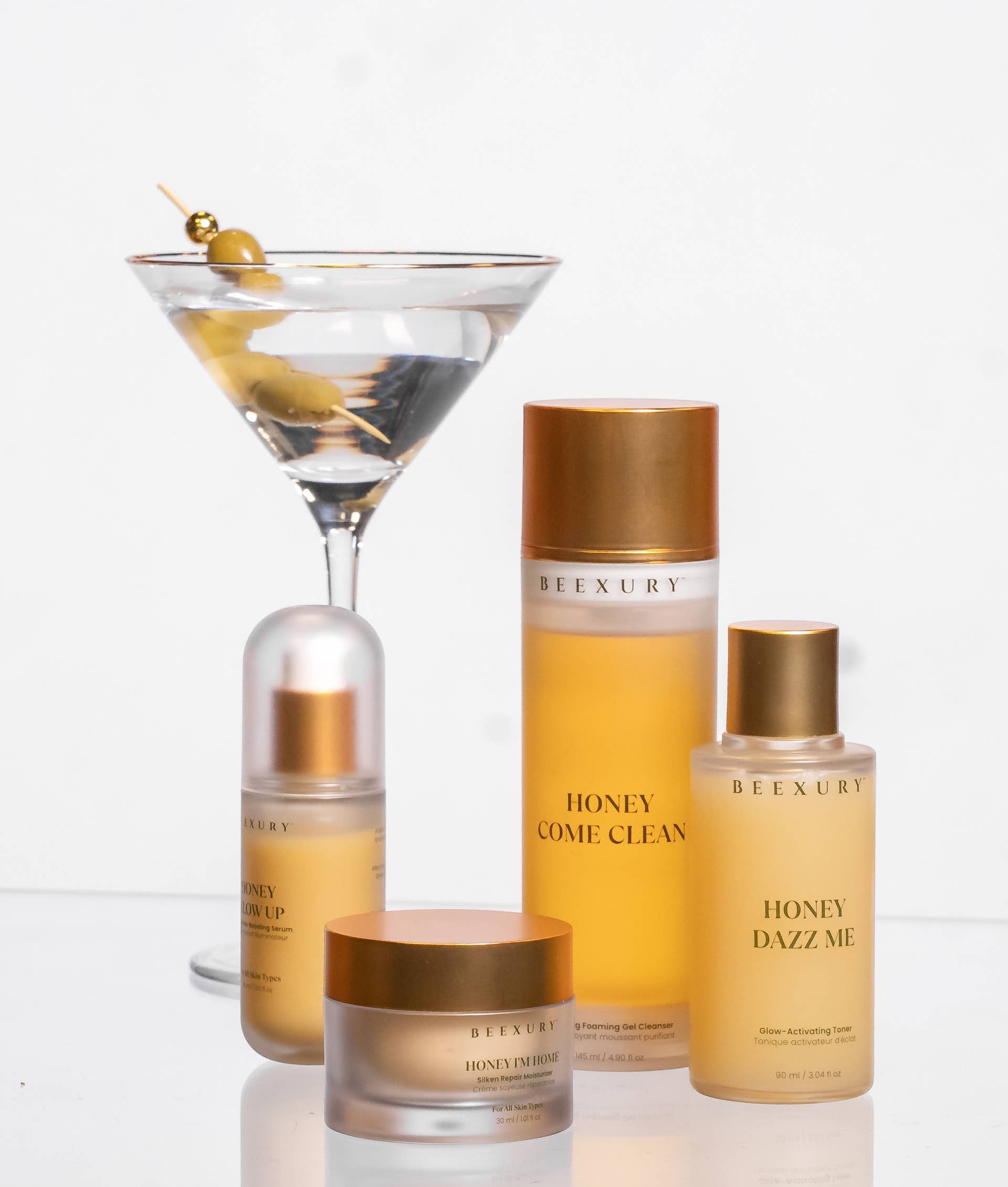
Daniella Bien Aimé launches Beexury, a luxury skincare brand anchored in bee-derived actives and Korean beauty science. The collection centers on honey, propolis, and beeswax as core ingredients, positioning the brand within the broader movement toward ingredient-transparency and natural efficacy in prestige skincare.
The four-product routine reflects Bien Aimé's research into Korean skincare methodology, which emphasizes layering hydrating essences and serums before occlusive moisturizers. This approach differs from Western skincare's traditional cleanser-moisturizer model. Korean beauty has dominated global skincare conversation for nearly a decade, shifting consumer expectations toward multi-step regimens and ingredient education.
Honey and propolis occupy a unique position in skincare formulation. Honey functions as a humectant, drawing moisture into skin. Propolis, the resinous mixture bees produce to seal their hives, contains antioxidants and antimicrobial compounds. Beeswax acts as an occlusive, trapping hydration. Together, these ingredients appeal to consumers seeking efficacy backed by both traditional apiculture knowledge and modern cosmetic science.
Beexury's entry arrives amid a luxury skincare consolidation toward botanical and bio-based actives. Brands like Augustinus Bader, La Roche-Posay, and SK-II have monetized ingredient stories effectively, commanding premium pricing through transparency and scientific validation. The honey-skincare category itself has expanded beyond indie brands into mainstream beauty: Tatcha incorporates honeycomb extract, while Augustinus Bader references botanical fermentation in its messaging.
Bien Aimé's timing capitalizes on two industry shifts. First, consumers increasingly distrust synthetic preservatives and prefer clean-label claims, even within luxury. Second, Gen-Z shoppers research ingredients before purchase. Glossy's 2023 beauty trend report found 62 percent of consumers aged 18-24 read ingredient lists. A brand built entirely around a recognizable active ingredient solves both concerns.
The sustainability narrative extends Beexury's appeal. Ethical beekeeping ties skincare to environmental stewardship, differentiating the brand from competitors relying on synthetic fermentation or lab-created alternatives. However, this claim requires scrutiny; the industrial beekeeping sector has faced criticism over colony health and pesticide exposure. Luxury skincare brands promoting bee-derived ingredients should disclose sourcing practices and beekeeping standards to maintain credibility.
Beexury positions itself within the $50,000 to $300,000 annual revenue tier typical of emerging prestige skincare. Distribution strategy will determine scale. Direct-to-consumer models dominate new beauty launches, offering margin advantage and consumer data collection. Beexury's initial positioning as a four-product routine encourages basket-building and higher average order values compared to single-product sales.
The brand faces competition from established players who already integrate honey into formulations. What Beexury offers is narrative cohesion. A consumer buying into the bee-centric story purchases not just products but a lifestyle choice aligned with natural beauty and environmental consciousness. This storytelling layer often justifies luxury pricing more effectively than ingredient quality alone.
Beexury's success hinges on execution and supply chain transparency. If Bien Aimé communicates sourcing, efficacy testing, and beekeeping partnerships clearly, the brand can build a loyal customer base. The Korean beauty methodology already carries prestige among skincare enthusiasts, lending credibility to Beexury's multi-step approach. The honey-propolis-beeswax story resonates with contemporary beauty values. Whether Beexury sustains relevance beyond the launch honeymoon depends on product performance and whether consumers perceive genuine differentiation or merely a repackaging of familiar ingredients with premium positioning.