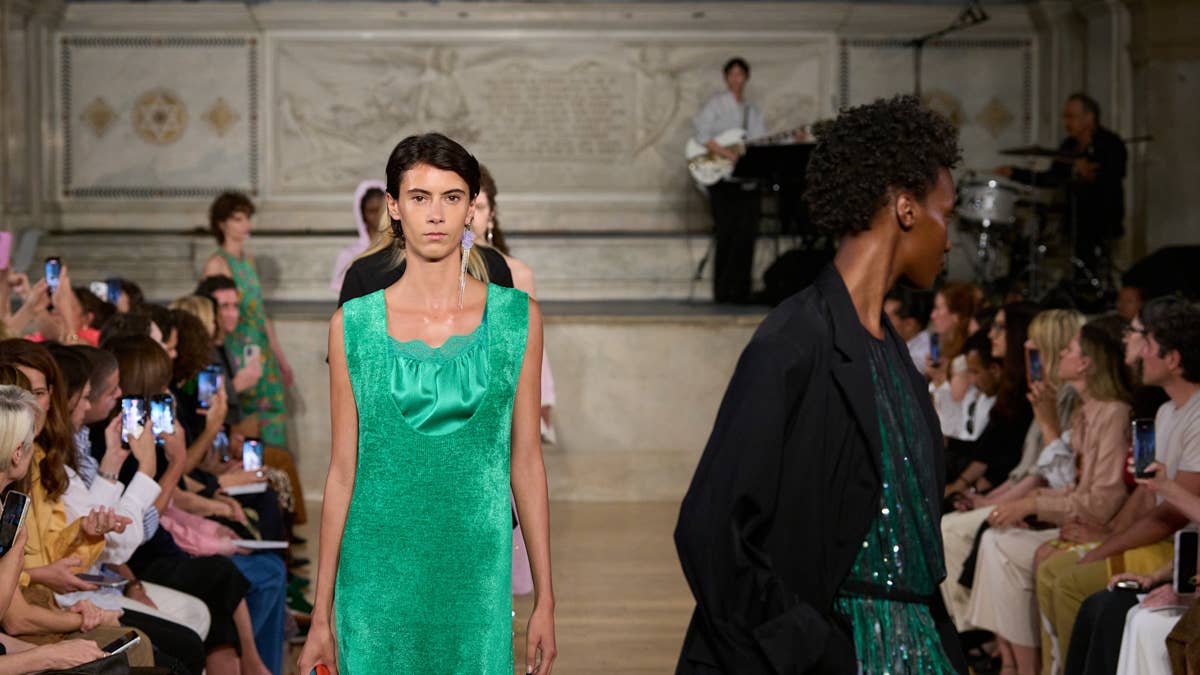
Rachel Comey closed out New York Fashion Week with a collection that blended high art, pop culture, and tactile indulgence into one cohesive vision. The designer's Spring 2027 offering marked the brand's 25th anniversary, and Comey chose to honor the occasion by channeling the legacy of Rosalyn Drexler, the late New York City creative, Emmy-winning writer, and professional wrestler who embodied creative fearlessness across multiple disciplines.
Drexler's dual identity as both artist and athlete became the conceptual spine of the collection. The wrestler persona introduced an unexpected athleticism to Comey's typically architectural silhouettes. Pieces featured wrestling-inspired elements rendered in luxe fabrications, subverting the rough-and-tumble associations of the sport through Comey's refined construction methods. Graphic prints nodded to vintage wrestling promotional materials, while structured shoulders and body-conscious cuts evoked the physicality Drexler commanded both in and out of the ring.
The chocolate motif offered visual and sensory counterpoint. Models carried handbags designed to resemble chocolate bars, complete with wrapper-inspired detailing and rich brown colorways that dominated the palette. This playful literalism marked a departure from Comey's typically minimal aesthetic, suggesting the designer wanted to explore joy and whimsy alongside the collection's more conceptual underpinnings. The handbag moment became instantly Instagrammable, positioning Comey's archive designs as objects of desire beyond their architectural merit.
Drexler's written work, which often explored identity and gender performance, informed the collection's tonal complexity. Comey has long operated in the space where structure meets subversion, and this collaboration of inspiration allowed her to push further into that territory. The collection balanced femininity with aggression, luxury with play, high art with popular entertainment. Nothing felt tongue-in-cheek or ironic, though the juxtapositions invited viewers to question the boundaries between these categories.
The 25th anniversary milestone carries weight in the designer landscape. Comey built her reputation on innovative tailoring and conceptual rigor without sacrificing wearability, a balance many emerging designers fail to strike. This collection demonstrated maturity without complacency. The wrestling references never felt gimmicky, and the chocolate accessories worked because they expressed personality rather than novelty.
For the broader industry, Comey's celebration of Drexler signals the fashion world's deepening engagement with female creative legacies beyond traditional fashion gatekeeping. Drexler moved fluidly between visual art, literature, performance, and sport. Her refusal to stay in one lane becomes increasingly relevant as contemporary design embraces interdisciplinary thinking. By centering Drexler, Comey affirmed that fashion history extends far beyond runway archives into the lives of women who worked across mediums.
The collection arrives as New York Fashion Week continues to reckon with its relevance in an era of direct-to-consumer brands and social media bypassing traditional gatekeeping. Comey's approach, which combined conceptual depth with accessible visual storytelling, offered a blueprint for how established designers can remain vital. The chocolate bags will move units. The tailoring will endure.