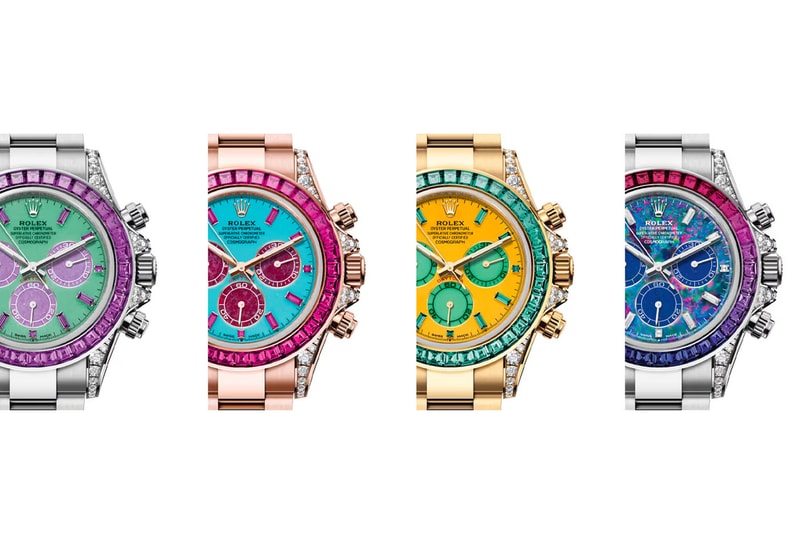
Rolex enters the philanthropic auction market with a strategically curated collection of one-of-a-kind timepieces. The watchmaker will offer four custom Gem-Set Cosmograph Daytona watches, each inspired by a different season, through Phillips Auction House in London. The collection pairs precious metal cases with colored gemstone dials, trapeze-cut sapphires, and diamond-set lugs tailored to evoke spring, summer, autumn, and winter aesthetics.
This move represents a calculated pivot for Rolex. The Swiss manufacturer rarely produces gem-set variations of its most coveted sports chronographs, making these pieces instantly desirable within collector circles. The Cosmograph Daytona itself commands astronomical secondary market prices, often exceeding retail by 300 to 400 percent. Adding gemstone treatments and seasonal storytelling elevates these watches beyond functional instruments into art objects.
The auction benefits two high-profile charitable organizations. Proceeds support the Roger Federer Foundation, which focuses on education initiatives in Africa, and Re:Wild, Leonardo DiCaprio's conservation organization. The pairing of these causes with luxury watches reflects how the ultra-high-net-worth demographic now expects their acquisitions to align with social impact narratives. Celebrity involvement amplifies reach and legitimacy within luxury circles.
Rolex's approach here differs markedly from its typical commercial strategy. The brand maintains production secrecy and rarely engages in transparency around limited editions. Charity auctions offer a controlled mechanism to introduce experimental designs without cannibalizing retail channel relationships or signaling scarcity manufactured through traditional limited-edition drops. This particular auction also generates goodwill and media coverage that standard press releases cannot achieve.
The seasonal concept itself holds cultural weight. Luxury watchmakers increasingly adopt narrative frameworks to justify premium pricing and differentiation. Patek Philippe has explored similar thematic collections through its Aquanaut and Nautilus families. Cartier and Chopard incorporate storytelling around gemstone selection. Rolex positions these Daytonas within a holistic brand vision rather than purely technical specifications.
Collectors respond predictably to authenticated rareness. The "one-of-a-kind" designation matters enormously in the secondary market where watches become alternative investments. Ownership records, provenance tied to charity, and gemstone certifications from recognized labs add investment legitimacy. Phillips handling the sale adds institutional credibility that specialist watch auction houses provide.
The trapeze-cut sapphires merit attention. This specific cut, historically associated with vintage Cartier and Patek Philippe sports watches, signals design sophistication. Trapeze cuts require more stone material and precision than standard brilliant cuts, driving production costs higher. The choice reflects knowledge of horology history and appeals to seasoned collectors who understand cuts beyond basic aesthetics.
Diamond-set lugs represent functional compromise. Standard Daytona lugs secure the bracelet. Adding diamonds creates maintenance challenges, potential loosening over time, and service complications. That Rolex accepted these trade-offs suggests the pieces prioritize collectibility over practical wearability, positioning them squarely in the investment art category rather than tool watch category.
The auction timing matters. Luxury goods face macroeconomic headwinds, yet ultra-rare timepieces maintain value. High-net-worth individuals seek alternative assets. Watch collecting has matured into institutional practice, with dedicated investment funds now acquiring vintage and rare pieces. Rolex's entry into this space validates the market while maintaining the brand's exclusive positioning.