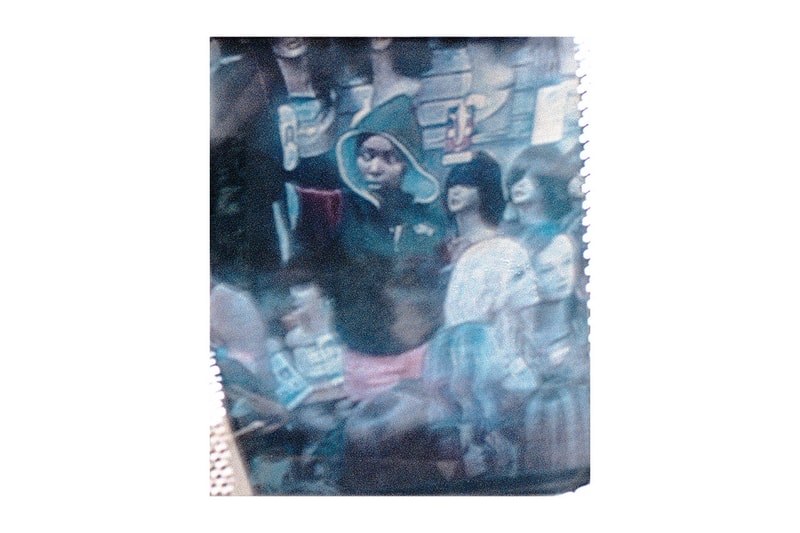
Deana Lawson stages her inaugural solo exhibition at Gagosian's New York flagship location, marking a significant milestone for the photographer known for her unflinching examination of Black life, identity, and surveillance. The show opens September 10 and runs through October 24, 2026, at the gallery's 541 West 24th Street location in Chelsea.
The exhibition debuts "Edge Control," a new series that recontextualizes surveillance footage captured inside beauty supply stores. Lawson transforms what originated as mundane security camera stills into luminous, mirror-framed photographs that interrogate the politics of watching and being watched. The title itself references a hair care staple, anchoring the work in everyday Black experience while maintaining Lawson's trademark critique of systems designed to monitor and control.
Lawson has built a formidable reputation over the past decade through work shown at major institutions including MoMA, the Guggenheim, and the Whitney. Her photographs operate at the intersection of portraiture, surveillance, and social commentary. She stages intimate scenes of domestic and communal life, often placing her subjects in states of vulnerability or transition. Her practice refuses sentimentality while demanding viewers confront their own gaze.
The Gagosian partnership elevates Lawson into the gallery's roster of contemporary heavy hitters. Gagosian represents artists across mediums and contexts, from painting and sculpture to photography and installation. By hosting Lawson's debut New York solo at the gallery, Gagosian positions her within a lineage of artists engaged in formally rigorous and politically engaged practice.
The "Edge Control" series speaks directly to current conversations around surveillance capitalism and algorithmic control. Beauty supply stores occupy a particular space in the American retail landscape, existing as cultural anchors within Black communities while simultaneously functioning as spaces of surveillance and transaction. Lawson's reframing of security footage as gallery object transforms the quotidian into the ceremonial.
The exhibition includes mirror-framed photographs, glass holograms, and large-scale portraits. Mirror framing adds a reflective dimension that implicates viewers in the act of looking. Holograms introduce three-dimensional data into still photography, suggesting how digital infrastructure shapes contemporary image-making. Large-scale portraiture returns focus to the human subject, ensuring individual faces and bodies anchor the conceptual framework.
Lawson's work arrives at a moment when photography's relationship to documentation, truth, and witness remains contested. Her practice resists photojournalism's claims to objectivity while refusing the art world's historical whitewashing of Black photographers' labor. Instead, she constructs a visual language that acknowledges both the camera's capacity to reveal and conceal.
The September opening positions "Edge Control" for fall art season momentum, with potential crossover between Gagosian's established collector base and emerging audiences interested in photography-based practice. The four-week run allows for multiple viewings while maintaining scarcity.
Lawson's representation by Gagosian signals the gallery's continued investment in photographers working at the intersection of aesthetics and politics. Her work demands sustained looking and refuses easy consumption, qualities that distinguish serious artistic practice from market decoration.