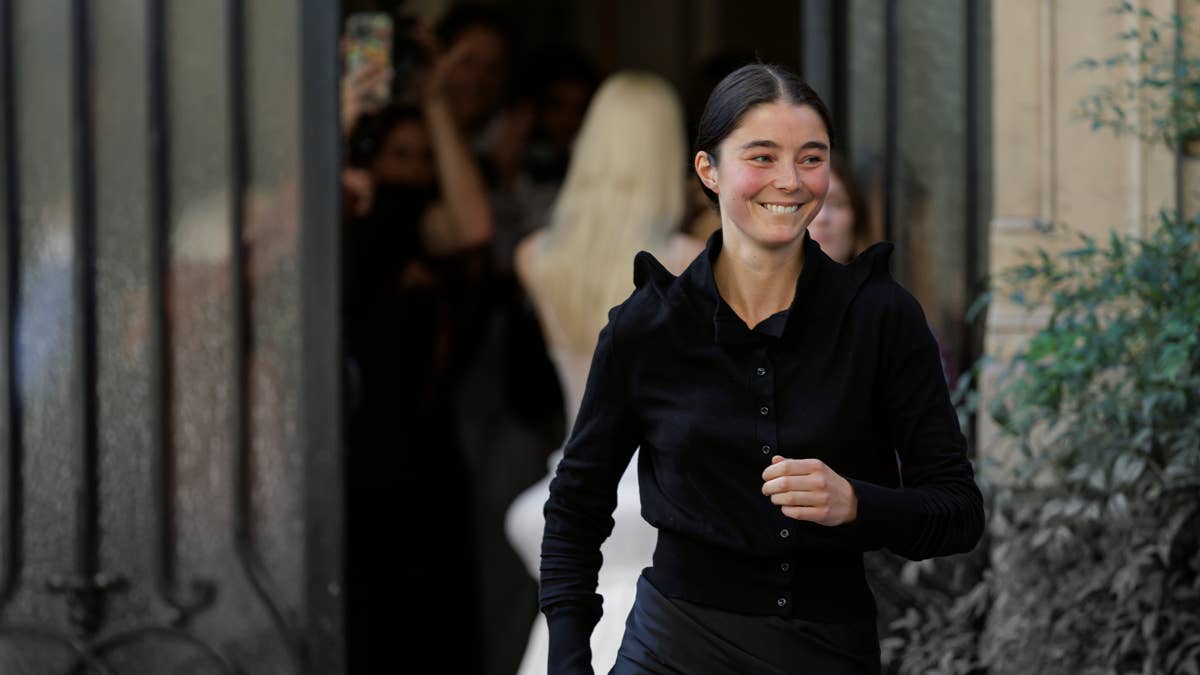
Julie Kegels has secured the 2026 LVMH Prize for Young Fashion Designers, cementing her emerging label as one of the industry's most promising voices. The Belgian designer wins the biennial award alongside a 300,000 euro prize and a year-long mentorship program embedded within the LVMH organization. Kegels joins a lineage of previous winners who have leveraged the prize into global visibility and wholesale acceleration, including Jacquemus, The Row, and Marine Serre.
Kegels' win arrives at a moment when the prize carries heightened weight. LVMH has intensified its scouting of emerging talent as luxury conglomerates race to identify designers before they reach oversaturation in the market. The prize serves dual purposes for LVMH: it functions as a talent pipeline and a public relations mechanism that positions the group as a patron of creative innovation. For Kegels, the mentorship structure offers direct access to LVMH's supply chain, manufacturing expertise, and distribution networks across the group's portfolio brands including Celine, Dior, and Givenchy.
Separately, Oura, the Finnish health-tech company behind the signature smart ring, filed for an initial public offering. The move signals growing investor appetite for wearable technology beyond traditional smartwatches and fitness trackers. Oura's trajectory reflects a broader market shift where luxury brands increasingly view tech integration as essential rather than novelty. The company's IPO filing opens questions about how fashion houses like Apple, Samsung, and emerging designer collaborators will position smart jewelry within luxury positioning.
The timing intersects with broader luxury market consolidation. Lululemon cut its full-year outlook and announced a leadership transition as its CEO Calvin McDonald steps aside. The athletic wear brand faces margin pressure from inventory corrections and shifting consumer spending patterns across North America. Lululemon's struggle echoes challenges facing other premium casual wear brands that rode pandemic-era demand surges but now confront normalized buying patterns and heightened competition from fast-fashion players upgrading their quality perception.
McDonald's departure signals board confidence issues tied to execution, not strategy. Lululemon dominated athleisure through vertical retail control and direct-to-consumer strength, but leadership transitions in premium sectors often precede strategic pivots. The brand must recalibrate pricing power while maintaining its community-driven positioning.
These three developments sketch the current luxury landscape: talent acquisition accelerating, technology integrating deeper into fashion infrastructure, and premium casual wear confronting margin reality. Kegels' LVMH Prize win represents the old model of designer discovery and vertical integration. Oura's IPO embodies the new model where fashion and health technology converge. Lululemon's stumble illustrates the danger of executing yesterday's playbook in today's market.
The LVMH Prize remains the industry's most coveted young designer award, but its winners increasingly face pressure to scale responsibly while maintaining design integrity. For Kegels, the next twelve months will determine whether she leverages LVMH's infrastructure to build brand equity or becomes absorbed into the conglomerate's machinery like countless predecessors.