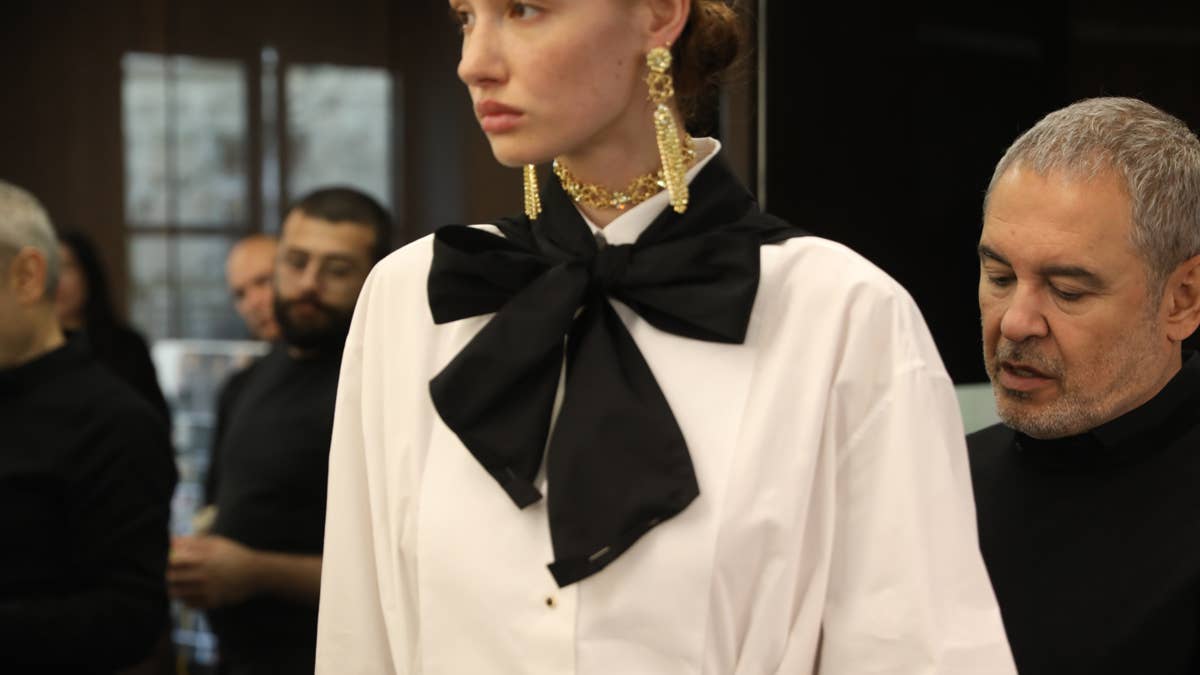
Elie Saab, the Lebanese couturier known for dressing A-list celebrities on the world's most prestigious red carpets, enters the mass market with an unexpected partnership. H&M will launch a 54-piece Elie Saab collection designed to democratize the luxury evening wear that has defined his 40-year career.
The collection marks a strategic shift for Saab, whose atelier has built its reputation on intricate beadwork, dramatic silhouettes, and six-figure price tags. Evening gowns starting at $39.99 represent a radical departure from his typical clientele of Hollywood actresses and royalty. This move aligns with a broader industry trend where established luxury designers seek growth through accessible diffusion lines. Balmain's collaboration with H&M in 2015 and Givenchy's partnership with Target set precedent for this strategy.
Saab's design philosophy requires translation for the democratized format. His signature techniques, from hand-sewn sequins to delicate embroidery, cannot transfer directly to mass production economics. The collection instead channels the essence of his aesthetic: volumetric skirts, metallic embellishments, and the romantic drama his brand promises. H&M's technical teams will engineer affordable fabrications and construction methods that capture visual impact without couture-level precision.
The price point signals H&M's confidence in Saab's name recognition among fashion-conscious consumers at multiple income levels. A $39.99 entry price for a gown bearing his signature represents extraordinary value compression. Mid-range pieces likely hover between $60 to $150, positioning the collection as attainable luxury rather than fast fashion. This pricing mirrors Saab's own diffusion line strategy, where secondary collections maintain brand prestige while expanding market reach.
Timing matters. The collection arrives as evening wear demand climbs post-pandemic, with consumers resuming events and celebrations. H&M itself has shifted strategy toward designer collaborations and quality-focused basics, moving away from the throwaway trend cycles that defined its early 2000s dominance. The Saab partnership reinforces this repositioning.
Saab's influence spans decades of red-carpet moments. His impact on contemporary bridal and evening wear aesthetics remains unmatched among Middle Eastern designers operating in the luxury sphere. His atelier dressed celebrities including Beyoncé, Audrey Hepburn, and countless Academy Award attendees. That cultural capital transfers to H&M's 73 million Instagram followers, introducing a new generation to his design language.
The collection reflects broader democratization within luxury fashion. Exclusive access no longer defines prestige as intensely as it once did. Gen Z consumers, who constitute H&M's core demographic, value brand heritage and design authorship over price gatekeeping. A $79 Elie Saab dress carries storytelling power that justifies purchase in ways generic fast fashion cannot.
For Saab, the collaboration expands revenue streams beyond his core couture business while building brand awareness in markets where luxury penetration remains limited. H&M gains a legitimate heritage designer name that elevates its positioning. The partnership transforms both entities: Saab reaches buyers he would never access through his atelier, while H&M claims credibility in the evening wear category.
The collection launches globally, available both in stores and online. This represents a full-scale democratization moment for one of fashion's most uncompromising evening wear architects.