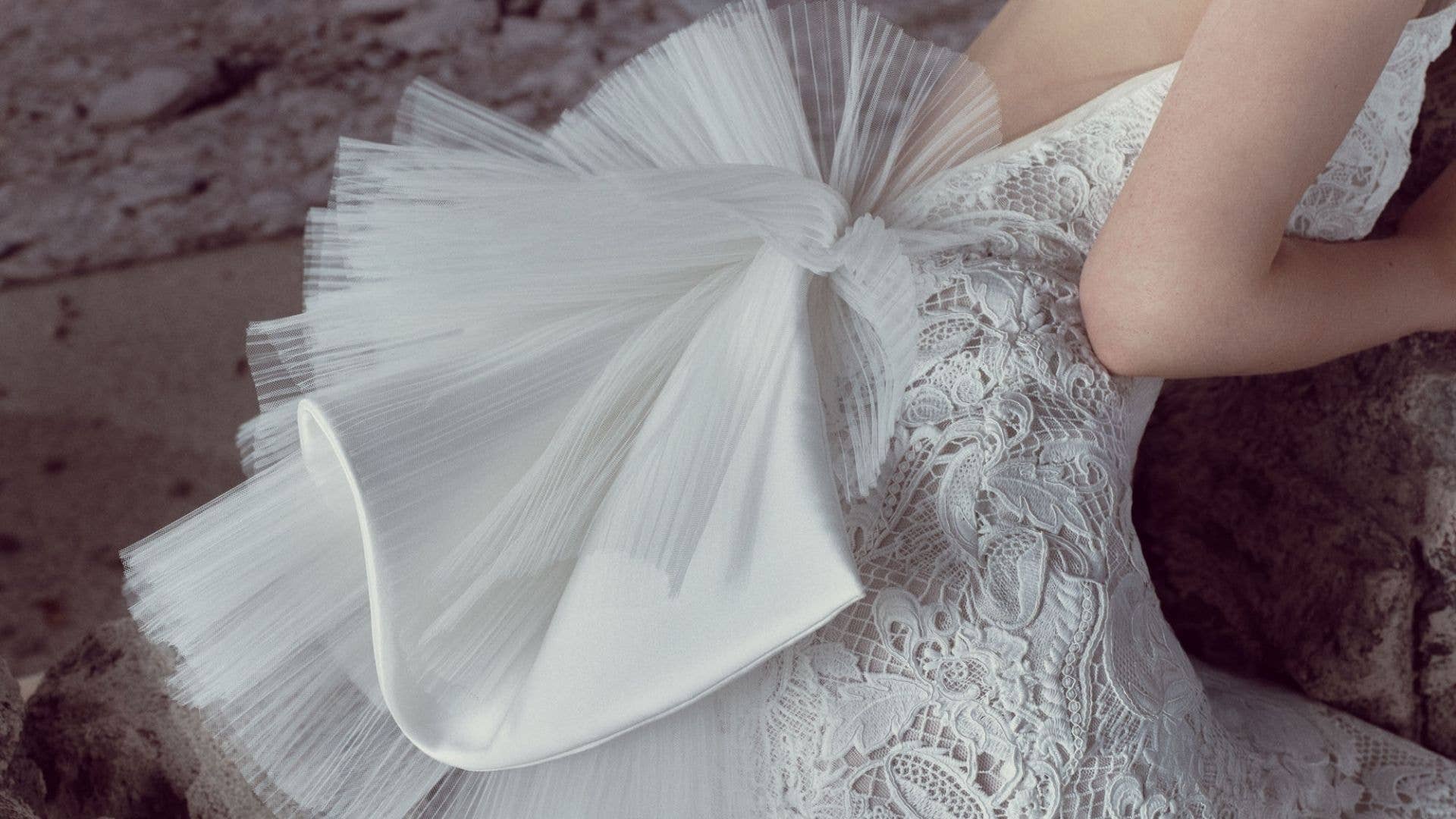
Rita Vinieris operates in a bridal market that has shifted dramatically over the past three decades. The founder's three-decade tenure in wedding dress design positions her as a veteran observer of evolving tastes, from the maximalist princess silhouettes of the 1990s to today's preference for restrained elegance and architectural construction.
The brand's positioning around "couture-level craftsmanship" reflects a broader luxury bridal trend. Vinieris eschews heavy beading, excessive lace, and dramatic embellishment in favor of precision tailoring, premium fabrics, and understated ornamentation. This approach aligns with contemporary brides who view wedding dresses as investment pieces rather than costume moments. The minimalist ethos that dominates high fashion now extends to bridal, where clean lines and exceptional construction command higher price points than ornament-heavy designs.
Vinieris's longevity in the category matters. While established bridal houses like Vera Wang and Oscar de la Renta's bridal line have maintained legacy status through consistent aesthetic refinement, newer entrants often chase Instagram-friendly spectacle. A 30-year track record suggests the brand has survived multiple cycles of trend volatility, economic downturns, and changing consumer preferences. This endurance indicates either deep customer loyalty or a design philosophy resilient enough to transcend seasonal fashion noise.
The emphasis on understated adornments speaks to a maturation within luxury bridal. Major fashion houses including Valentino, Gucci, and Dior have all elevated their bridal offerings in recent years, treating wedding collections with the same design rigor as ready-to-wear. This has pressured independent bridal brands to articulate distinct value propositions. Vinieris's couture-level construction narrative positions the brand in conversation with bespoke ateliers rather than mass-market wedding retailers.
The market context matters here. The bridal industry has fractured considerably. At one end, mass retailers like BHLDN and David's Bridal have democratized access through affordable options. At the other, ultra-luxury houses command four and five-figure price tags. Independent designers like Vinieris occupy the middle-luxury space where craftsmanship becomes the primary differentiator. Brides in this segment value meticulous hand-finishing, advanced pattern-making, and fabric selection over logo prominence or celebrity endorsement.
The understated aesthetic also reflects changing cultural attitudes toward weddings themselves. Gone is the era when bigger, more ornate, and more visible meant better. Today's luxury consumer values discretion. A bride in a Vinieris gown signals sophistication through restraint rather than proclamation. The dress becomes an extension of personal style rather than a costume for a single day. This shift has created space for brands that reject the "fairy tale fantasy" positioning that long dominated bridal marketing.
Rita Vinieris's brand philosophy aligns perfectly with how luxury currently operates across fashion. Minimalism in construction paired with maximalism in price reflects the industry's current reality. When construction and craftsmanship dominate the value proposition, brands can justify premium positioning without relying on trend-chasing or celebrity visibility. For a designer with three decades of experience, consistency in execution and philosophy has become an asset. The bridal market continues evolving toward quality over spectacle, and Vinieris operates from a position of established credibility within that evolution.