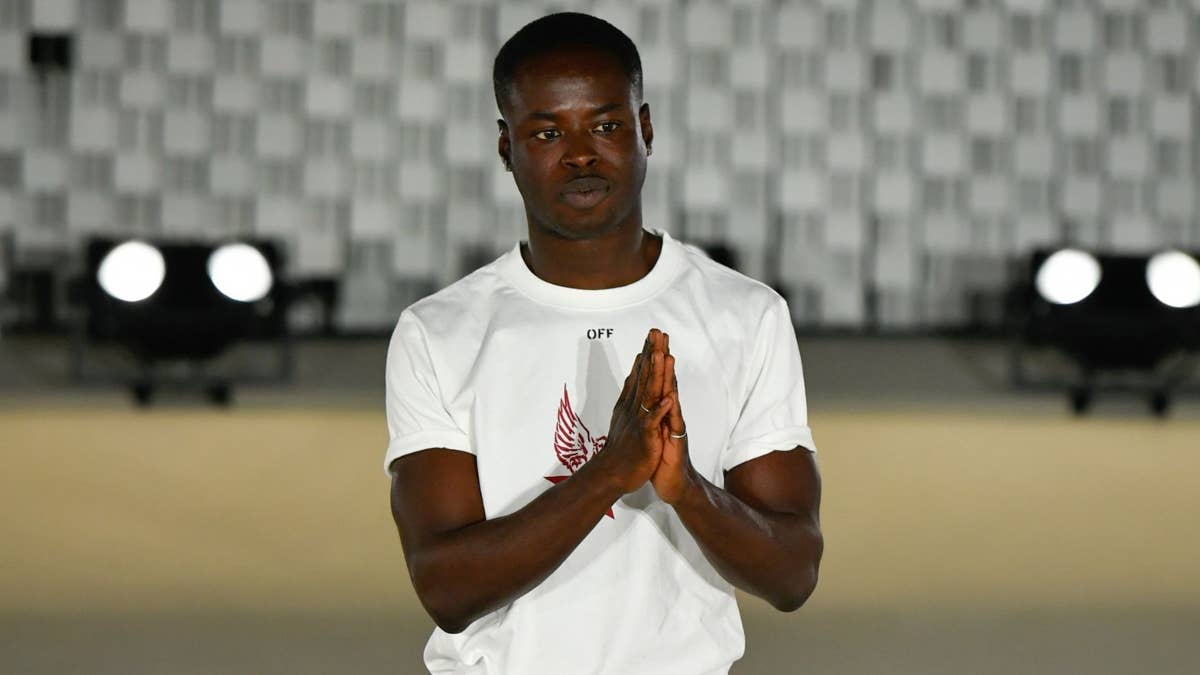
Ib Kamara has stepped down as creative director of Off-White, ending a two-year tenure steering the house left vacant by the death of founder Virgil Abloh in November 2021.
Kamara arrived at the Milan-based luxury brand in 2022 as the figure tasked with shepherding Off-White through its most vulnerable period. His appointment came nine months after Abloh's passing, a moment that tested whether the label could survive without its visionary founder. The 32-year-old designer, known for his editorial eye and work as menswear creative director at Dior, carried substantial expectations. He needed to honor Abloh's legacy while charting a new course.
The exit marks a turning point for a brand built on a single creative vision. Off-White, founded in 2012, became synonymous with Abloh's vocabulary of quotation marks, industrial straps, and the collision of streetwear with high fashion. His fingerprints remained everywhere: the signature diagonal lines, the logo treatments, the conceptual rigor wrapped in accessible design. Kamara inherited not just a creative role but the burden of proving the brand could transcend its founder.
During his time, Kamara introduced a warmer sensibility to Off-White's austere aesthetic. He leaned into tailoring, softened color palettes, and explored more narrative-driven collections. Reviews were mixed. Some applauded his sensitivity and refinement. Others questioned whether Off-White risked losing the edge that defined Abloh's work. The collections showed promise but never achieved the cultural moment that might have cemented Kamara's vision as the definitive next chapter.
The departure raises urgent questions about Off-White's trajectory. Parent company Sotheby's parent EssilorLuxottica holds the brand, positioning it within a constellation of luxury houses. Unlike a founder-led business, Off-White operates within corporate structures that demand quarterly returns and strategic clarity. Kamara's exit suggests the company and its stewards may have disagreed on creative direction or commercial performance.
Succession at heritage houses remains notoriously difficult. Tom Ford rebuilt Gucci. Marc Jacobs helped steer Louis Vuitton. These examples succeeded because they brought distinct voices while respecting institutional memory. Kamara entered Off-White as an outsider replacing a legend, a nearly impossible equation. Two years proved insufficient to resolve the tension between reverence and reinvention.
The search for a new creative director will define Off-White's future. The brand must decide whether to hire someone trained in the Abloh school, someone who can excavate and extend his themes, or whether to embrace a complete aesthetic pivot. Each option carries risk. Loyalty to Abloh's vision risks calcification. Radical departure risks alienating the customer base built on his DNA.
Off-White occupies a strange space in luxury. It sits between streetwear and high fashion, between accessibility and exclusivity, between intellectual rigor and wearability. Abloh's genius lay in balancing these contradictions. Finding that balance again demands not just talent but intuition about what Off-White is fundamentally meant to be in a world without its founder.