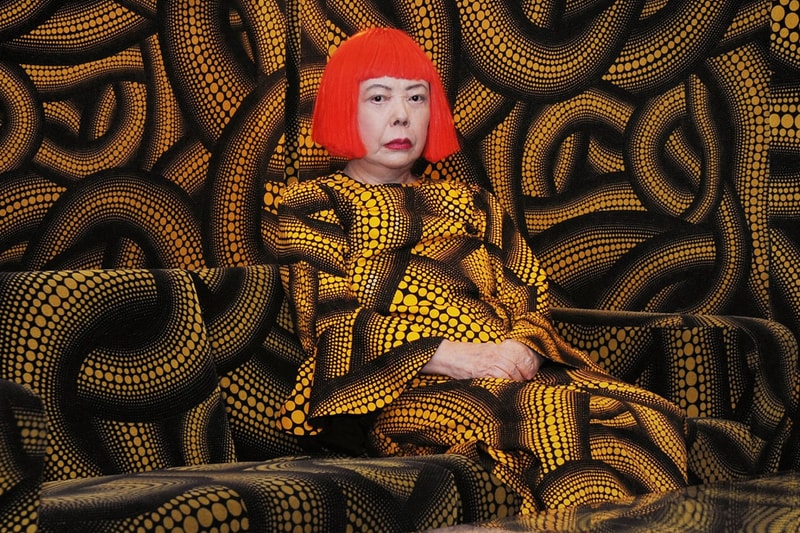
Yayoi Kusama, the visionary Japanese artist whose polka dots and immersive installations defined contemporary art for generations, died on August 14 at a Tokyo hospital. She was 97.
Kusama's death marks the end of an artistic career spanning more than seven decades. Her studio confirmed the passing on Thursday. The news closes a chapter on one of the 20th century's most recognizable and influential artists, whose work transcended gallery walls to shape how millions of people experience visual culture.
Born in Matsumoto, Japan in 1929, Kusama built an artistic practice rooted in her personal psychology. She channeled emotional and psychological experiences into a distinctive visual vocabulary that became instantly recognizable. Her signature elements, the obsessive polka dots and her iconic bright red bob hairstyle, functioned as both artistic signature and personal statement. The dots appeared in paintings, sculptures, installations, and fashion collaborations, each iteration expanding their meaning.
Her mirrored infinity rooms became pilgrimage sites for art audiences worldwide. These immersive spaces, filled with mirrored walls and suspended lights, created disorienting yet meditative experiences that dissolved boundaries between viewer and artwork. Museums from MoMA to the Guggenheim featured her installations. Long queues formed at galleries whenever a new Kusama exhibition opened, transforming contemporary art viewing into something approaching cultural ritual.
The pumpkins held equal weight in her practice. The sculptures appeared in photographs, videos, and major installations. They carried autobiographical resonance and emerged from her early drawing practice, which began in childhood as coping mechanism for psychological distress. Kusama's work functioned as visual therapy, transforming private struggle into public artwork.
Her influence extended into fashion and design beyond traditional art boundaries. Collaborations with brands and designers brought her aesthetic into streetwear and luxury markets. The polka dots appeared on clothing, accessories, and collaborations that made Kusama's visual language wearable, accessible, and commercially viable without sacrificing artistic integrity.
Late in life, despite health challenges that limited her physical mobility, Kusama continued creating from her studio in Tokyo. Her productivity never diminished. New works appeared regularly, maintaining the intensity and focus that defined her entire career. She became a symbol of artistic persistence and the power of personal vision maintained across decades.
Her impact on contemporary art remains immeasurable. Kusama influenced generations of artists working across sculpture, installation, painting, and interdisciplinary practice. She proved that art rooted in personal obsession and psychological depth could reach global audiences. Her work prefigured the contemporary art world's embrace of immersive experiences and viewer participation long before such concepts became industry standard.
The polka dots will remain her most recognizable motif. Museums worldwide now hold her works in permanent collections. Exhibitions of her practice continue to draw record audiences. Kusama transformed from outsider artist struggling in obscurity to globally recognized figure, a trajectory that testifies to her singular vision and unwavering commitment to artistic expression.