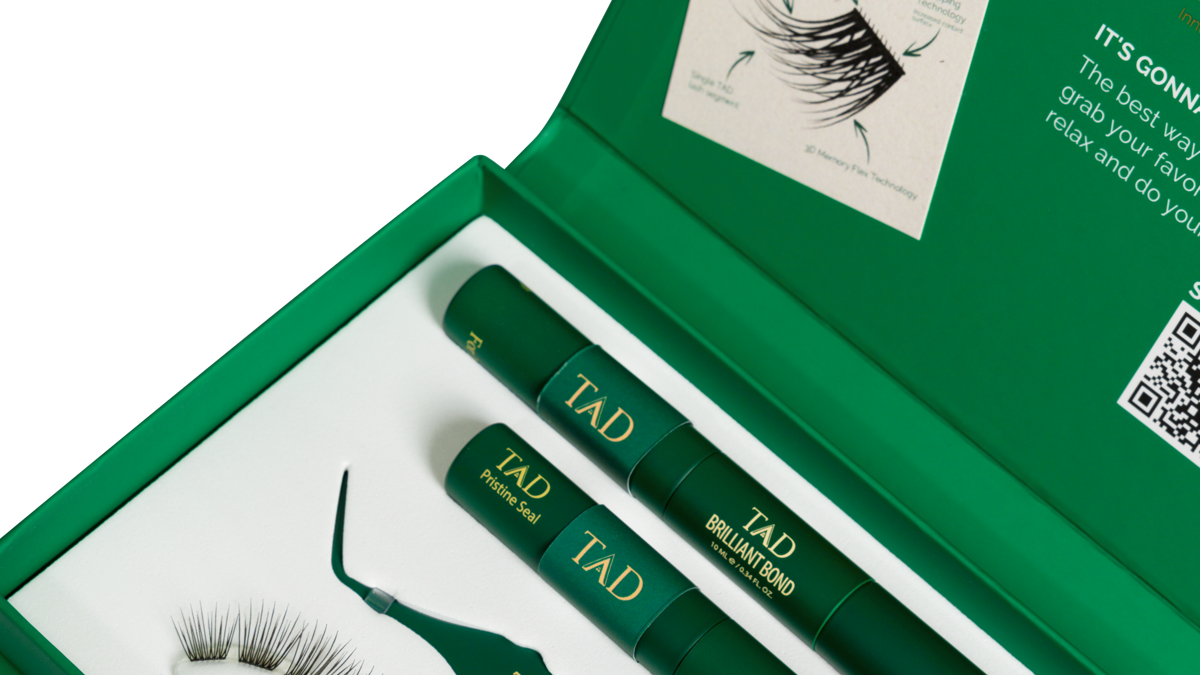
TAD Beauty enters the crowded lash extension market with a bold manufacturing play. The brand uses 3D printing to produce cluster lashes, bypassing traditional injection molding and offering customers customizable, DIY-friendly lash extensions at home.
The brand's proprietary "Memory Flex" technology forms the core of its product innovation. This microstructure design mimics the natural curve of the lash line, allowing the extensions to hug individual natural lashes without tugging or causing damage. Unlike conventional lash clusters that often feel stiff or require professional application, TAD Beauty's printed clusters flex with movement, reducing strain on the lash follicle.
3D printing shifts economics in the beauty space. By removing injection molding's tooling costs and minimum order quantities, TAD Beauty can produce small batches and iterate rapidly. This manufacturing advantage translates to faster product development cycles and the ability to offer customization. Consumers can select cluster density, length, and curl patterns tailored to their eye shape and preferences. The result sidesteps the one-size-fits-most limitations of traditional cluster lashes sold at Sephora or through beauty subscription boxes.
The DIY lash cluster category has exploded over the past three years. Brands like Ardell, Lilly Lashes, and newer players have capitalized on the shift away from salon-only beauty treatments. At-home application removes the 50 to 200 dollar price tag associated with professional extensions while cutting turnaround time to zero. TAD Beauty positions itself within this democratized space but with a technical moat. Its proprietary microstructure and 3D-printing capability create barriers to imitation that traditional lash brands cannot easily replicate.
The brand also speaks to broader trends in personalized beauty and sustainable manufacturing. 3D printing reduces material waste compared to injection molding, which discards excess resin. Print-on-demand production means inventory sits less in warehouses and more on consumers' vanities, lowering environmental impact. For a generation of beauty consumers increasingly attuned to sustainability, this manufacturing story carries weight beyond product performance.
TAD Beauty targets Gen Z and younger millennial consumers who embrace DIY beauty rituals and value transparency in production methods. The brand's website likely emphasizes the technology and customization story, positioning lash extensions as a personalized beauty tool rather than a luxury accessory.
Competition remains intense. Established retailers like Ulta Beauty and Sephora dominate shelf space for lash clusters, and direct-to-consumer brands like Lilly Lashes have already built loyal audiences. TAD Beauty must prove that Memory Flex technology and customization justify a premium price point. If the brand prices competitively, margins shrink. Price too high, and consumers default to established names with lower perceived risk.
The real test arrives at application. DIY clusters demand precision and steady hands. Even superior microstructure fails if consumers cannot apply the extensions without gaps or uneven placement. TAD Beauty's success hinges on packaging, instruction clarity, and potentially offering application tutorials that compete with salon expertise.
3D printing in beauty remains nascent. TAD Beauty's move signals that the technology moves beyond prototyping into consumer-facing products. If Memory Flex clusters perform as advertised, the brand establishes a playbook for other beauty manufacturers considering on-demand manufacturing. For now, TAD Beauty occupies white space between salon professionalism and retail accessibility, betting that proprietary technology and customization reshape the lash extension category.