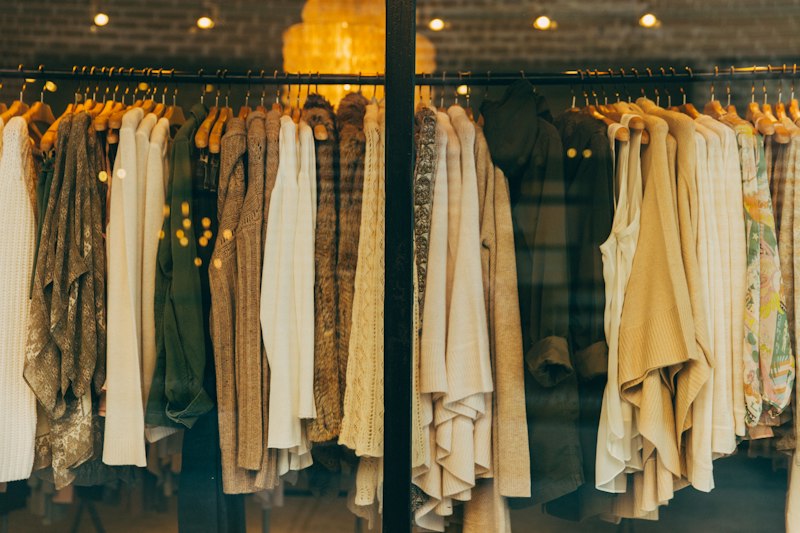
Listen to enough industry chatter, and you'll hear a comforting narrative: design is being democratized. Luxury houses are becoming accessible. Fast fashion is becoming thoughtful. The gap between a $50 Zara piece and a $5,000 designer equivalent is narrowing. This trend is being sold as inevitable, a natural evolution of fashion toward egalitarianism. It deserves more skepticism than it is getting.
Here's what's actually happening: designers are panicking about margins, and they're rebranding the problem as progress.
When LVMH offloads a house like Patou, when established designers flood the market with basics and call them "intentional," when the gap between fast fashion and premium narrows to a thread count's worth of distinction, we're not witnessing some noble leveling of the playing field. We're watching an industry scramble to maintain relevance in an economy where fewer people can afford actual luxury goods.
The language matters here. "Accessible luxury." "Democratic design." "Elevated basics." These phrases make margin compression sound like a gift to consumers rather than what it is: a response to shifting purchasing power and attention economies that punish gatekeeping.
Consider what's really changed. A designer brand used to signal scarcity, craft, and exclusivity. You paid for the design vision, the production standards, the heritage. Now? A $50 Zara sleeveless top with a "designer-inspired detail" competes directly with a designer equivalent. The actual difference in construction might be marginal. The price difference? Enormous. So the designer house lowers prices or exits altogether, or pivots toward "accessible" lines that cannibalize their own luxury positioning.
This isn't democratization. It's confusion masquerading as progress.
The real beneficiary here isn't the consumer. It's the investor class and the algorithm. Fast fashion wins because it moves faster than ever. Luxury conglomerates win because they absorb designer houses, strip them for brand value, and operate them at lower price points with lower expectations. The designer, ironically, often loses autonomy in this equation. They become content creators for a holding company's portfolio rather than independent visionaries.
What actually gets lost in this shift? The things that made design matter in the first place. Risk-taking. Experimentation. The radical idea that fashion could be something other than trend-chasing. When every designer house is operating at similar price points with similar production timelines, competing against the same algorithms and fast-fashion manufacturers, the incentive structure collapses. Why push boundaries when you're trying to hit quarterly targets alongside Gap Inc.?
The current fashion ecosystem rewards speed and volume, not vision. A designer operating at accessible price points needs velocity to survive. That means less experimentation, more repetition, tighter adherence to what already works. Call it democratized. Call it evolved. What you're really calling it is flattened.
I'm not arguing for gatekeeping or for some return to pure luxury exclusivity. That era had its own problems. But we should be honest about what's replacing it. This isn't greater access to better design. It's the scaling of mediocrity and the elimination of the space where truly experimental design could exist without immediate commercial pressure.
The designers who will matter five years from now won't be the ones playing this middle-market game. They'll be the ones who found a way to sustain vision outside these collapsing structures. That might mean smaller scale, genuine independence, or complete reinvention of the designer-consumer relationship.
The trend being sold as inevitable is actually unsustainable. It's worth questioning whether we should be rooting for its success.