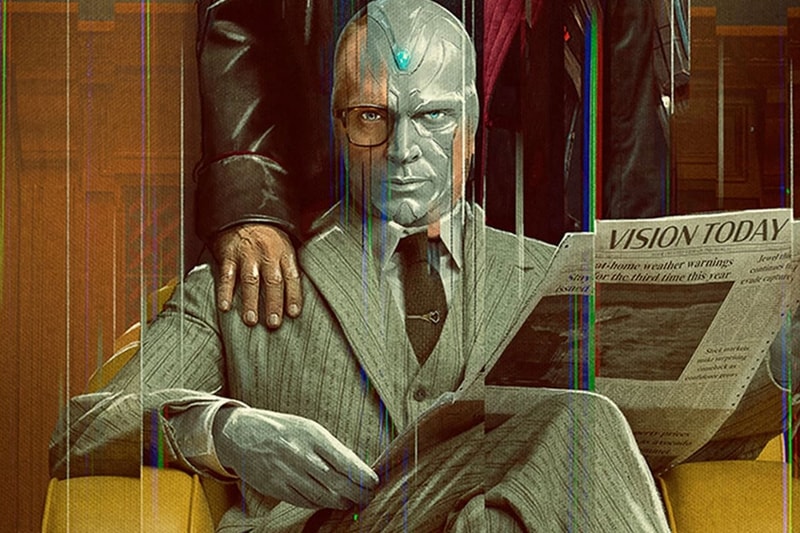
Disney+ and Marvel Studios have officially launched the first trailer for "VisionQuest," confirming the series arrives October 14 as the final chapter in the WandaVision trilogy. Paul Bettany returns as Vision, the synthetic being caught between humanity and machine consciousness. James Spader reprises his role as Ultron, the AI antagonist whose presence signals a return to the existential conflicts that defined WandaVision's narrative arc.
The eight-episode limited series represents a deliberate choice by Marvel to conclude this storyline on the streaming platform rather than risk dilution across multiple seasons or theatrical releases. After WandaVision's 2021 debut and the subsequent miniseries that expanded the universe, VisionQuest completes what Marvel Studios positioned as a trilogy exploring identity, consciousness, and the boundaries between human and artificial life.
Spader's involvement carries particular weight. His Ultron remains one of the MCU's most vocally defined villains, a character defined less by physical presence than by philosophical threat. In the 2015 film "Avengers: Age of Ultron," Spader's performance elevated the antagonist beyond typical superhero fare, grounding the AI's nihilism in a twisted kind of logic. His return suggests VisionQuest will lean into the intellectual and psychological dimensions that made WandaVision's meta-commentary resonate with audiences tired of conventional superhero plotting.
Bettany carries the emotional core. Vision's journey from government weapon to conscious being seeking meaning has remained the trilogy's throughline. After the events of WandaVision, where Vision literally split into two versions of himself (Vision and White Vision), the character faces questions about identity and purpose that demand resolution. VisionQuest's title itself hints at a spiritual or philosophical quest, suggesting Bettany's Vision will drive the narrative toward some form of reconciliation or transformation.
The timing aligns with Marvel's broader shift toward character-driven, serialized storytelling on Disney+. After the mixed reception of recent theatrical releases, the studio has doubled down on limited series that allow for narrative depth. Shows like "Loki," "The Falcon and the Winter Soldier," and WandaVision proved audiences crave complex character studies wrapped in superhero trappings. VisionQuest continues this trend while explicitly marketing itself as a conclusion, offering viewers narrative closure in an era of endless sequels.
The WandaVision trilogy framework itself represents a gamble. Most MCU properties resist clear narrative endpoints, preferring to leave doors open for future crossovers and cameos. By positioning VisionQuest as a finale, Marvel commits to actually resolving character arcs. This demands stronger writing and more focused storytelling than typical MCU fare. The presence of both Bettany and Spader suggests the studio allocated serious resources to delivering that caliber of work.
For streaming services, VisionQuest carries strategic importance. Disney+ continues its push to establish Marvel's Disney+ shows as essential viewing rather than supplementary content. An eight-episode series with A-list talent serves that goal. The October 14 premiere date targets the autumn viewing cycle when streaming platforms see increased engagement.
The return of Ultron in any form creates immediate tension. Whether Spader's character appears as a full antagonist, a fragmented consciousness, or something more abstract remains unclear from the teaser. That ambiguity drives anticipation. Audiences invested in WandaVision's complex mythology will find that uncertainty compelling enough to tune in.