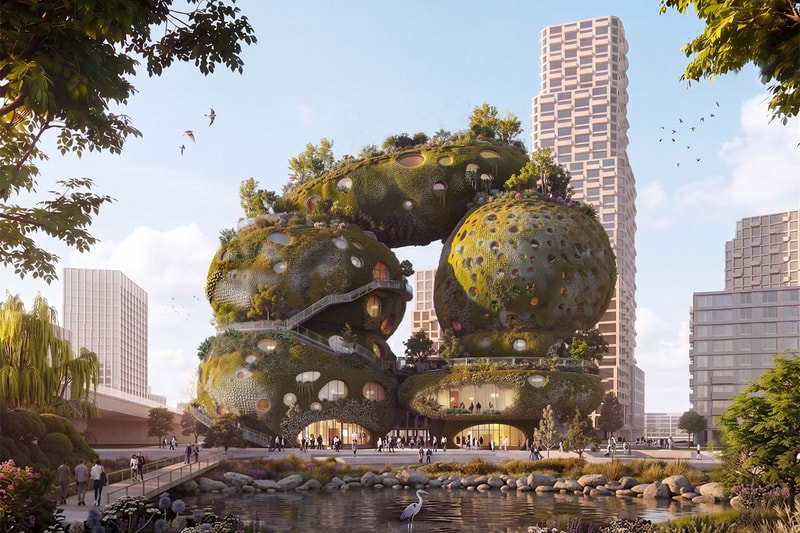
Dutch architecture firm MVRDV has won an international competition to design the Shift Embassy in Rotterdam with a proposal that merges built structures with landscape ecology. The "Rotterdam ROCKS!" concept stacks dramatic rock-like volumes to create a landmark building that anchors the Waterkant district.
The design integrates immersive cave-like interior spaces with vertical tidal park terraces, positioning biodiversity as a core architectural element rather than an afterthought. MVRDV prioritizes low-carbon construction methods, aligning with Rotterdam's climate commitments and the Netherlands' broader push toward sustainable urbanism.
The project reflects a shift in how major European cities commission cultural buildings. Rather than iconic monuments detached from their surroundings, the Shift Embassy fuses architecture with ecological restoration. The stacked volumes recall geological formations, grounding the structure in natural systems. Interior caves offer intimate spaces for programming and gathering, while the terraced parks create public gathering zones and habitat corridors.
This approach resonates with current architectural trends favoring biomimicry and regenerative design. MVRDV joins firms like Snøhetta and BIG in treating landscape integration as essential to contemporary cultural architecture. The project positions Rotterdam as a testing ground for how post-industrial cities can become ecological anchors.
The Waterkant district has undergone significant transformation, and the Shift Embassy serves as a symbolic centerpiece for this evolution. By embedding nature into the building's DNA rather than surrounding it with green space, MVRDV creates a structure that works with tidal systems and native vegetation.
The competition victory signals growing demand for architects who understand ecological systems alongside spatial design. As cultural institutions face pressure to demonstrate environmental responsibility, projects like the Shift Embassy offer tangible models for what sustainable landmark architecture looks like in practice. MVRDV's win validates an approach where form, function, and environmental stewardship operate