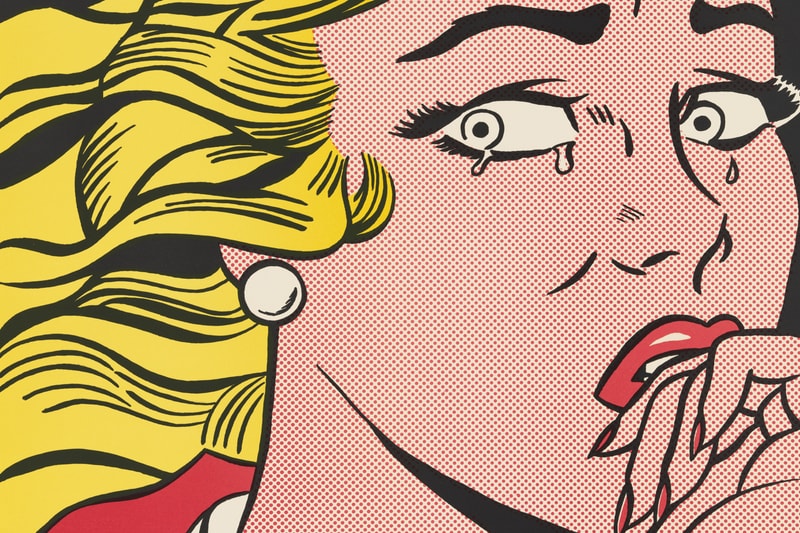
The Whitney Museum of American Art opens "Roy Lichtenstein: Like New" this October, mounting a comprehensive retrospective of the Pop Art pioneer. The exhibition spans over 130 works across paintings, sculptures, drawings, films, and installations, tracing Lichtenstein's career from early experiments to his most recognizable pieces.
Lichtenstein's practice anticipated our current image culture. His method of appropriating comic book panels, enlarging them, and layering Ben Day dots created a visual language that prefigured today's endless cycles of cropping, reposting, and memeing. The artist transformed low-brow source material into high art, collapsing hierarchies between commercial and fine art at a moment when such boundaries felt rigid and absolute.
The exhibition arrives at a moment when Lichtenstein's influence reverberates across fashion, graphic design, and digital culture. His flattened planes of color and mechanical reproduction techniques resonate with contemporary designers mining Pop aesthetics for novelty and irony. The show positions Lichtenstein not as a historical artifact but as an active force shaping how we see and consume images today.
"Like New" suggests a radical reading of Lichtenstein's work. Rather than treating his pieces as objects frozen in the 1960s, the exhibition frames them as perpetually contemporary, speaking directly to algorithmic culture and the saturation of branded imagery. His investigation into mechanical reproduction and mass production feels prescient in an age of AI-generated content and Instagram aesthetics.
The Whitney's timing proves strategic. As designers like Virgil Abloh and contemporary streetwear brands have mined Pop Art for visual currency, a major institutional survey legitimizes Lichtenstein's continued relevance to fashion and visual culture beyond painting. The show arrives as the art world continues wrestling with questions of appropriation, originality, and authorship that Lichtenstein posed