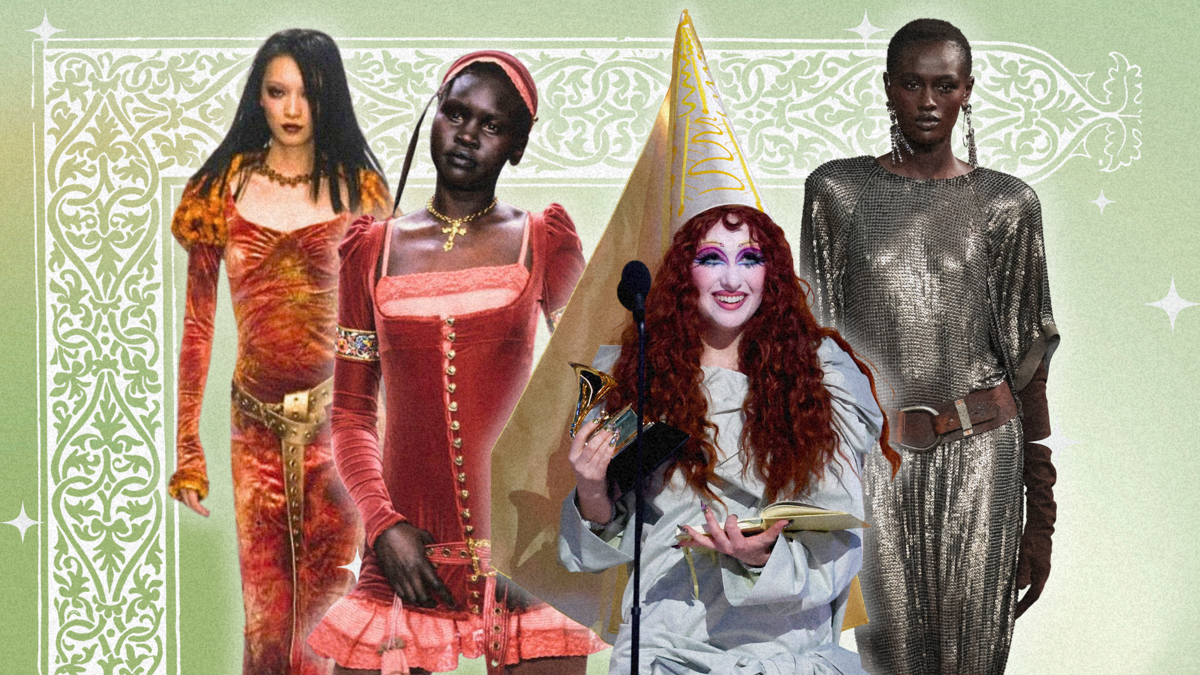
The fashion world has embraced a maximalist revival that fuses Y2K sensibilities with medieval aesthetics. Velvet, chainmail, and exaggerated sleeves dominate runways and street style alike, creating a distinctly theatrical approach to dressing that rejects minimalism entirely.
This trend represents a collision of two powerful fashion moments. The early 2000s obsession with luxury fabrics and bold silhouettes meets contemporary interest in historical references and costume-like dressing. Designers are leaning into the drama: rich jewel tones, metallic details, and architectural shoulder construction signal a move away from the understated luxury that dominated the past decade.
Velvet serves as the fabric's breakout star. Once relegated to evening wear, the textile now appears in daywear across major collections. Its tactile richness appeals to consumers seeking sensory satisfaction in fashion. Chainmail, whether as statement jewelry or woven into garments, delivers the medieval edge with contemporary polish. The effect avoids costume territory through careful pairing with modern pieces.
Dramatic sleeves command silhouettes. Puffed shoulders, bell cuffs, and extended lengths create volume and presence that modern fashion had systematically stripped away. This expansion feels rebellious against the fitted, minimal aesthetic of recent seasons.
The trend reflects broader shifts in fashion psychology. Post-pandemic, consumers gravitate toward clothing that makes bold statements and invites conversation. The theatrical dressing of the Y2K medieval moment provides escapism without irony. It's sincere, excessive, and entirely unbothered by restraint.
Retailers report strong demand for statement pieces in these categories. Luxury houses have integrated chainmail into leather goods. Contemporary brands offer accessible velvet blazers and tops with architectural sleeves. The aesthetic filters down quickly, signaling its staying power beyond trend cycles.
This direction challenges the quiet luxury movement