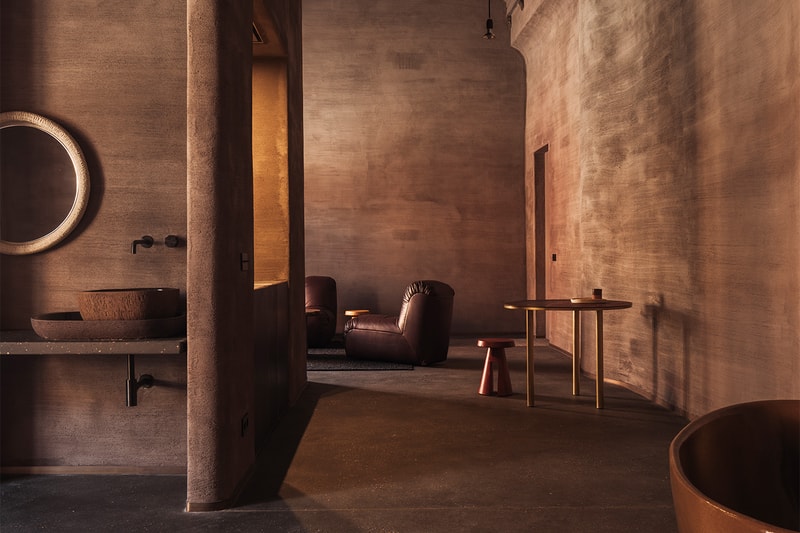
Studio LOHO has transformed a decommissioned brush factory in Bruges into Jonojé, a six-suite luxury hospitality concept that blurs the line between hotel, gallery, and design studio. The 1,000-square-meter property sits on the outskirts of Belgium's medieval city, anchored by a sprawling 1,250-square-meter garden that extends the experience beyond traditional lodging.
Each suite features bespoke interiors crafted by the studio, with monolithic clay bathtubs serving as sculptural centerpieces. The tubs function as both functional fixtures and artworks, carved from single clay blocks. Organic plaster finishes and naturalistic materials dominate the design language, positioning the rooms as immersive installations rather than standard accommodations.
Jonojé operates as a hybrid space. Beyond the guestrooms, the venue hosts a showroom for Studio LOHO's design practice, a gallery for rotating exhibitions, and a working studio where the team develops new pieces and concepts. This multi-functional approach positions the property as a destination for design enthusiasts, collectors, and those seeking experiential luxury rather than typical amenities-driven hospitality.
The project reflects a broader shift in luxury travel toward narrative-driven accommodations. Rather than competing on thread count or spa services, boutique properties increasingly offer cultural immersion and direct access to creative practitioners. Studio LOHO's decision to integrate their working studio into the guest experience creates authenticity and exclusivity that mass-market luxury cannot replicate.
The adaptive reuse of the industrial brush factory carries symbolic weight. Converting manufacturing spaces into creative hubs aligns with contemporary values around sustainability and heritage preservation. Bruges, already saturated with medieval tourism, gains a modern cultural anchor that attracts design-conscious travelers seeking contemporary craft alongside historic architecture.
Jonojé signals a new model for luxury hospitality in