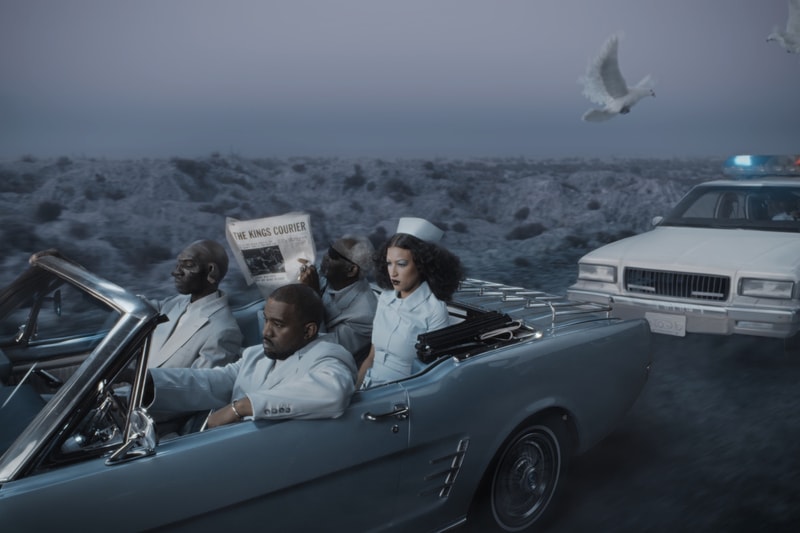
Bianca Censori directed the music video for Ye's "King," leveraging her architectural background to construct a visual argument about power and perception. The video unfolds as a cinematic sequence that builds toward a final symbolic moment, using gesture and spatial composition as primary storytelling devices rather than narrative exposition.
Censori's architecture training manifests throughout the piece. She treats the frame as constructed space, positioning Ye within environments that reinforce thematic content about kingship and public scrutiny. The video moves beyond conventional music video grammar, trading quick cuts and narrative drive for deliberate choreography and spatial relationships that carry meaning.
This collaboration marks a significant moment in Ye's creative output. Where previous visual work relied on shock value or celebrity spectacle, "King" operates through visual restraint and conceptual rigor. Censori's involvement elevates the project beyond typical hip-hop video conventions. Her design sensibility demands viewer engagement with form itself, not just content.
The final symbolic scene functions as the video's thesis statement, crystallizing whatever argument about power and image the preceding footage builds toward. This structure reflects architectural thinking. Architecture communicates through space and structure before ornament. Censori applies that discipline to temporal media.
Her role extends beyond direction into creative development, positioning her as conceptual collaborator rather than hired cinematographer. This distinction matters. It signals Ye's investment in design-forward thinking and intellectual rigor in visual communication. The video becomes less about displaying Ye's celebrity and more about exploring how image and gesture function symbolically.
The "King" video represents a broader industry shift toward designer-led visual projects in music. As musicians increasingly collaborate with architects, fashion designers, and visual artists from non-film backgrounds, music videos evolve beyond their traditional function. They become architectural statements, fashion installations, spatial interventions. Censori's involvement in "King" exemplifies this trajectory,