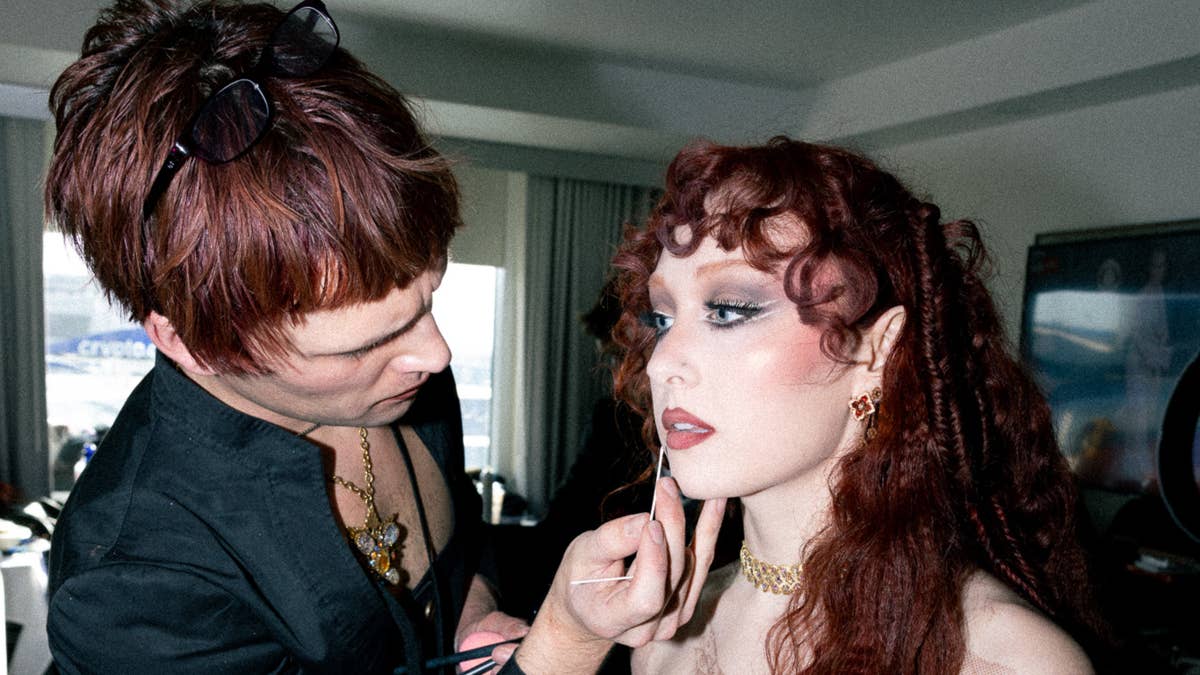
Andrew Dahling transformed his small-town Kentucky upbringing into a career as one of pop's most sought-after makeup artists. The makeup specialist now helms creative direction for a MAC Cosmetics campaign while serving as the lead artist behind Chappell Roan's bold, theatrical makeup looks.
Dahling's aesthetic centers on treating the face as a canvas for high-impact artistry. His approach combines precision technique with conceptual thinking, turning everyday makeup application into wearable art. The artist's work with Roan exemplifies this philosophy, creating looks that push beyond conventional beauty standards and embrace theatrical expression.
The Kentucky native credits the internet as his primary educational tool during formative years in a region without extensive fashion infrastructure. That self-directed learning shaped his distinctive vision, one that prioritizes individuality and artistic risk-taking over conventional trends.
MAC's decision to collaborate with Dahling reflects the brand's broader strategy of partnering with emerging makeup artists who bring fresh perspectives to cosmetics. The partnership positions him within the luxury beauty establishment while maintaining his outsider credibility.
Dahling's trajectory mirrors a larger shift in beauty and entertainment. Pop stars increasingly demand makeup artists who function as creative collaborators rather than technicians. Roan's maximalist visual identity requires someone who understands theatrical makeup, color theory, and cultural commentary simultaneously.
The makeup artist's philosophy resonates beyond celebrity work. His commitment to "making people look like a walking piece of art" speaks to a cultural moment where personal beauty expression has become politicized and individualized. The approach rejects one-size-fits-all beauty standards in favor of self-directed artistic creation.
His ascent from internet-educated artist in Kentucky to MAC's creative sphere demonstrates how digital access has democratized fashion and beauty careers. Geographic limitations matter less when talent and vision translate across platforms.