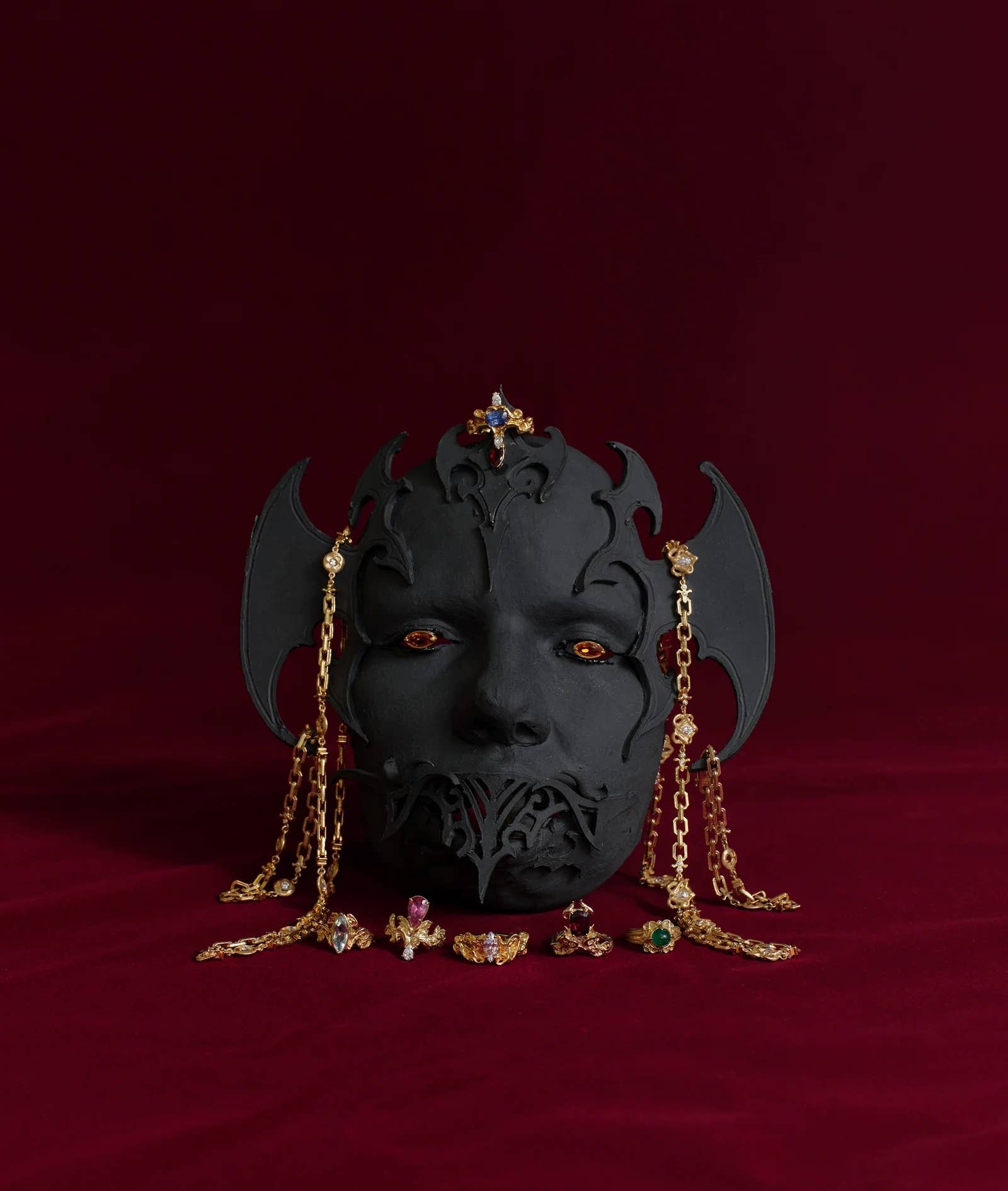
AdaLioryn bridges centuries of craftsmanship with contemporary design philosophy, positioning fine jewelry as wearable ritual objects for the modern moment. The brand channels ancient lost wax casting techniques, a labor-intensive process requiring multiple hand-executed steps, to create pieces that function as personal talismans rather than mere adornment.
This approach reflects a broader luxury shift away from status signaling toward intentional, meaningful ownership. AdaLioryn's collection speaks to consumers seeking jewelry with narrative depth and artisanal provenance. Each piece carries the fingerprints of its maker, a deliberate counterpoint to mass-produced luxury that dominates mainstream fine jewelry retail.
The talisman concept proves especially resonant post-pandemic, when consumers gravitated toward objects imbued with protective or emotional significance. AdaLioryn taps into this hunger for personal symbolism, transforming jewelry from passive accessories into active talismans carrying intention and meaning.
Lost wax casting itself demands precision and patience. Artisans hand-carve original designs in wax, then create ceramic molds around them. The wax melts away, leaving a hollow cavity that receives molten metal. This process yields organic imperfections impossible in industrial stamping, authenticating each piece as singular.
The brand's positioning reflects luxury's ongoing recalibration. Heritage houses increasingly emphasize craft provenance and storytelling as differentiation strategies. AdaLioryn capitalizes on this by centering the maker's hand, offering collectors verifiable artisanal authenticity at accessible luxury price points.
This model attracts design-forward consumers disillusioned with overpriced heritage brands offering little beyond marketing mythology. AdaLioryn delivers tangible craft evidence alongside wearable beauty, solving the transparency problem plaguing contemporary luxury. The brand transforms fine jewelry into a conversation between wearer and maker, past