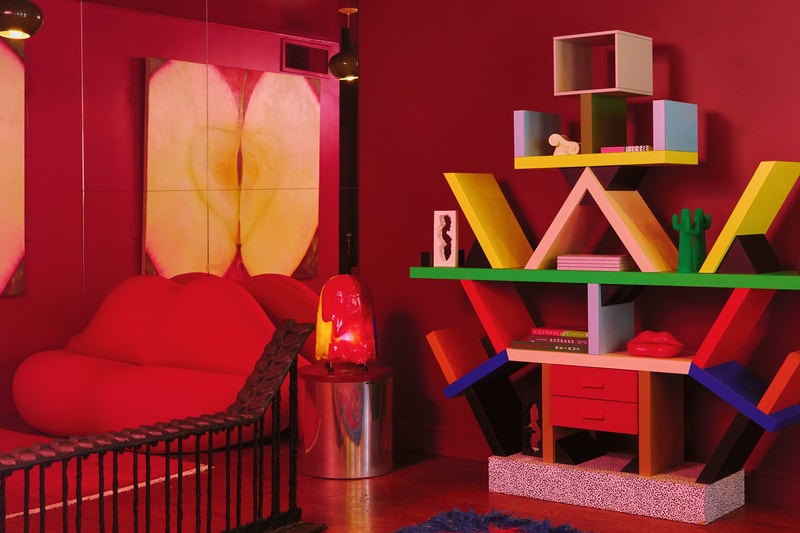
Three heavyweight names in Italian radical design converge for the first time in New York. Memphis, Gufram, and Meritalia occupy a Bowery townhouse through the NYCXDesign festival, each brand commanding its own floor within the Kalei NYC space.
The exhibition presents radical design's most recognizable pieces. Gufram's sculptural Cactus sofa sits alongside Memphis' Carlton bookcase, objects that defined postmodern furniture across the 1980s and beyond. The intentional mixing of brands across three floors creates dialogue between distinct design philosophies that emerged from the same Italian movement.
Radical design rejected functionalism and convention. Memphis under Ettore Sottsass introduced color, geometry, and playful irreverence to everyday objects. Gufram brought surrealist sensibilities to seating and surfaces. Meritalia contributed its own maximalist vision to the movement's vocabulary. These brands shaped how design thought about form, material, and purpose.
This joint presentation matters. Radical design cycles through critical favor, often dismissed as frivolous before being rediscovered as foundational. The 1980s rejected the minimalism that preceded it, embracing decoration and irony as valid design languages. Contemporary designers continually reference these movements.
The timing aligns with broader design market shifts. Collectible postmodern furniture commands auction prices once reserved for fine art. Young designers study radical design as counterpoint to today's algorithmic, data-driven aesthetic. Sustainability conversations have also reframed vintage radical pieces as alternatives to fast furniture.
Hosting all three brands together in a residential setting lets viewers experience these objects as they were intended, within lived spaces rather than museum contexts. The townhouse format transforms the exhibition into something closer to a collector's private home than a traditional gallery experience, allowing each object to breathe while maintaining the intentional curation