When Miu Miu debuted its matelassé handbag at Lapérouse in Paris on March 4, 2006, few could have predicted that a quilting technique originating in early 18th-century Marseille would become the brand's defining signature for the next two decades. The introduction of the Coffer—a slouchy chocolate brown shoulder tote with a twisted handle and bold metal clasp—seemed modest at the time, with only three shown on the runway in a single colorway. Yet it was immediately embraced by Anne Hathaway, Lindsay Lohan, and Isla Fisher, cementing a calling card that has only grown stronger. What makes this origin story remarkable is not just the bag's appeal, but what it reveals about luxury fashion's relationship with time.
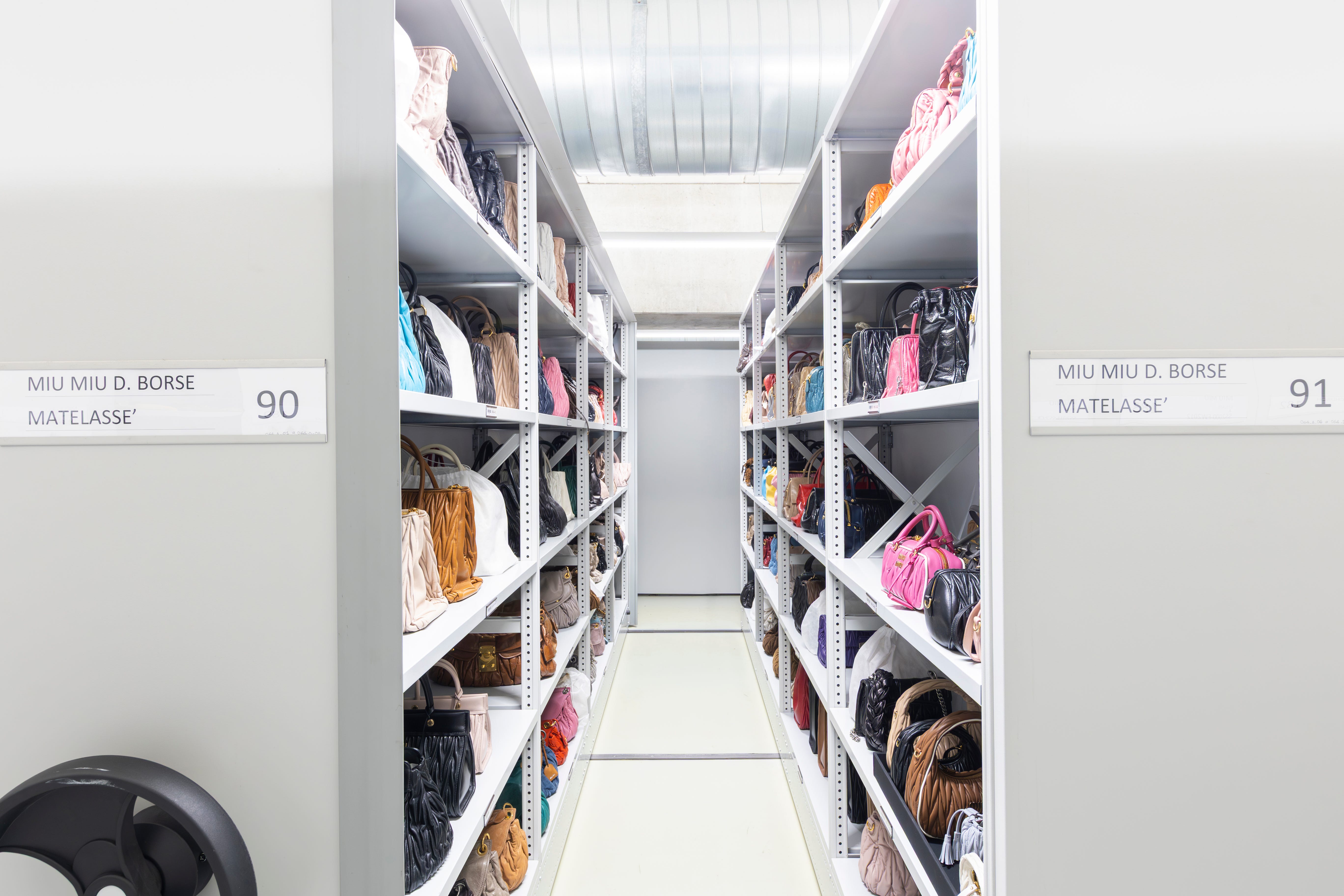
Today, twenty years later, Miu Miu's matelassé appears everywhere from the Wander and Arcadie styles to the brand's 2026 campaign starring Gigi Hadid. But this ubiquity should not fool us into thinking the craftsmanship has been commodified or simplified. Inside The Garden Factory in Tuscany's Valvigna region—an architecturally award-winning facility designed by Guido Canali in the mid-1990s and completed in 2015—the truth becomes evident. The workshop contains 66,000 leather goods and 77,000 pairs of shoes organized meticulously by category, with matelassé commanding its own dedicated section. This is not mass production; this is archival intentionality.
The actual construction of a matelassé bag is a masterclass in controlled precision. Elastic Lycra is layered with thin padding and nappa lambskin leather sourced from Miu Miu's French tannery. Strategic patterns are stitched, the Lycra is removed, and the leather and padding fold back into themselves, creating the signature pillowy effect somewhere between plissé and origami. Crucially, three-dimensional modeling is never used. Every leather product is assembled by hand and inspected manually by experts who know every design detail. For smaller products like card holders, the difficulty multiplies exponentially.
The human cost of this commitment is substantial. Craftspeople spend six months at the Prada Group's leather goods academy learning luxury standards, yet it takes five to ten additional years to master making an entire bag from start to finish. Most of these artisans are women, working in teams of two throughout The Garden Factory's minimalist spaces, with their white lab coats bearing the Prada Group logo. This is the antithesis of fast fashion's promise.
In an age of Instagram aesthetics and hyper-visual signifiers, Miu Miu understands something essential: tactility cannot be faked, even through an iPhone screen. A matelassé handbag's visual appeal inevitably raises the question of how it feels, and that question drives desire in ways that trend cycles cannot sustain. By insisting on hand assembly, expert inspection, and years-long apprenticeship, Miu Miu has positioned itself not as a follower of luxury trends, but as a guardian of standards that refuse to bend to market pressures. Twenty years in, the brand's matelassé remains a calling card precisely because it was never designed to expire.