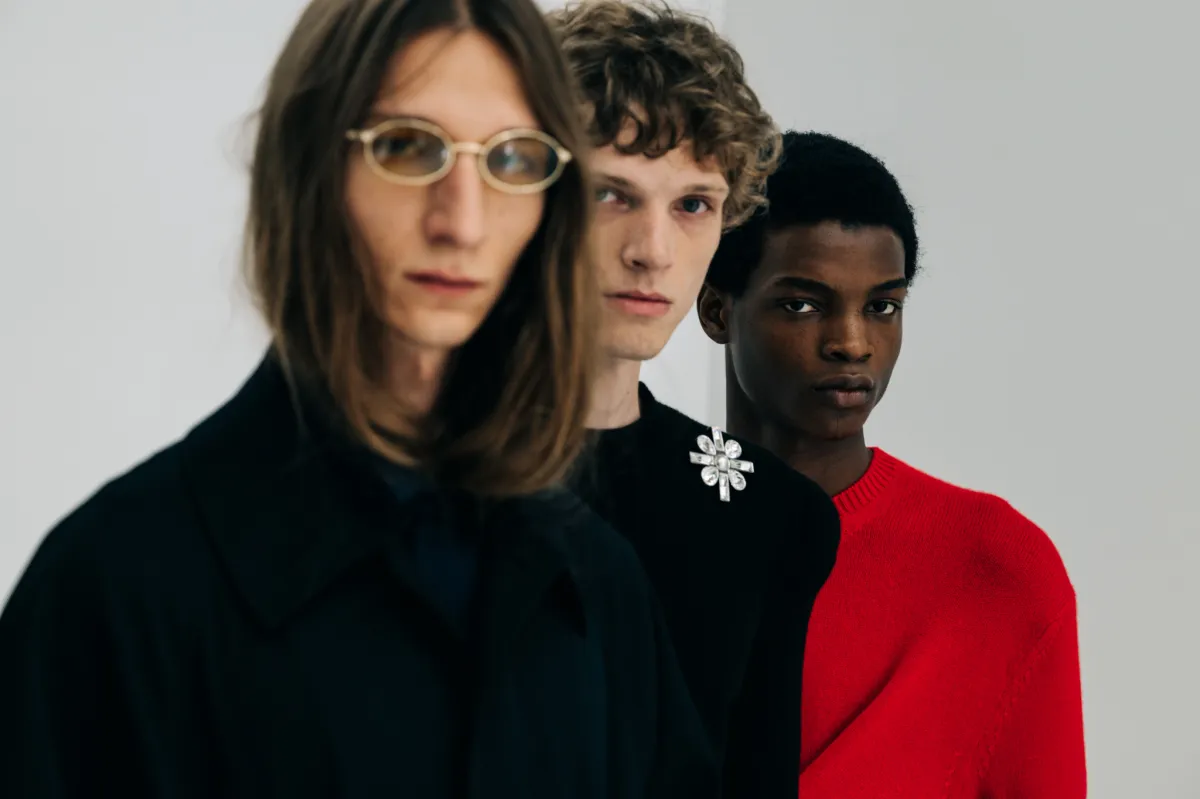
# Michael Rider Injects Color and Irreverence Into Celine's Buttoned-Up Menswear
Michael Rider has spent his first seasons at Celine dismantling the house's reputation for restrained minimalism. The American designer traded the brand's signature neutral palette and rigid tailoring for something bolder, louder, more distinctly his own.
Rider's appointment marked a turning point for the French luxury house. Celine, long known for its quiet luxury aesthetic and architectural silhouettes, needed a creative jolt. The brand had become synonymous with a particular type of refined restraint, the uniform of a certain demographic of wealthy men who viewed fashion as something to be worn, not discussed. Rider saw an opening.
His approach centers on color. Tangerine, chartreuse, and unexpected tonal combinations now punctuate collections that would have seemed transgressive under previous creative direction. He pairs vivid hues with off-kilter styling choices, creating deliberate imbalance where Celine once favored harmony. A perfectly cut blazer gets paired with clashing trousers. Tailoring meets streetwear vernacular. The "bite" Rider brings carries menace, playfulness, and a refusal to follow the unspoken rules of menswear conformity.
This strategy positions Celine within a broader industry shift. Menswear itself has fractured into competing philosophies. On one end sits Daniel Lee's Bottega Veneta approach, which honors craft through restraint. On the other end, brands like Haider Ackermann and Martine Rose build reputations on sartorial provocation. Rider plants Celine somewhere between these poles, maintaining the house's technical excellence while abandoning its emotional distance.
The stakes matter because menswear drives significant revenue for luxury conglomerates. Bernard Arnault's LVMH portfolio treats menswear as a category requiring constant reinvention. Dior Homme maintains its allure through Spike Lee collaboration and boundary-pushing silhouettes. Saint Laurent channels downtown irreverence. Celine's previous position as the "thinking man's brand" worked for certain clients but left the house vulnerable to younger shoppers seeking personality in their purchases.
Rider's background shapes his vision. His understanding of fashion extends beyond heritage reverence. He brings an American sensibility to a house steeped in Parisian codes. This outsider perspective proves essential. Heritage institutions benefit from designers willing to question their own mythology.
The collections read as conversations with Celine's past rather than rejections of it. Rider preserves the brand's commitment to impeccable construction and proportion. He simply refuses to treat these tools as shields against expression. Color becomes structural. Excess becomes intentional. Styling becomes narrative.
Whether Rider's recalibration sticks depends on luxury market reception. Menswear audiences tend toward conservatism, particularly at price points where a single blazer costs what most people spend on quarterly rent. Yet younger consumers entering the luxury market exhibit different priorities. They want menswear that signals personality, not just wealth.
Rider's gambit resembles the calculations facing other heritage houses: evolve or become a museum piece. His infusion of flair and deliberate styling chaos suggests Celine chose forward momentum. Whether that momentum translates into cultural resonance remains his ongoing test.