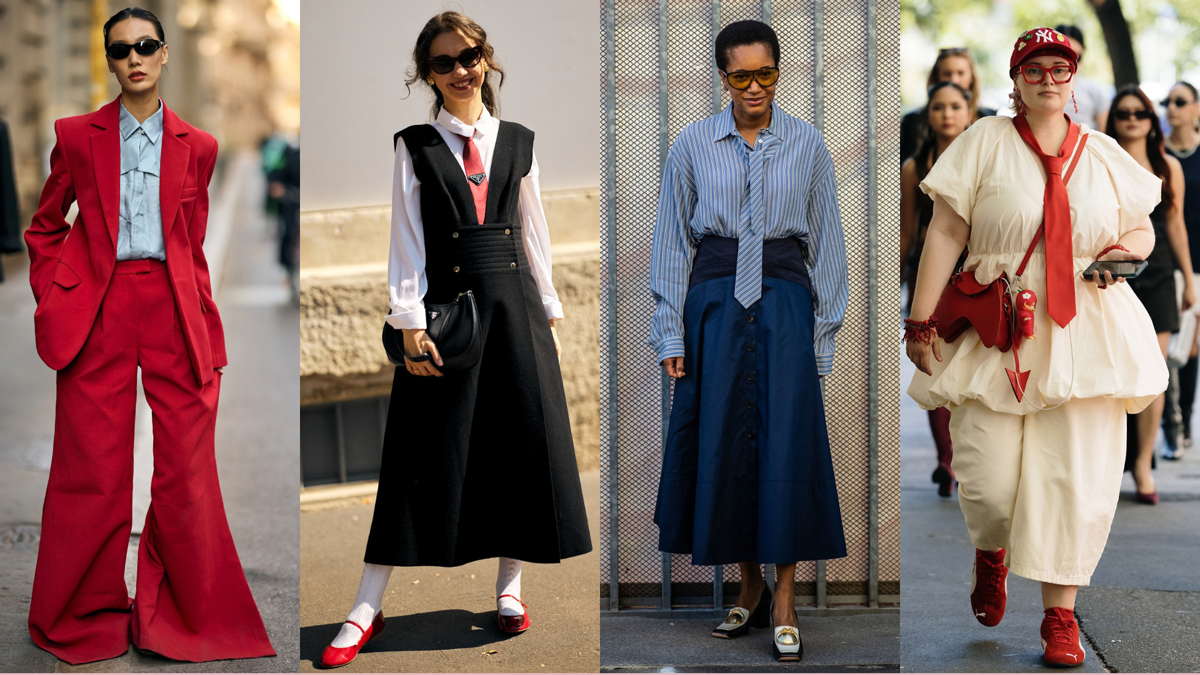
# Milan Fashion Week Street Style Channels Sexy, Modern 'Mad Men' Aesthetic
Attendees at Milan Fashion Week's Spring 2027 presentations brought a decidedly vintage-inflected energy to the streets, filtering 1960s tailoring codes through a contemporary lens. The result: polished silhouettes that borrowed from Don Draper's corporate wardrobe while maintaining distinctly modern sensibilities.
Ties emerged as a defining accessory on the Milan streets. Whether worn traditionally knotted or styled loosely around the neck, they signaled a return to structured formality. The choice signals a broader industry shift toward power dressing and corporate-inspired silhouettes, a movement that has gained momentum as designers increasingly look backward for inspiration in uncertain economic times.
Tailored separates dominated the scene. Sharp-shouldered blazers paired with high-waisted trousers created clean architectural lines. Designers favored neutral palettes—charcoal, cream, navy—but injected personality through unexpected fabrications and cuts. Wide-leg silhouettes replaced the skinny fits that defined the previous decade, offering both comfort and visual impact.
Sheer skirts provided the sexy counterpoint to rigid tailoring. Semi-transparent fabrics layered over slip skirts created tension between exposure and concealment, a sophisticated play on modesty that separates this iteration from both genuine 1960s conventions and millennial-era transparency trends. The styling choice demonstrates how contemporary fashion reinterprets vintage reference points through a distinctly 2024 lens.
Structured bags rounded out the aesthetic. Boxy top-handle styles and architecturally rigid clutches replaced the slouchy carryalls that dominated recent seasons. Hardware remained prominent but refined. The bag choices underscored a return to formality and defined silhouettes across all categories.
What makes this moment distinct from previous Mad Men-adjacent trends is the emphasis on modernity. Attendees didn't simply replicate 1960s dressing. Instead, they applied proportional updates, mixed textures, and deployed color strategically. A structured blazer might pair with contemporary footwear or layered with cutting-edge separates that wouldn't have existed in Draper's era.
The trend reflects industry dynamics worth noting. As fashion becomes increasingly introspective in response to economic pressures and consumer skepticism about fast trends, designers find safety in codes that communicate sophistication and longevity. The 1960s represent a specific moment of prosperity, cultural change, and sartorial codes that still register as aspirational. Reimagining that era allows brands to signal timelessness and investment value.
Milan's spring showing also signals that tailoring has reclaimed its position as a cornerstone category. Tailored pieces imply craft, fit, and longevity. After seasons dominated by oversized silhouettes and relaxed dressing, the return to structured tailoring represents a meaningful shift in how designers and consumers perceive fashion's purpose and value.
This aesthetic will likely ripple through major retail channels as brands from contemporary to luxury houses interpret the codes. Expect tailored pieces, ties, and structured accessories to become category priorities heading into spring delivery. The styling also suggests that sex appeal, when paired with formality and polish, reads as sophisticated rather than decorative. That distinction matters for how the industry positions clothing moving forward.