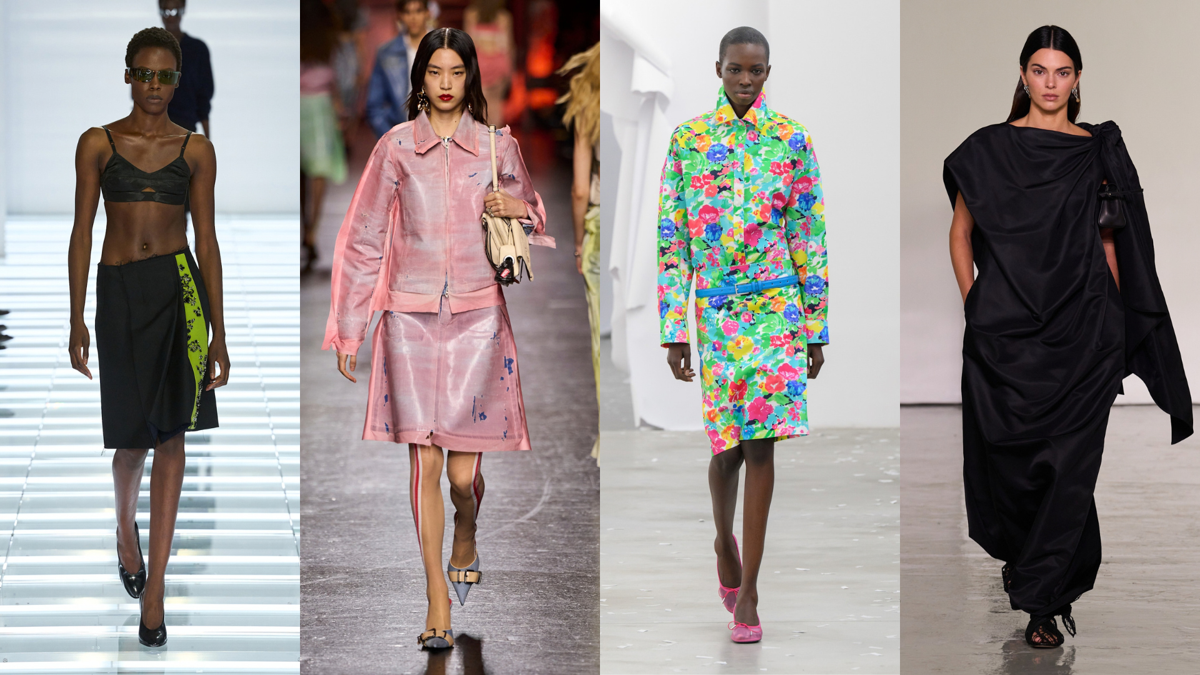
Glenn Martens delivered his final collection for Diesel at Milan Fashion Week Spring 2027, and the designer made the exit count. The Belgian provocateur, who transformed Diesel from workwear brand into a runway fixture, closed his tenure with what Fashionista describes as a "hedonistic last hurrah." Martens leaves the Italian house after reshaping its aesthetic into something deliberately provocative and body-conscious, establishing Diesel as a destination for directional fashion that embraces excess and sensuality rather than restraint.
Alberta Ferretti continued her signature approach with flowing jewel tones that dominated her Spring 2027 presentation. The Italian designer remains committed to the liquid, movement-driven silhouettes that built her brand legacy. Her palette of emeralds, sapphires, and rich amethysts created a collection rooted in romantic elegance with modern fluidity. Ferretti's consistency in this direction reinforces her position as a counterweight to harder-edged design philosophies emerging across Milan.
Prada centered its Spring 2027 offering on skirt-centric silhouettes, a notable shift in emphasis within Miuccia Prada's experimental framework. The collection leaned into structured and tailored skirts as the hero piece, moving away from the trouser-heavy presentations Prada showed in recent seasons. This return to skirt focus signals a broader industry pivot toward renewed femininity and volume, themes that ripple across contemporary luxury design.
The Milan Fashion Week Spring 2027 schedule reinforced the city's role as the stage for heritage brands negotiating tradition with innovation. Diesel's leadership transition, Ferretti's continuity, and Prada's silhouette reorientation map a larger conversation about where luxury sits in 2027. Martens' departure marks the end of a distinctive five-year run that proved a legacy brand could embrace radical aesthetics without losing commercial viability. His successor at Diesel now inherits both momentum and expectation.
These three presentations represent distinct philosophies coexisting on the Milanese runway. Martens prioritized disruption and sensory overload. Ferretti relied on craft and romantic movement. Prada balanced concept with wearability. Together, they illustrate why Milan remains the fashion capital most concerned with the act of collection-building itself, rather than quick trend-chasing. Each designer used the Spring 2027 schedule to make definitive statements about where their houses stand heading into warmer months.
The emphasis on skirts, hedonistic tailoring, and flowing fabrics across these three major presentations suggests a season defined by deliberate mood-setting. Designers are favoring pieces that communicate intention and vision rather than neutral basics. This approach challenges the minimalist language that dominated early 2020s luxury fashion, moving toward expression and texture as primary tools. Milan's Spring 2027 week validated this shift across its most visible houses.