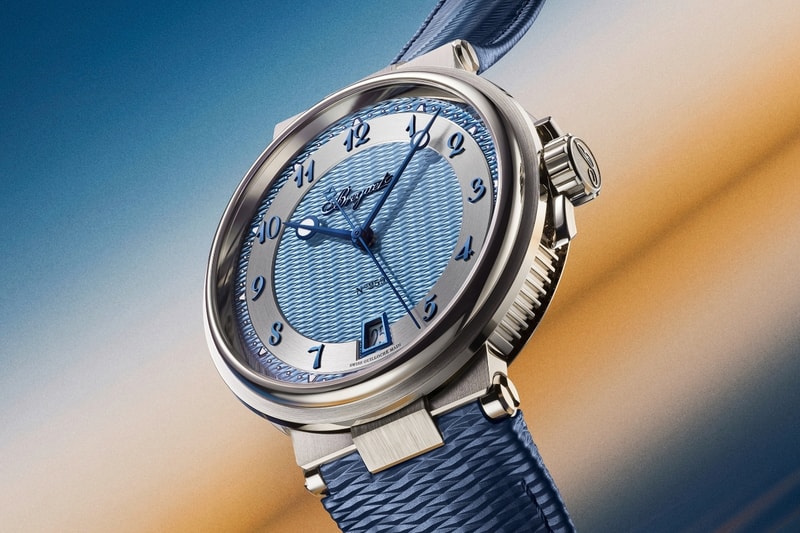
Breguet marks a significant chapter in its horological narrative by introducing specially crafted iterations of its Marine 5517 and Marine Chronographe 5527, anchored in hand-guilloché "Quai de l'Horloge" dials. This anniversary refresh draws directly from the Swiss manufacture's storied relationship with maritime timekeeping, tracing back to 1815 when Abraham-Louis Breguet received his appointment as Watchmaker to the French Royal Navy.
The new Marine collection pieces arrive in white gold, rose gold, and titanium cases, spanning both three-hand and flyback chronograph formats. The guilloché work itself becomes the focal point of this release. The "Quai de l'Horloge" pattern references the Paris riverside location where Breguet established its original manufacture, embedding historical geography into contemporary watchmaking. Hand-guilloché dials represent one of haute horlogerie's most labor-intensive finishing techniques, requiring skilled artisans to hand-engrave geometric patterns into dial surfaces using specialized rose engines. Each dial becomes a singular expression of craftsmanship rather than mass production.
The Marine 5517 maintains its three-hand configuration, designed for classical dress-watch versatility. The Marine Chronographe 5527 preserves its flyback chronograph complication, permitting continuous timing without stopping the mechanism between separate measurements. This dual-format strategy addresses both minimalist collectors and those seeking additional chronometric function within a single tool watch.
Material selection reflects Breguet's positioning within luxury watchmaking's current landscape. White and rose gold continue serving core ultra-high-net-worth clientele, while titanium integration acknowledges shifting preferences toward lighter sportier cases without compromising precious-metal positioning. Titanium cases in high-complication pieces have become increasingly common among independent manufacturers and established houses alike, signaling accessibility within luxury parameters.
The Marine collection itself occupies a distinct niche within Breguet's portfolio. Unlike dress collections emphasizing dial minimalism or sports lines emphasizing technical specification, the Marine line bridges heritage storytelling with wearable functionality. The naval appointment origin story differentiates Breguet from competitors while providing narrative weight that extends beyond mechanical specifications. Contemporary luxury watches increasingly compete on brand mythology alongside movement quality and finishing standards.
Guilloché finishing trends across the industry reflect broader collector preferences toward visible artisanship. Dials featuring hand-executed patterns command premium pricing and demonstrate commitment to heritage techniques in an era when dial printing technology could replicate patterns at fraction of cost. Breguet's signature hand-guilloché work, particularly on pieces like the Classique line, has established house identity that collectors recognize and value distinctly.
This Marine refresh also represents calculated diversification within a narrow category. By introducing the same dial pattern across multiple case materials and complications, Breguet increases addressable market without fragmenting brand identity. The approach contrasts with limited-edition scarcity strategies, instead emphasizing that guilloché craftsmanship itself becomes the edition narrative rather than numerical limitation.
The timing of this anniversary announcement aligns with watchmaking's broader pattern of commemorative releases. Houses celebrate founding years, historical appointments, and significant milestones through limited refreshes. These releases generate institutional excitement without requiring entirely new model development, allowing established manufactures to maintain product freshness while controlling development costs.