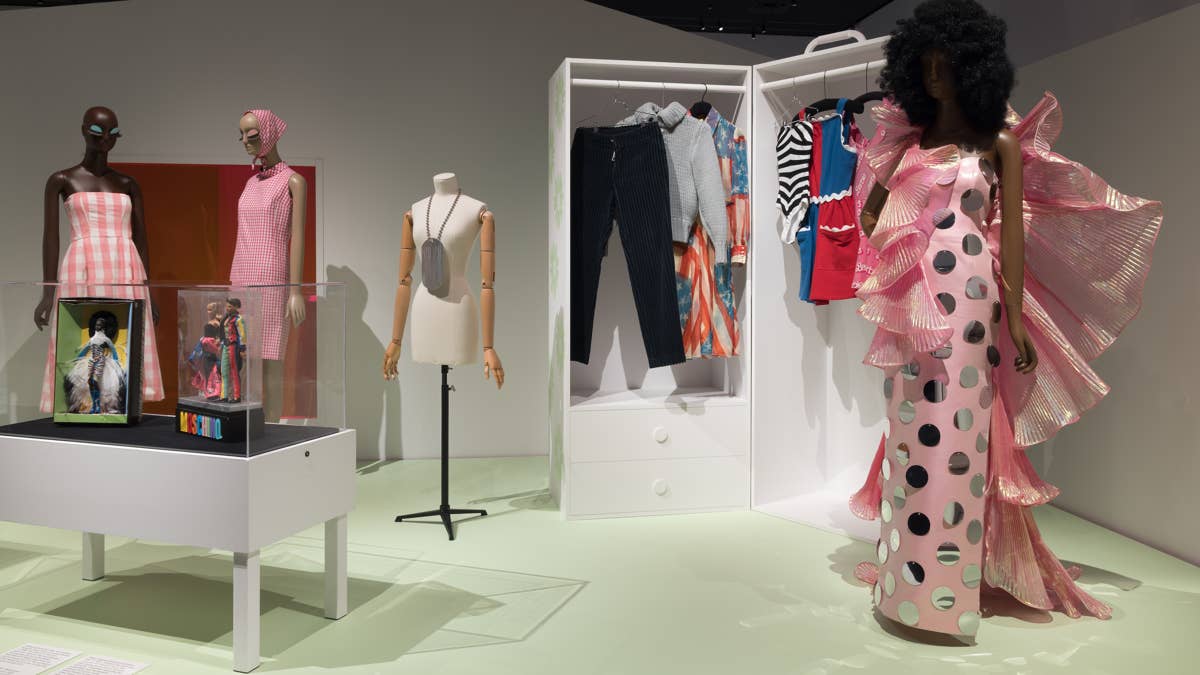
# The Museum at FIT Explores Fashion's Obsession With Doll Dressing Through New Exhibition
The Museum at the Fashion Institute of Technology opens a new exhibition that treats doll dressing as serious cultural practice rather than nostalgic hobby. The show examines how fashion designers, stylists, and enthusiasts have elevated the miniaturization of clothing into a legitimate design discipline.
Doll dressing has evolved far beyond childhood play. The practice encompasses haute couture in miniature, with designers creating pieces that mirror runway collections at one-sixth scale. What began as promotional tools for fashion houses in the early twentieth century has transformed into a thriving subculture where adult collectors commission bespoke garments for their dolls at prices rivaling real couture.
The FIT exhibition positions doll dressing within broader fashion history. Mattel's Barbie became a lightning rod for design innovation after her 1959 debut. Legendary designers including Givenchy, Versace, and more recently Iris van Herpen created pieces for the doll. These collaborations were not gimmicks. They functioned as experimental laboratories where designers tested proportions, draping techniques, and color combinations without the constraints of human anatomy.
Contemporary designers continue this tradition. The exhibition likely highlights how doll dressing intersects with collectibility, sustainability, and DIY fashion culture. Customizers and seamstresses build followings on social media by creating intricate garments for high-end collectible dolls. Some pieces sell for hundreds of dollars. This market demonstrates that fashion's audience extends beyond wearable scale, and that miniature dress-making requires genuine technical skill.
The curatorial approach acknowledges that doll dressing reflects how we consume and construct identity through clothing. Dolls serve as blank canvases for fantasy and experimentation. They allow designers and collectors to explore aesthetics without functional requirements or body politics that constrain adult fashion. A dress need not accommodate movement, but it must achieve perfect proportion.
This exhibition arrives as fashion institutions increasingly recognize marginalized creative practices. Museums have devoted shows to video game fashion, cosplay, and fan culture. The FIT's decision to examine doll dressing legitimizes an activity long dismissed as frivolous or feminine. It positions miniature garment construction alongside haute couture and ready-to-wear as valid creative expression.
The timing reflects shifting attitudes toward handcraft and customization. As fast fashion dominates retail, collectors and makers champion the opposite aesthetic. Doll dressing demands precision, patience, and labor. Each stitch serves purpose. This contradicts the disposability that defines contemporary fashion consumption.
The exhibition also contextualizes how dolls function as cultural vessels. They embody ideals of beauty, identity, and aspiration across generations and geographies. Fashion applied to dolls reveals what societies value aesthetically at specific moments. A retrospective of doll fashion becomes a retrospective of fashion itself.
FIT's Museum continues its mission of examining fashion across all contexts and scales. By elevating doll dressing from novelty to exhibition subject, the institution validates the creative work of designers and enthusiasts who have always understood that fashion happens everywhere, not just on human bodies.