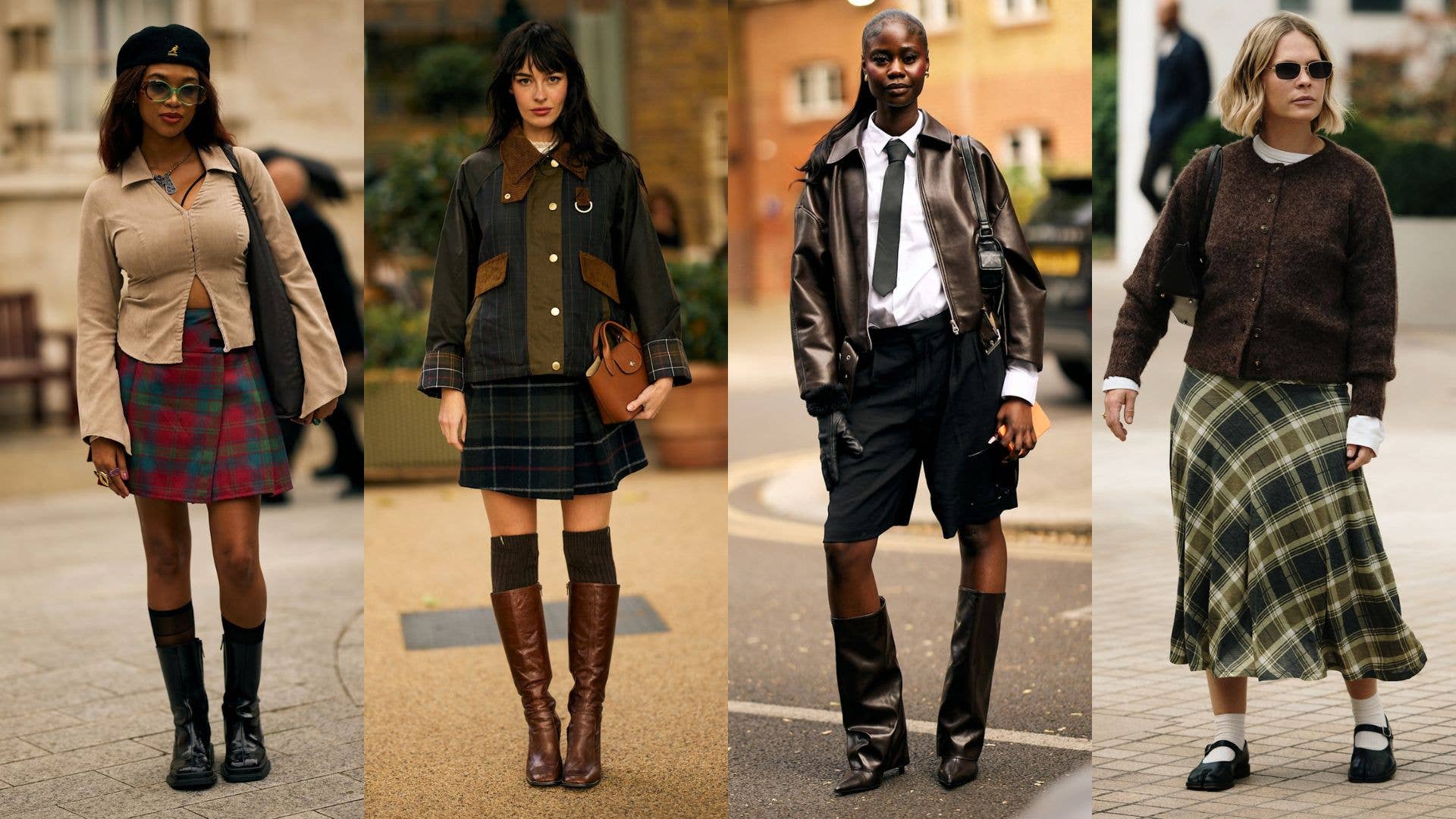
London Fashion Week's Spring 2027 schedule brought a sartorial reset to the streets, with attendees trading avant-garde experimentation for nostalgic prep school aesthetics. Argyle sweaters, plaid skirts, pleated fabrics, knee-high socks, Mary Jane shoes, loafers, and rugby shirts dominated the sidewalks outside shows, signaling a decisive pivot toward heritage-coded dressing that signals both rebellion and comfort.
This return to preppy codes reflects broader cyclical patterns in fashion. Every five to seven years, the industry revisits the boarding school wardrobe, but this iteration carries distinct contemporary weight. Gen Z and younger millennials, who grew up without direct connection to traditional prep culture, now consume these codes through a filter of irony and authenticity. The argyle that once signified old money now reads as earnest nostalgia, a deliberate embrace of structure after seasons of maximalism and gender-neutral silhouettes.
The Spring 2027 street style narrative also tracks the influence of heritage brands repositioning for Gen Z consumption. Ralph Lauren, Burberry, and Tommy Hilfiger have all leaned into their preppy DNA while modernizing codes through contemporary tailoring and sustainable materials. This season, attendees layered classic pieces with unexpected elements, mixing Mary Janes with sheer hosiery and pairing rugby shirts with cargo silhouettes. The result reads less costume and more editorial, transforming school uniform codes into legitimate fashion direction.
London specifically functions as the epicenter for this trend. British prep culture carries stronger visual resonance than American counterparts, and London Fashion Week attracts buyers and editors primed to decode subtle heritage references. The city's street style photographers documented the shift extensively, with images circulating rapidly across social platforms and influencing high street retailers within 48 hours.
This aesthetic also represents a practical response to economic uncertainty. Preppy dressing emphasizes investment pieces with extreme longevity. Loafers, argyle sweaters, and pleated skirts resist seasonal obsolescence. In an era where consumers increasingly question fast fashion practices, the prep wardrobe's durability offers both emotional and practical appeal. The codes suggest stability, heritage, and timelessness during volatile periods.
The runway presentations accompanying this street style moment confirmed the direction. Designers from across the spectrum introduced updated takes on traditional silhouettes. Some presented pristine heritage interpretations while others deconstructed prep codes entirely, fragmenting argyle or distressing pleats. This range allowed attendees and consumers to participate in the trend at multiple price points and commitment levels.
Retail buyers witnessed the street style momentum and immediately adjusted purchasing strategies. Department stores and specialty retailers increased orders for classic loafers, argyle knits, and plaid suiting ahead of the Spring 2027 season. Online resale platforms specializing in vintage prep pieces reported traffic spikes during Fashion Week, with 1980s Ralph Lauren pieces and secondhand Burberry blazers commanding premium prices.
The preppy resurgence also intersects with ongoing conversations about fashion identity and cultural codes. Unlike logomania or maximalist trends that broadcast consumption, prep dressing functions as a subtle signifier. It suggests education, inherited taste, and cultural capital. Fashion consumers appear ready to signal these values again after years of deliberately obscuring them.
This London Fashion Week moment positions prep aesthetics as a foundational direction for the next 18 to 24 months. High street retailers from H&M to Zara will introduce accessible prep pieces by spring delivery. Luxury designers will continue refining heritage interpretations. Street style will maintain argyle and plaid visibility through autumn 2026 and beyond, establishing prep codes as the season's most enduring visual language.