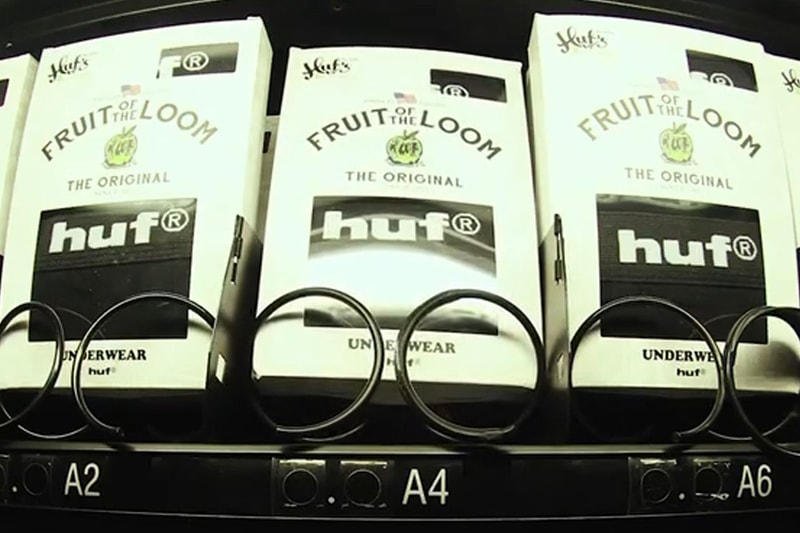
HUF, the California-based streetwear brand with deep roots in skate culture, has partnered with Fruit of the Loom for a collaborative essentials capsule that strips back fashion to its basics. The collection marks the first official partnership between the two brands, blending HUF's street sensibility with Fruit of the Loom's 170-year heritage in American basics manufacturing.
The capsule centers on two-pack sets: signature soft cotton underwear and ribbed tank tops, priced at ¥4,950 JPY each. Both pieces are now available through official HUF retail channels, with distribution pointing toward Japanese markets as the initial focus. This stripped-down approach reflects a broader shift in contemporary streetwear, where collaborations increasingly target foundational wardrobe staples rather than statement pieces.
HUF emerged from the Southern California skate scene in 2002, building a reputation for balancing technical skate apparel with accessible, wearable design. The brand has matured into a global player with collections spanning outerwear, footwear, and accessories, yet maintains credibility within core skate communities. Fruit of the Loom operates in a completely different space, occupying the utilitarian corner of American commerce since 1851. The brand became an American institution through mass distribution of affordable basics, particularly underwear and t-shirts, positioning itself as the everyman's everyday essential.
This collaboration signals two overlapping industry trends. First, heritage basics brands are leveraging their manufacturing expertise and cultural cachet by partnering with lifestyle-focused designers. Second, streetwear's maturation phase increasingly embraces "boring" product categories. When Supreme collaborated with Hanes on basics a decade ago, it felt novel. Now, such pairings represent standard business practice. The distinction lies in execution and distribution strategy.
HUF's choice to position this capsule through Japanese retail channels rather than American distribution reveals market awareness. Japanese streetwear consumers maintain an outsized appetite for collaborative basics, particularly those connecting American heritage brands with contemporary design voices. This demographic actively seeks out products that bridge subcultural authenticity with functional simplicity. The pricing in yen suggests a focused rollout before potential global expansion.
The collection's minimalist positioning contrasts sharply with HUF's typical design vocabulary, which incorporates bold graphics, skate-specific messaging, and colorway experimentation. By stripping away visual complexity, both brands tacitly acknowledge that their respective audiences value substance and authenticity in basics. A co-branded ribbed tank or two-pack underwear set gains value through association and quality, not visual spectacle.
From a manufacturing perspective, this partnership leverages Fruit of the Loom's unmatched expertise in cotton basics production. HUF gains access to supply chain efficiency and quality control protocols developed over 170 years. Conversely, Fruit of the Loom taps into HUF's cultural relevance within global streetwear communities, introducing its products to younger, design-conscious consumers who might otherwise view the brand as their parents' underwear choice.
The collaboration represents a practical response to how contemporary consumers evaluate basics. Rather than defaulting to mass-market commodity options, younger shoppers now seek products with narrative value. A HUF x Fruit of the Loom two-pack carries more cultural weight than either brand's solo offering, justifying premium pricing within accessible parameters.