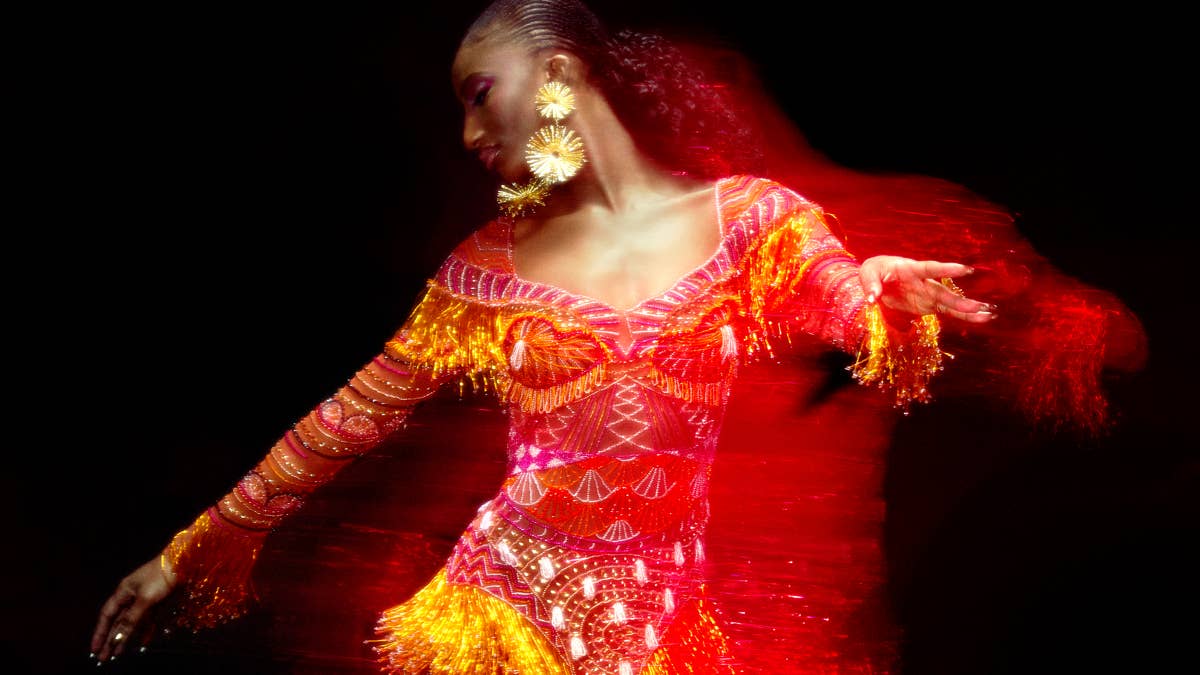
British-Nigerian designer Onalaja enters London Fashion Week with a collection born from adversity. A devastating fire destroyed the designer's office, yet rather than retreat, Onalaja channels that loss into a phoenix-inspired debut that addresses a gap luxury fashion has systematically ignored.
The label positions itself as "demi-couture," a term that sits between ready-to-wear accessibility and haute couture exclusivity. This positioning speaks directly to women whom traditional luxury has sidelined. Onalaja recognizes that the industry's narrow beauty standards, size ranges, and pricing structures have created an underserved market of discerning customers with spending power but limited options.
The phoenix metaphor runs through the collection's DNA. Fire destroyed, but it also purifies and transforms. Each piece carries that duality. The designer uses this narrative not as mere marketing but as a creative philosophy. The work moves beyond trauma into empowerment, a language that resonates with customers fatigued by luxury's predictability and gatekeeping.
Onalaja's demi-couture approach operates on a specific principle. The label offers construction quality, textile choice, and design sophistication typically reserved for haute couture houses. Prices remain accessible compared to full couture while significantly exceeding mass-market ready-to-wear. This model serves professionals, established women, and those with expertise in quality who reject both fast fashion and excessive price tags.
The London Fashion Week debut matters for several reasons. London's fashion calendar has increasingly positioned itself as the experimental counterpoint to Paris and Milan. Established designers like Richard Quinn and emerging talents have used the platform to challenge convention. Onalaja joins that lineage, offering British fashion an unapologetically inclusive vision that doesn't compromise on craft.
The label's focus on underrepresented customers reflects broader industry shifts. Luxury houses have finally recognized that growth comes from expansion, not gatekeeping. Hermès, Brunello Cucinelli, and even LVMH brands have quietly expanded size ranges and diversified their creative vision. Onalaja enters this conversation not as follower but as originator. The "women that luxury forgot" framing positions the brand as activist fashion with commercial viability.
The phoenix collection uses tailoring as its primary tool. Structured jackets, considered cuts, and unexpected fabric combinations create silhouettes that dress bodies rather than force them into molds. The designer's British-Nigerian heritage likely informs a perspective on beauty and proportion that differs from Eurocentric luxury conventions. That cultural lens becomes commercial advantage.
Timing amplifies the moment. Post-pandemic fashion shows evidence of exhaustion with frivolity. Customers invest in meaning. Collections that tell stories, that honor struggle and transformation, that speak to real lives, command attention. Onalaja's phoenix narrative satisfies this hunger without resorting to performative activism.
The label's London Fashion Week debut represents a small but deliberate shift in who fashion recognizes as worthy of investment. Fire destroyed a space. A collection rebuilds something better. That trajectory, from destruction to creation, from exclusion to inclusion, from silence to voice, defines Onalaja's entry into fashion's established conversations. The industry is watching how luxury's forgotten women respond.