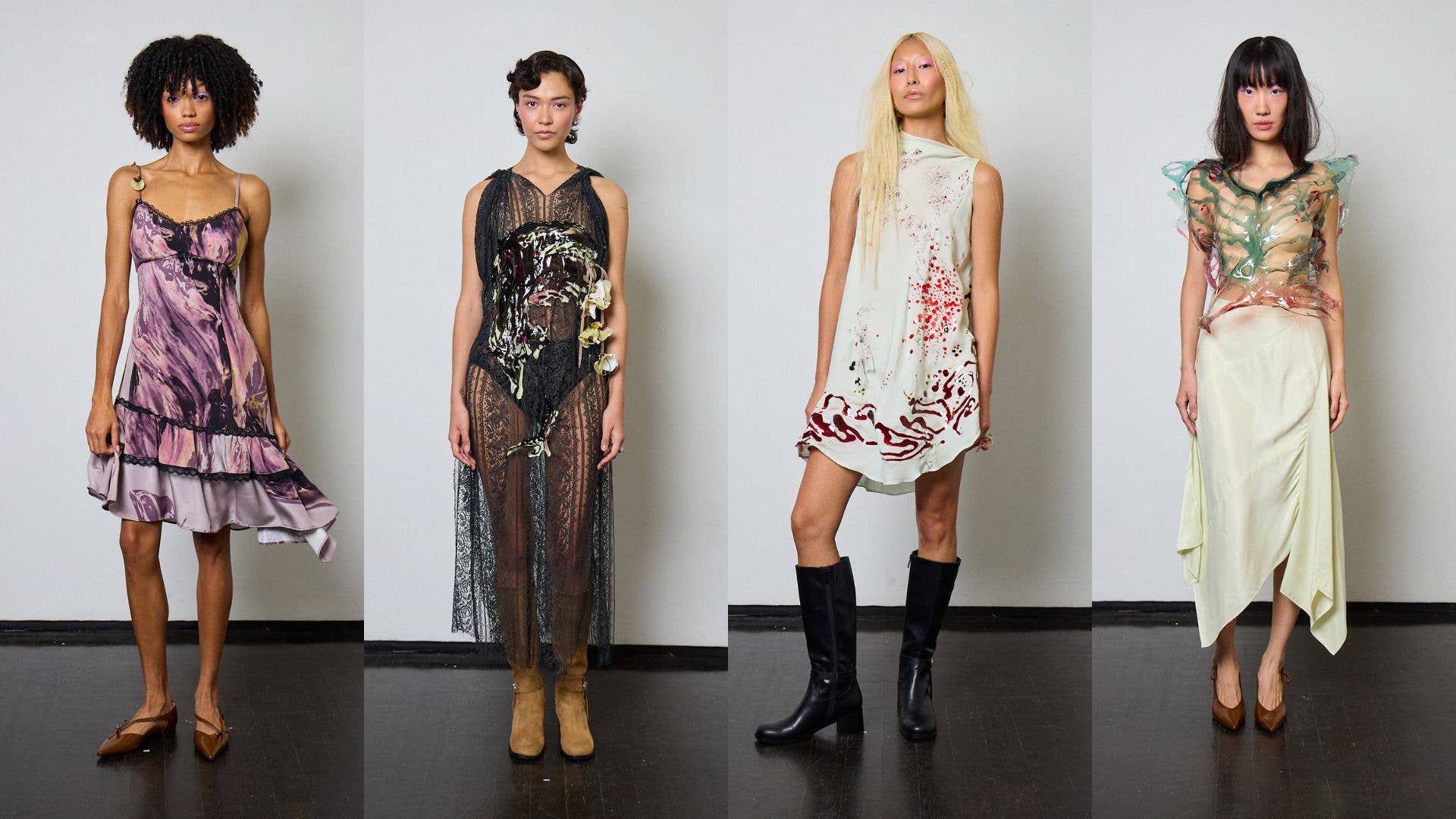
Caroline Zimbalist pushed past sculptural formalism for Spring 2027, trading rigid architectural silhouettes for garments engineered around the body's actual mechanics. The designer's new collection centers on what she calls "wearable exoskeletons," a term that captures both her design philosophy and the collection's underlying pragmatism.
The collection hinges on asymmetrical slip dresses that abandon the stiff, gallery-like presentation Zimbalist built her reputation on. These pieces retain her signature structural DNA, but with a radical shift toward movement and comfort. The asymmetry isn't decorative flourish. It's functional, allowing the body to breathe and flex without fighting the garment. Zimbalist paired these slips with pleated trousers cut for actual walking, sitting, and bending, a departure from the dramatic, sculptural proportions that defined her earlier work.
This evolution reflects a broader industry recalibration. Luxury and contemporary designers are increasingly ditching the false choice between beauty and wearability. Brands like The Row, Jil Sander, and Lemaire have long proven that precision tailoring and comfort aren't mutually exclusive. Zimbalist's pivot suggests she's absorbing this lesson while staying true to her material obsessions and geometric sensibilities.
The shift also tracks with changing consumer expectations post-pandemic. Luxury customers no longer accept clothes that punish the body. The rise of quiet luxury and "stealth wealth" aesthetics has made visible discomfort read as dated rather than daring. A dress that looks sculptural but moves like a second skin resonates harder than one that photographs beautifully but feels like armor.
Zimbalist's pleated trousers deserve particular attention. Pleating is a technical gamble. Poor execution reads cheap. Perfect pleating requires precision cutting, quality fabric, and expert pressing. When done right, it creates movement and visual interest without adding bulk. Zimbalist's approach here suggests she's prioritized the craft without sacrificing the silhouette.
The "wearable exoskeleton" concept also nods to biomimicry and performance-wear influence trickling into high fashion. Designers are studying how athletic garments distribute weight, manage temperature, and facilitate movement. Zimbalist's application feels less literal than conceptual, but the DNA is clear. She's treating the body as an athlete treats a course, designing around its actual needs rather than imposing external form.
This collection signals a maturing practice. Zimbalist isn't abandoning sculpture. The asymmetries, the unexpected draping, the material choices still carry her fingerprints. She's simply refusing to make drama an excuse for dysfunction. The result feels inevitable in retrospect, the kind of evolution that reshapes how we see a designer's entire body of work.
Spring 2027 positions Zimbalist within a growing cohort of designers rethinking performance and form. Expect other sculptural practitioners to follow this path. The market has spoken clearly. Beauty without function reads as self-indulgent. Function wrapped in formal intelligence reads as the future.