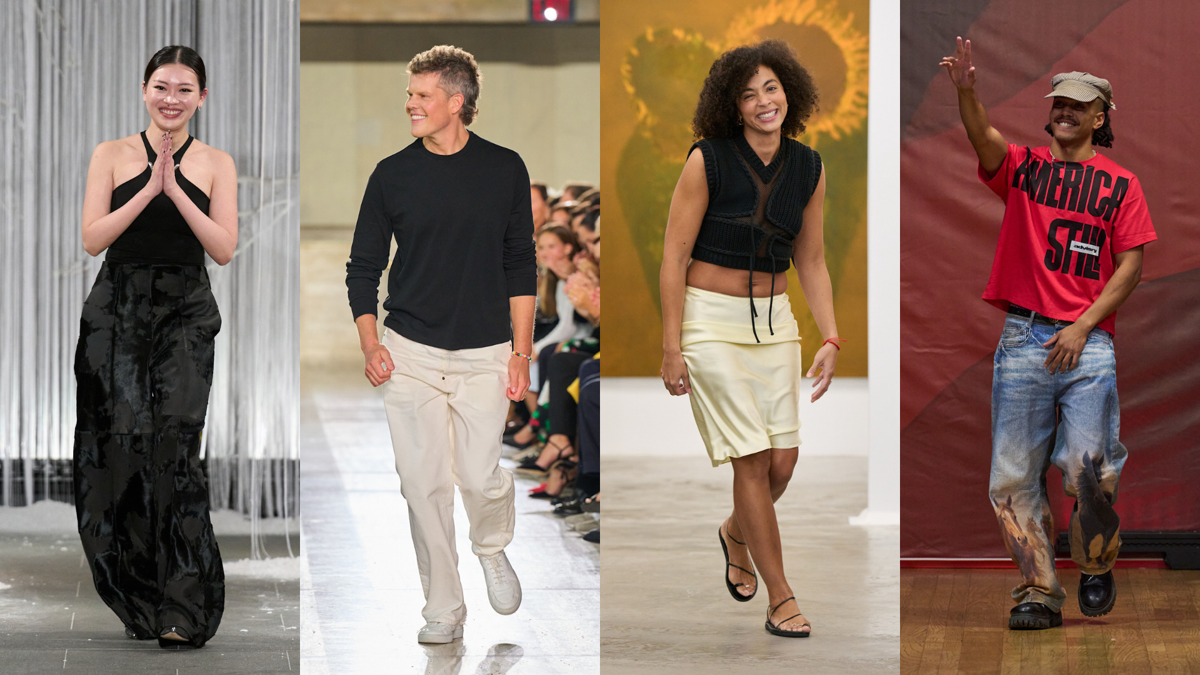
# What Designers Think About During Their Post-Show Bows
The moment a designer steps onto the runway for their post-show bow, the public sees triumph. What actually runs through their heads tells a different story. For many, that walk represents something closer to obligation than celebration. The quote from one designer says it plainly: "I started this job so I could make clothes, not walk on a runway."
This tension between design craft and public performance has become a defining feature of contemporary fashion. The post-show bow has evolved from a simple acknowledgment into a carefully orchestrated moment of personal branding. Designers walk out to applause, sometimes alone, sometimes with their teams, their expressions photographed and dissected across social media within seconds. Yet the internal monologue rarely matches the external pageantry.
Designers report thinking about logistics during their bows. Did the collection land as intended? Did the fit work on real bodies? Are there technical issues to address before retail? Are the clothes actually wearable, or did they prioritize spectacle? These practical concerns occupy mental space that audiences assume belongs to self-congratulation.
The bow also carries existential weight. For emerging designers, it marks a professional threshold. For established names, it becomes routine, sometimes tedious. Some feel the pressure of expectation. Others resent the performative aspect entirely. The runway show, historically a presentation of work, has mutated into celebrity theater where the designer's physical presence and personality matter as much as the collection itself.
This shift tracks with broader changes in fashion hierarchy. Instagram has democratized access to collections. Video streaming makes physical attendance optional. Yet the bow remains a holdover from an era when the designer's appearance authenticated the work. Now it serves dual purposes: validating the collection and feeding the personal brand that sells everything from fragrances to handbags.
The tension intensifies for designers who entered the industry for pure creative reasons. Pattern makers, tailors, and conceptual designers often feel the bow requirement conflicts with their practice. The runway demands narrative coherence, emotional resonance, sometimes spectacle. The studio demands technical precision, problem-solving, iteration. These modes exist in constant friction.
Some designers have begun to subvert the bow itself. They've sent it up, skipped it entirely, or made it deliberately awkward. Others lean into it fully, understanding that the bow serves their business interests. Younger designers navigate this more pragmatically, treating the bow as a marketing tool rather than an intrusion on their work.
The post-show moment also functions as a pressure valve. Collections that underperform suddenly need defensive narratives. Designers craft explanations, discuss influences, spin context around choices that didn't register as intended. The bow becomes a chance to reframe audience response before critics finalize their takes.
What designers think about during their bows reflects the industry's fundamental contradiction. Fashion exists as both art form and commercial product. The collection represents months of work, investment, and creative vision. The bow represents the industry's requirement that designers also function as personalities, spokespeople, and content generators. That walking moment contains all that tension in a single gesture.